
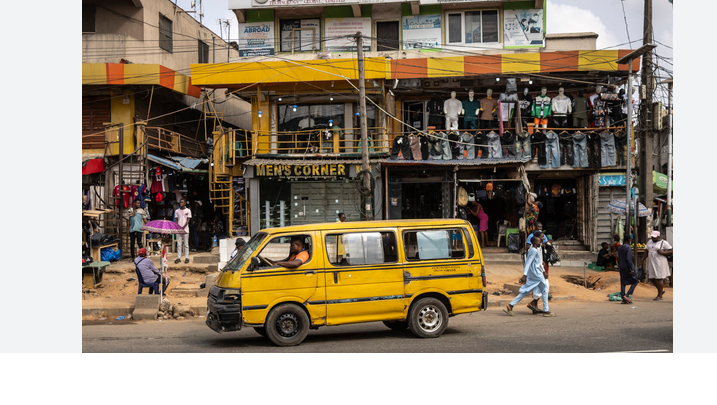
Behind the Wheel: A Lagos Driver’s Story
At 5:00 a.m., while many Lagos residents are still asleep, Bolaji is already behind the wheel.
Parked outside his home in Egbeda, the 38-year-old ride-hailing driver starts his car, opens the Uber, Bolt and LagRide apps on his phone, and checks one thing before accepting his first request—whether he has enough fuel to get through the busy morning rush.
For Bolaji, every day starts with calculations.
How much will petrol cost today? How many trips will cover platform commissions? Will traffic swallow half the day? Will there be enough left after vehicle maintenance and household expenses to provide for his wife and children?
“It’s not about how much you make,” he says. “It’s about how much you have left after spending.”
His first passengers are airport travellers and office workers eager to beat Lagos’ notorious traffic. The roads are relatively free before sunrise, but that changes quickly.
By 8:30 a.m., the Third Mainland Bridge, Ikorodu Road and Lekki-Epe Expressway have become parking lots. A journey that should take 20 minutes stretches to nearly an hour. While passengers often assume drivers benefit from longer trips, Bolaji says the opposite is usually true.
“The car is burning fuel while you’re barely moving. That’s money disappearing.”
Traffic is only one of several obstacles facing Lagos’ growing community of ride-hailing drivers.
Since the removal of fuel subsidies and the continued rise in operating costs, keeping a vehicle on the road has become significantly more expensive. Petrol consumes a large share of daily earnings, while engine servicing, tyres, brake pads, batteries and other spare parts have become costlier due to inflation and the high cost of imported components.
Many drivers say maintenance schedules can no longer be ignored because a single mechanical fault could leave them without income for days.
Then comes the commission.
Every completed trip attracts deductions from the ride-hailing platform before drivers receive their earnings. For many, the deductions are unavoidable, meaning they must complete more trips simply to achieve the same income they earned a few years ago.
“There are days when you think you’ve worked well,” Bolaji explains. “Then you subtract fuel, commission, food and repairs, and you realise the money isn’t much.”
By midday, fatigue begins to creep in, but there is little time to rest.
The afternoon brings school pickups, business meetings and shopping trips. As evening approaches, another surge begins as commuters head home, while restaurants, malls and entertainment centres generate fresh ride requests.
The busiest hours often arrive when drivers are already exhausted.
Yet many stay online until late at night because those extra trips could make the difference between paying school fees or postponing another household bill.
Night driving, however, introduces another challenge—security.
Several ride-hailing drivers have reported robberies, vehicle theft and assaults over the years, making many operators cautious about accepting requests from unfamiliar or isolated locations after dark.
Some have installed dashboard cameras, while others immediately share their live location with relatives or fellow drivers whenever they accept a late-night booking.
Driver associations have repeatedly called on ride-hailing companies to strengthen passenger verification systems and work more closely with security agencies to improve safety for operators.
The demands of the job also extend beyond the road.
Bolaji says he rarely eats dinner with his family during the week. Most mornings, he leaves home before his children wake up. On many nights, he returns after they have gone to bed.
“My children sometimes ask why I’m always driving,” he says with a smile. “I tell them every trip is for them.”
For drivers operating vehicles through lease-to-own or financing schemes, the pressure is even greater. Missing a daily remittance target can have serious financial consequences, leaving little room for illness, mechanical breakdowns or slow business days.
Shortly before midnight, Bolaji accepts his final trip of the day. After dropping off his passenger, he parks by the roadside and opens the earnings summary on his phone.
The day’s income looks encouraging at first glance.
Then he starts deducting expenses.
Fuel.
Platform commissions.
Food.
Vehicle maintenance.
Mobile data.
The amount left is far smaller than most passengers imagine.
By the time he gets home, it is almost midnight. In just a few hours, the alarm will ring again.
For Bolaji and thousands of other Uber, Bolt and LagRide drivers navigating Lagos every day, success is not measured by the number of trips completed but by whether the day’s earnings are enough to keep the car running, pay the bills and put food on the table.
In a city that never truly slows down, ride-hailing drivers are among the invisible workforce keeping Lagos moving—one passenger, one traffic jam and one long day at a time.