
Community Leaders Back Sustained Drive For Cleaner, Healthier Lagos
By Sherif Salau
Community leaders in Lagos have thrown their weight behind the state government’s ongoing campaign to embed proper sanitation and healthy living habits at the grassroots, describing continuous public enlightenment as the surest path to lasting change.
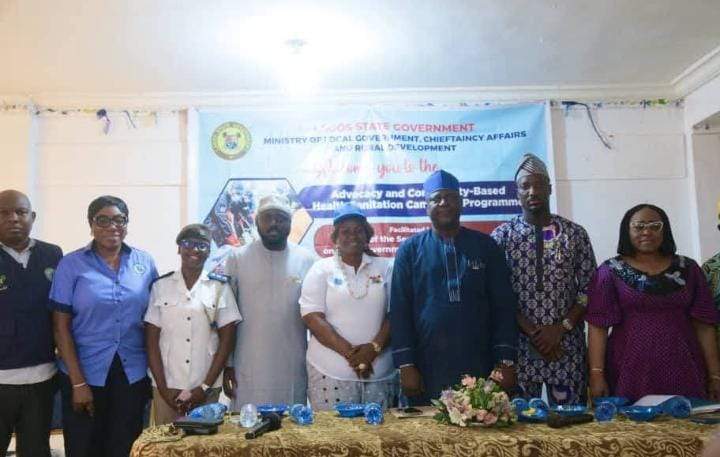
The endorsement came during an Advocacy and Community-Based Health and Sanitation Campaign held at the Itire-Ikate Local Council Development Area secretariat. Special Adviser to the Governor on Rural Development, Dr Nurudeen Yekinni Agbaje, used the occasion to call on traditional rulers, community development associations and other local influencers to keep the message alive long after the formal events end.
Agbaje stressed that regular sensitisation was essential if residents were to adopt simple but critical practices — proper handwashing, responsible waste disposal, hygienic toilet use, protection of water sources and maintenance of clean surroundings. He urged community leaders to take full ownership of the effort, turning cleanliness into a daily routine rather than a periodic exercise.
Senior Special Assistant to the Governor on Local Government and Rural Development, Babatunde Durojaiye, explained that the campaign forms part of a broader strategy to keep neighbourhoods clean, safe and liveable. By working through local government structures and community networks, he said, the initiative aims to strengthen sanitation awareness where it matters most — at the grassroots.
Chairman of Itire-Ikate LCDA, Oluwafemi Odunayo, represented by council secretary Afeez Lawal, welcomed the state government’s decision to bring the programme directly to the community. He pledged that the council would partner with the Community Development Council and other stakeholders to sustain the momentum and promote healthier living across the area.
The event is one in a series of similar outreaches being rolled out across Lagos divisions. Officials say the goal is not a one-off clean-up but a lasting shift in behaviour that reduces disease, improves quality of life and gives residents a greater sense of ownership over their environment.