Why Are Young Mothers Ending Up on Dumpsites With Their Babies?
By Kehinde Adeleye
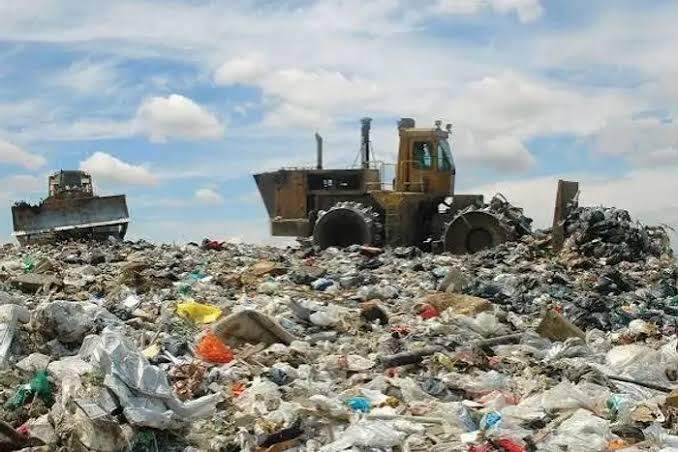
For 4 young mothers and their babies, an illegal dumpsite in Agboju, in the Amuwo-Odofin area of Lagos State, had become more than a place surrounded by discarded waste. It had become a place to live.
Their rescue by operatives of the Lagos State Environmental Sanitation Corps, LAGESC, has raised questions that go beyond the immediate environmental violation. How did 4 young women, all between 20 and 25, end up raising babies in such hazardous conditions? Where are the fathers of their children? What happened to their families and support systems, and why did a dumpsite become an option?
The women, identified as Amanda Oziema Abalihi, 20, from Anambra State; Fareedat Muyideen, 23, from Kwara State; Ayomide Ayomoke, 25, from Ondo State; and Chisom Ugo, 24, from Imo State, were found with children between 9 days and 2 years old during an operation along the Lagos-Badagry corridor.
One of them was caring for a 9-day-old baby.
The discovery is disturbing because the children were not simply being exposed to the hardships associated with homelessness. They were reportedly living around an illegal dumpsite, where poor environmental conditions, hunger and unhealthy air created additional risks for both mothers and babies.
But behind the shocking discovery is a more uncomfortable question: why did these mothers have nowhere safer to go?
The circumstances surrounding each woman’s situation have not been fully established, and it would be premature to assume that all 4 experienced the same form of hardship. Some may have faced poverty, family breakdown, homelessness, abandonment or other difficulties. Some may have left their homes because of maltreatment, as LAGESC said had happened in cases involving young people living on the streets.
What is clear, however, is that the presence of 4 young mothers and their babies in the same hazardous environment points to vulnerabilities that cannot be addressed simply by clearing the dumpsite.
There is also the question of paternal responsibility.
Where are the fathers of these children?
A child does not become the sole responsibility of a mother because the mother is young or vulnerable. Yet situations involving young mothers often leave women carrying the overwhelming burden of childcare while the fathers remain absent from the picture.
The identities and circumstances of the fathers in these cases have not been disclosed, but the question of paternal responsibility deserves attention whenever mothers and infants are found living without adequate shelter or support.
There is another question society must confront: what happens when a young woman becomes a mother without a stable support system?
Motherhood can place enormous responsibilities on a young woman, particularly where she has limited income, housing, family support or access to social services. When those support systems collapse, the consequences can affect not only the mother but also the child.
That is why the rescue of these women and their babies should not end with removing them from the dumpsite.
LAGESC said it was working with relevant government and humanitarian agencies to ensure that the women and children receive medical attention and are either reunited with their families or referred to appropriate welfare authorities.
That next stage may be more important than the rescue itself.
If the women are simply removed from the dumpsite and returned to the same circumstances that brought them there, the problem has not been solved. They could simply become homeless somewhere else.
The case also raises questions about Nigeria’s social protection system and the safety nets available to vulnerable mothers.
How easily can a young mother without stable accommodation access temporary shelter? Where can she obtain food, healthcare and childcare support? What mechanisms exist for identifying vulnerable mothers before they end up living in hazardous environments?
And perhaps most importantly, what are we teaching the next generation about motherhood, fatherhood and responsibility when mothers and babies can become invisible until they are discovered living beside a dumpsite?
The answer cannot be limited to blaming the women.
Parents and guardians have a responsibility to protect vulnerable young people. Fathers have responsibilities towards their children. Communities have a duty to identify and respond to vulnerable families. Government agencies must provide effective welfare and rehabilitation pathways, while society must resist the temptation to stigmatise young mothers who are already struggling.
The Agboju rescue therefore presents Lagos with an opportunity to look beyond environmental sanitation.
Removing illegal dumpsites is necessary. But removing the people found living around them without addressing why they were there risks treating the symptom while leaving the underlying problem untouched.
For these 4 mothers and their babies, the real measure of the rescue will not simply be that they were taken away from the dumpsite.
It will be whether they are given a genuine opportunity to find somewhere safer to live, access healthcare and support, reconnect with responsible families and, most importantly, raise their children in conditions worthy of their dignity.