
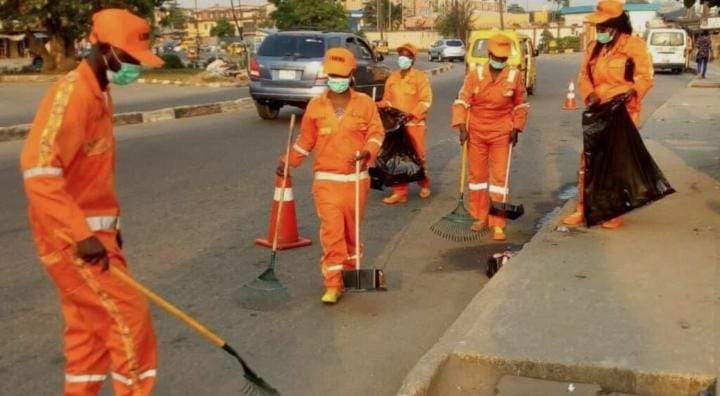
Lagos Residents Get Stronger Push For Cleaner Neighbourhoods
By Sherif Salau
Cleaner streets and healthier neighbourhoods are in focus as the Lagos Waste Management Authority (LAWMA) seals 25 buildings in Okota over alleged environmental violations and distributes 172 recycling bins in Ikoyi. While the enforcement drive underscores the need for residents and property owners to comply with sanitation regulations, the recycling initiative offers an opportunity to promote responsible waste disposal and environmental sustainability. For Lagosians, keeping the city clean requires both effective enforcement and active community participation.
The reintroduced monthly environmental sanitation exercise remains a central pillar of the campaign. Observed on the last Saturday of every month, the programme encourages residents to clean their immediate surroundings and drainage channels. Officials say participation has been high, with the government offering incentives such as awards for the cleanest local government areas, council development areas and streets to foster healthy competition.
Commissioner for the Environment and Water Resources Tokunbo Wahab has repeatedly stressed that lasting change depends on behavioural shift rather than enforcement alone. “Achieving a cleaner Lagos requires more than collecting waste; it requires changing how we generate, sort and dispose of waste,” he has said, while noting that sanctions remain available for those who violate sanitation laws.
LAWMA’s Managing Director, Dr Muyiwa Gbadegesin, has also highlighted the need for residents and businesses to use approved disposal channels, warning that dumping on roads, in drains or waterways undermines public health and the city’s overall cleanliness efforts.
The broader strategy includes expanding recycling, developing waste-to-energy projects and strengthening monitoring of private waste contractors. Officials argue that these measures, alongside consistent public education, are essential if Lagos is to move from reactive clean-ups to a sustained culture of environmental responsibility.
For residents, the message is clear: cleaner neighbourhoods will not be achieved by government action alone. Collective effort—daily habits, proper waste disposal and active participation in organised sanitation—remains the key to a healthier and more liveable city.