What Lagosians Should Know About the Food Hub in Agege
By Kehinde Adeleye
As Lagos continues to grapple with rising food prices and pressure on household incomes, the Food Hub in Agege is emerging as part of the state government’s efforts to improve food distribution and make essential food items more accessible to residents.
The initiative is designed to strengthen the connection between food producers, distributors and consumers while reducing some of the challenges associated with moving agricultural produce from farms to urban markets.
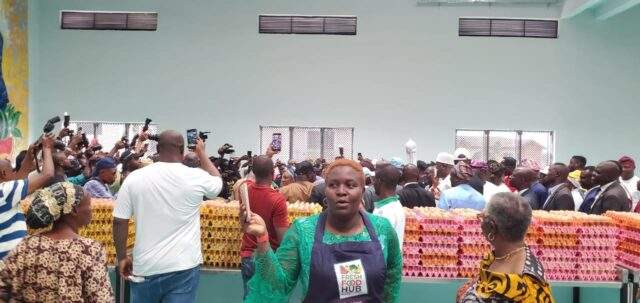
Located in Agege, one of Lagos’ densely populated areas, the Food Hub is expected to serve as an important point for the distribution and sale of food commodities to residents and businesses.
For Lagosians, one of the major questions is whether the facility will translate into cheaper food.
The concept of the hub is based on improving the movement of agricultural produce through a more organised supply chain, potentially reducing some of the costs and inefficiencies that occur between farmers and consumers.
Food prices in Lagos are influenced by several factors, including transportation, storage, logistics, multiple layers of middlemen and the cost of moving produce from farming communities to the state.
By providing a structured platform for food aggregation and distribution, the Agege Food Hub could help reduce some of these pressures and improve the availability of food commodities.
The hub is also expected to provide opportunities for farmers, traders, food businesses and other players in the agricultural value chain to connect with a larger consumer market.
For consumers, however, the real test will be whether the initiative delivers food at competitive prices and whether ordinary residents can easily access the products.
The facility could also help address another major challenge in Lagos’ food system: wastage.
Agricultural produce can deteriorate when transportation, storage and distribution systems are inefficient. Better aggregation and distribution facilities can help food products move more quickly from producers to consumers.
The location of the hub in Agege is also significant because of the area’s large population and its connection to several communities across Lagos.
If properly managed, the facility could become more than just another food market. It could serve as part of a wider food distribution network linking farmers and producers with urban consumers.
But the success of the Food Hub will ultimately depend on how effectively it operates.
Lagosians will want to know whether prices at the hub will consistently remain competitive, whether supplies will be regular, which food items will be available, who is eligible to trade there and what measures are in place to prevent unnecessary price increases.
There will also be questions about how the hub will complement existing markets and whether small traders and low-income consumers will be able to benefit from it.
For the government, the broader objective is to strengthen food security and improve the resilience of Lagos’ food supply system as the state’s population continues to grow.
The Agege Food Hub therefore comes at a time when food affordability has become a major concern for households across Lagos.
Its impact should not be measured simply by the infrastructure itself, but by whether it ultimately helps more Lagosians access quality food at prices they can afford.
For residents, the most important question remains simple: will the food hub make food cheaper and easier to access?
That is the measure by which Lagosians are likely to judge the initiative.