After Ikola Unrest, Lagos Steps Up Safety Drive, Clears Structures Under Power Lines
By Sherif Salau
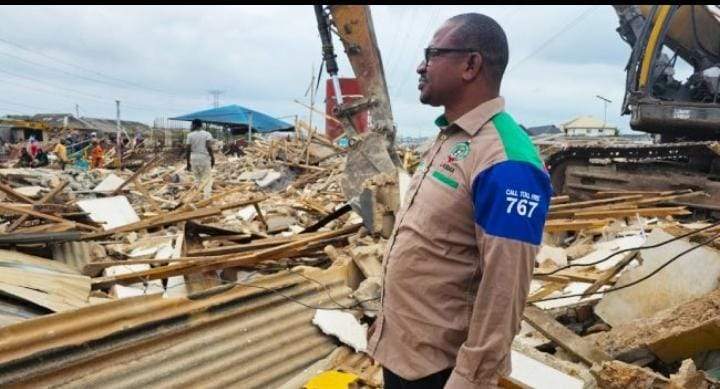
In the wake of recent communal tensions in Ikola, Alimosho, Lagos State authorities have intensified a broader safety operation across the area, including the demolition of buildings and structures erected directly beneath high-tension power lines.
The exercise forms part of efforts to restore order and reduce preventable hazards in a community still recovering from the earlier clash. Officials say the removal of illegal structures under electricity lines is both a security and public-safety measure, aimed at protecting lives and ensuring unhindered access for power infrastructure maintenance.
Living under high-voltage power lines carries well-documented risks. The most immediate danger is electrocution or serious injury should a cable snap, sag during storms, or come into contact with rooftops and metal structures. Fires can also start more easily when electrical faults occur near densely packed buildings. During heavy rains or high winds, the combination of unstable structures and live wires significantly increases the chance of collapse and cascading accidents.
Beyond the physical threats, residents face practical difficulties. Power companies require clear corridors for routine inspection and emergency repairs; illegal buildings often block these routes, delaying restoration after outages and raising the cost of maintenance. There are also long-standing concerns about prolonged exposure to electromagnetic fields, though scientific consensus on health effects remains cautious. In addition, such structures are usually unapproved, leaving occupants vulnerable to sudden demolition without compensation and complicating insurance or formal property claims.
City planners and safety experts have repeatedly warned that the practice of erecting homes and shops under power lines is a recipe for disaster in a densely populated metropolis like Lagos. The current operation in and around Ikola underscores the authorities’ determination to enforce existing regulations more strictly, particularly in areas already strained by social tension.
While the demolitions will inevitably disrupt the lives of those who have lived or traded in the affected spots, officials maintain that the alternative—allowing hazardous structures to remain—poses a far greater long-term threat to the wider community. As the safety drive continues, the challenge will be to pair enforcement with clear communication and, where possible, support for displaced residents so that the pursuit of public safety does not deepen existing hardships.