Obanikoro Set Ambitious Vote Target As Lagos APC Prepares For 2027 Contest
By Sherif Salau
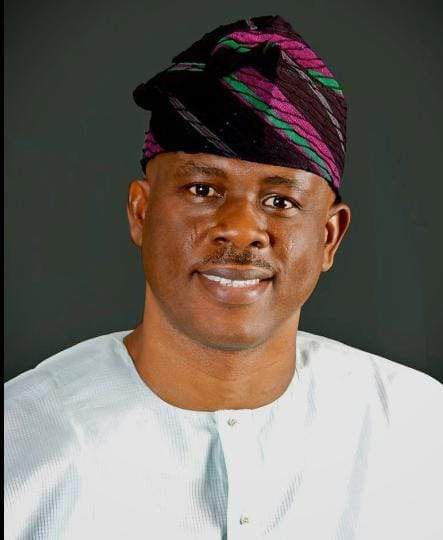
Senator Musiliu Obanikoro, Director-General of the President Bola Ahmed Tinubu–Kadri Obafemi Hamzat (PBAT-KOH) Campaign Council, has projected a strong performance for the All Progressives Congress in Lagos during the 2027 elections, framing the state’s large voter base as both an opportunity and a responsibility.
Speaking in recent engagements, including a press conference on Sunday, Obanikoro emphasised that the party must convert its membership and organisational strength into decisive numbers for both the presidential and governorship races. Lagos currently holds the highest number of registered voters in the country, with figures placed above seven million. Against that backdrop, party leaders have publicly discussed targets ranging from three million to five million votes, while Obanikoro has repeatedly stressed the need to mobilise far beyond the modest turnouts of previous cycles.
The focus is deliberate. In the 2023 presidential election, the APC suffered a narrow loss in Lagos—the first of its kind in the state for the party in a presidential contest. Peter Obi of the Labour Party edged out President Tinubu by fewer than 10,000 votes. That outcome remains a reference point for the current campaign. Obanikoro has described it as a wake-up call that forced internal reflection and a renewed emphasis on grassroots structures, membership expansion and disciplined mobilisation.
The campaign council has since registered approximately one million members in Lagos, according to Obanikoro. He has argued that even a high percentage of that membership turning out, combined with additional support from long-standing APC voters, could produce a substantial base. From there, the party aims to broaden its reach across the 20 local government areas and 37 local council development areas. The strategy, he said, rests on unity, sustained engagement with residents, and a people-centred message rather than assumptions of automatic loyalty.
“Electoral success does not happen by accident,” Obanikoro has told party stakeholders. It requires planning, coordination, clear responsibilities and continuous conversation with the electorate. The campaign has prioritised reconciliation after internal primaries and has urged members to set aside differences in favour of a common objective. A manifesto for the governorship candidate, Deputy Governor Obafemi Hamzat, is scheduled for public presentation in the coming days, framed around continuity of existing development plans and inclusive governance.
For ordinary Lagos voters, the numbers projected by party leaders translate into a more immediate reality: intensified campaigning, renewed voter-card drives and competing claims about performance and delivery. The APC presents its record in infrastructure, transport and urban management as evidence of competence. Opposition voices, drawing on the 2023 result, argue that the electorate is more fluid and more willing to punish perceived shortcomings than in previous cycles.
Obanikoro’s projections, whether three million, five million or higher, serve a dual purpose. They set an internal benchmark for organisers and signal to supporters that the party intends to treat Lagos as a decisive battleground rather than a safe stronghold. Whether those figures materialise will depend less on declarations than on the ability to turn organisational energy into actual ballots on election day.
As the campaign season advances, the conversation in Lagos is shifting from abstract targets to the practical work of persuasion. For the APC, the memory of 2023 remains a quiet pressure. For its opponents, it remains a source of confidence. The scale of the ambition articulated by Obanikoro suggests the party understands the size of the task ahead.