UNILAG Research Targets Solutions To Food, Health, Housing Crises
By Sherif Salau
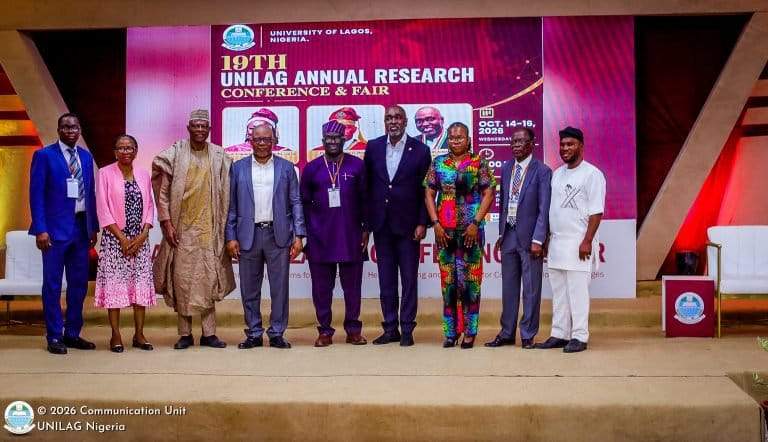
From food security and affordable housing to better healthcare and reliable energy, the University of Lagos is placing research and innovation at the centre of efforts to tackle pressing global challenges.
The three-day event forms part of the university’s International Week and brings together faculty members, postgraduate students and experts from institutions within and outside Nigeria. Its organisers have structured the programme around eight interdisciplinary tracks. These range from biotechnology and genomic innovations for food and health security, to artificial intelligence, data science and clean technology; from public health, drug discovery and global preparedness, to smart cities, human-centred urban design and environmental resilience. Other streams examine leadership and policy strategies, transformative education, cultural heritage and social policy in emerging economies.
Beyond formal paper presentations, the fair includes an academia–business forum, product exhibitions, a colloquium and opportunities for researchers to showcase work that can move from the laboratory or the field into real-world application. The emphasis is deliberate. Nigeria continues to face intertwined crises of food insecurity, strained health systems, inadequate housing and unreliable energy supply. The university’s leadership has framed the conference as a platform for research that does not stop at diagnosis but presses toward usable solutions.
The shift in dates from the original mid-to-late October schedule to mid-October reflects the institution’s determination to keep the conversation current and accessible. Registration has drawn participants from across the academic spectrum, with separate rates for regular attendees, students and international delegates.
In a country where the gap between research findings and public policy often remains wide, gatherings of this kind serve a practical purpose. They create space for collaboration between universities, government and the private sector, and they place the spotlight on work that can influence how communities feed themselves, stay healthy, find shelter and power their daily lives. For three days in Akoka, that conversation is under way.