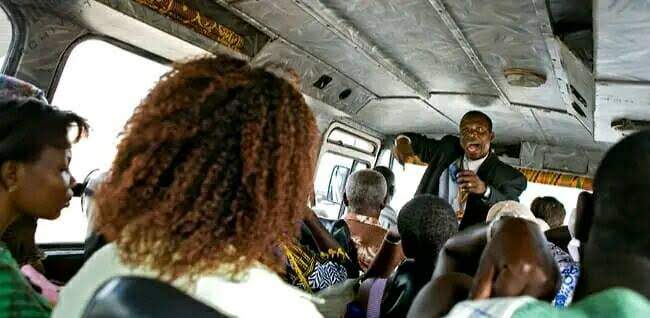
Bus Preaching in Lagos: Where Should the Line Be Drawn?
Every day, millions of Lagosians board commercial buses expecting nothing more than a safe journey to work, school or home. Instead, many find themselves in what quickly becomes a moving place of worship, complete with sermons, prayers, testimonies and, in some cases, appeals for offerings.
The conversation has gained fresh attention after the President of the Pentecostal Fellowship of Nigeria (PFN), Bishop Wale Oke, declared that Christians would continue preaching in commercial buses despite the controversy surrounding the proposed amendment to the Federal Road Safety Corps (FRSC) Act, which prescribes penalties for hawking, trading and preaching inside moving commercial vehicles.
While the Senate has clarified that the provision is not a new law and is intended to enhance road safety rather than restrict religious freedom, the debate has reopened a broader question: Where should the line be drawn between freedom of worship and the rights of commuters in shared public spaces?
For regular commuters in Lagos, the experience is all too familiar.
A passenger suddenly rises from a seat and begins, “Good morning, brethren. Before we get to our destinations, let us hear the word of God.” Within moments, the atmosphere inside the bus changes.
The preacher raises his or her voice above the engine noise and the blaring horns outside. Passengers are urged to repent, reject evil dreams and surrender their lives to God. Some are asked to bow their heads. Others are instructed to close their eyes in prayer, even as the vehicle speeds through Lagos traffic.
The sermon often flows into testimonies of miraculous healings, financial breakthroughs, deliverance from misfortune and lives transformed through faith. In some cases, the message concludes with an appeal for offerings, support for a ministry or the announcement of a bank account number for donations.
For decades, bus preaching has become part of Nigeria’s public transport culture, particularly in Lagos. Many commuters welcome the messages, describing them as words of encouragement in a society weighed down by economic hardship, insecurity and uncertainty.
Others, however, see it differently.
To them, commercial buses are shared public spaces, not churches or mosques. They argue that while everyone has the constitutional right to practise and propagate their religion, fellow passengers should also have the freedom to enjoy a quiet journey without feeling compelled to participate in religious activities.
Some commuters say they simply want to read a book, reply to emails, listen to music or rest after a long day at work. Others belong to different religious backgrounds or prefer to keep their faith private.
Yet declining to participate is not always easy.
There are instances where passengers are repeatedly urged to respond with “Amen,” raise their hands or close their eyes during prayers. Those who choose not to join sometimes attract curious looks or are perceived as being uncooperative, creating an uncomfortable atmosphere inside the vehicle.
The issue becomes even more contentious when offerings are introduced. While many bus preachers preach without requesting money, others end their messages by soliciting donations, leaving some commuters questioning whether the purpose of the exercise remains purely evangelistic.
Beyond questions of religion, some road safety experts have also expressed concerns that loud preaching, emotional outbursts or prolonged religious activities inside moving vehicles could distract drivers and compromise passengers’ safety.
Supporters of bus evangelism disagree.
They argue that public preaching has always been central to Christianity and that buses, like markets, parks and street corners, remain legitimate places to share the gospel. They also point to the countless testimonies of lives they believe have been changed through such encounters.
Bishop Wale Oke echoed that position when he insisted that Christians would continue preaching in commercial buses, maintaining that believers must obey God’s command to evangelise.
The controversy, however, extends beyond Christianity alone. Lagos is one of Africa’s most religiously diverse cities, where Christians, Muslims and adherents of traditional beliefs share the same buses, workplaces and neighbourhoods every day.
In such a multicultural society, balancing religious freedom with respect for others becomes increasingly important.
The Nigerian Constitution guarantees every citizen the right to freedom of thought, conscience and religion. It also protects the rights of individuals to dignity and peaceful enjoyment of public spaces. The challenge is ensuring that one right does not unnecessarily infringe on another.
As lawmakers, religious leaders and commuters continue to debate the issue, perhaps the conversation should move beyond whether bus preaching should be banned or allowed.
The real question is how Nigerians can exercise their religious freedoms while respecting the rights and choices of others.
In a city as diverse and dynamic as Lagos, religious tolerance and peaceful coexistence should be the order of the day. The freedom to preach should be exercised with consideration for those who may not wish to participate, just as those who choose not to listen should respect the rights of others to express their faith.
Finding that balance may be the only way to preserve both Nigeria’s rich religious heritage and the mutual respect needed for peaceful coexistence in shared public spaces.