Tinubu Hails AfCFTA Adoption of Nigeria’s Customs Model
President Bola Ahmed Tinubu has hailed the African Continental Free Trade Area (AfCFTA) for recognising and adopting Nigeria’s homegrown customs modernisation model.
He described the development as a major vote of confidence in the country’s capacity to produce solutions for Africa’s trade challenges.
The President’s commendation follows the selection of AfriTrade CMP Limited, a subsidiary of Nigerian-owned Bergmans Security Consultant and Supplies Limited, to execute a 20-year, multi-billion-dollar AfCFTA Customs Modernisation Project.
The initiative is expected to deploy digital systems and physical infrastructure aimed at transforming customs administration across participating African countries, with a focus on cargo tracking, border management, trade data exchange and faster clearance procedures.
Nigeria’s own Customs Modernisation Project is being implemented by another Bergmans subsidiary, Trade Modernisation Project Limited, making the country’s experience a key reference point for the continental initiative.
Tinubu said the development demonstrated that solutions designed and successfully deployed in Nigeria could be adapted to tackle similar challenges across Africa.
He described the recognition as a boost for Nigerian innovation and private-sector capacity, while reaffirming his administration’s commitment to supporting indigenous businesses under its “Nigeria First” policy.
The President commended Bergmans, AfriTrade CMP Limited, Trade Modernisation Project Limited, the Nigeria Customs Service (NCS), Comptroller-General of Customs Bashir Adewale Adeniyi and the Nigerian professionals involved in driving the reforms.
At the centre of Nigeria’s customs transformation is B’Odogwu, the indigenous Unified Customs Management System. Piloted in October 2024, the platform has been deployed to automate customs procedures, improve cargo processing, strengthen risk management and reduce manual intervention.
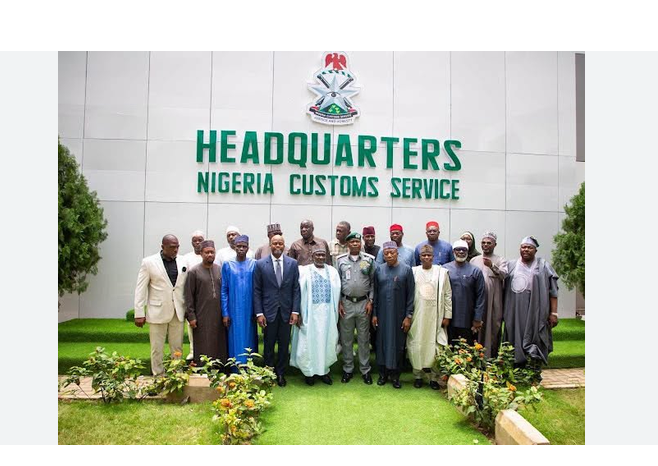
AfCFTA Secretary-General Wamkele Mene recently inspected the system at the NCS headquarters in Abuja and described it as a potential blueprint for other African countries. He noted that while several international firms had proposed solutions for the continental project, AfCFTA chose an African-developed system.
Nigeria’s modernisation programme also incorporates cargo tracking, data management, surveillance, risk assessment and non-intrusive inspection technologies. These systems are being linked with the National Single Window, launched in March 2026 to create a unified digital platform for cross-border trade transactions.
The reforms have also enhanced Nigeria’s standing in international customs administration. In July, Tinubu congratulated Adeniyi after his unanimous re-election as Chairperson of the World Customs Organization Council, citing progress recorded in revenue collection, trade facilitation, border security and digital transformation.
Tinubu said Nigeria’s experience could help Africa tackle some of the persistent barriers to intra-African commerce, particularly lengthy clearance processes, high transaction costs and fragmented border procedures.
He stressed that achieving the full potential of AfCFTA would require faster, cheaper and more predictable movement of goods across African borders.
The President said Nigeria remained ready to share its expertise, technology and private-sector capacity to help build a more efficient and competitive continental trading system.