Pepper Prices Drop In Lagos Markets As Tomato Costs Remain High
By Sherif Salau
Pepper prices have declined across several Lagos markets, offering relief to traders and consumers, but rising tomato costs continue to put pressure on household budgets and dampen sales.
A survey of markets in Costain, Suru-Alaba and neighbouring areas shows that pepper has become more affordable in recent weeks, with traders attributing the development to increased seasonal supply from producing areas.
Small bags of pepper that sold for between ₦30,000 and ₦35,000 in August and September now cost between ₦20,000 and ₦25,000 in some markets. Larger bags are available for between ₦30,000 and ₦60,000, depending on size and variety.
The decline has also reflected in retail prices, with small rubber plates of pepper selling for about ₦500. Consumers say quantities available for ₦200 and ₦500 have improved compared with previous months.
Okoro Ebubechi, a pepper seller on Olaogun Street near Abule-Nla Junction, said the drop in prices had encouraged customers to buy more.
“Customers are buying larger quantities because pepper has become more affordable,” he said.
Ebubechi explained that he now buys a small basket of pepper for about ₦20,000, compared with between ₦30,000 and ₦40,000 in September.
He attributed the price reduction to increased supply during the current harvest period, adding that traders were keen to sell their produce quickly to avoid losses from spoilage.
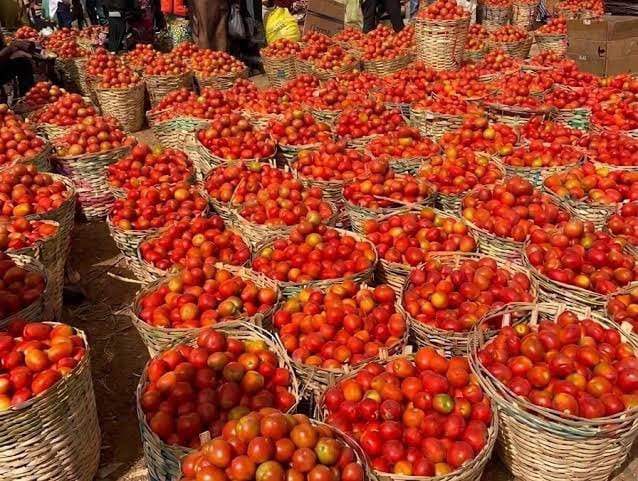
However, the relief in the pepper market has not extended to tomatoes, whose prices remain high despite slight reductions in some categories.
A paint measure of tomatoes that sold for between ₦6,000 in August and September now costs about ₦7,000, while baskets previously priced between ₦35,000 and ₦40,000 have risen to between ₦45,000 and ₦65,000, depending on size, variety and source.
Ghana tomatoes currently sell for between ₦40,000 and ₦45,000 per basket, although some traders said prices had eased slightly from levels above ₦50,000 recorded earlier.
At Suru Market, large baskets of tomatoes sell for around ₦50,000, while smaller ones cost between ₦35,000 and ₦45,000.
The high prices have created difficulties for traders struggling to maintain sales while meeting customers’ expectations.
Malam Mohammed, a tomato seller at Costain Bus Stop, described the business as increasingly challenging, saying consumers were unhappy with the quantities and quality they received for the money spent.
He said some customers had reduced their purchases or stopped buying altogether, forcing him to limit the volume of tomatoes he stocks to minimise losses from unsold produce.
Another trader, Mrs Rukayat Sherif, said she continued to source her tomatoes from Mile 12 because of its reliability but hoped prices would fall soon to improve sales and ease complaints from customers.
For many households, the rising cost of tomatoes has meant adjusting cooking habits and spending less on fresh produce.
Mrs Mary Chigozie, a resident of Vaughan Street, Costain, said she previously spent between ₦2,000 and ₦5,000 daily on tomatoes and pepper but had reduced the quantity of tomatoes she bought because of the rising cost.
According to her, small portions that previously sold for ₦200 or ₦300 now cost between ₦500 and ₦1,000.
She said she had increasingly resorted to using tomato paste mixed with pepper or preparing stews with red palm oil to reduce food expenses.
Similarly, Mrs Teni David, a civil servant living in Iyana Ipaja, welcomed the reduction in pepper prices, saying it had enabled her to buy larger quantities for household use.
However, she expressed concern that prices could rise again as the festive season approaches, when demand for food items typically increases.
Traders and consumers identified seasonal fluctuations in supply, transportation expenses and loading charges from producing areas in northern Nigeria as factors influencing market prices.
They also highlighted inadequate storage and processing facilities as major challenges contributing to post-harvest losses and price instability.
According to traders, increased pepper supply has helped drive down prices, but the risk of spoilage often forces sellers to dispose of their stock quickly. Tomato prices, meanwhile, remain sensitive to supply shortages, variations in quality and the cost of transporting the produce over long distances.
Some traders and consumers called for greater investment in food processing and storage infrastructure to preserve surplus produce during periods of abundance and improve availability when supplies decline.
With the festive season approaching, market operators and consumers are watching closely for further price movements.
While cheaper pepper has provided some relief to Lagos households, persistently high tomato prices continue to weigh on food budgets, highlighting the challenges consumers face in managing the cost of everyday meals.