Lagos Targets 40% Food Self-Sufficiency, Unveils ₦200m Agrithon Funding
Kehinde Adeleye
The Lagos State Government has unveiled plans to increase the state’s food self-sufficiency level from 20 per cent to 40 per cent, alongside a ₦200 million funding initiative to support innovative agricultural businesses.
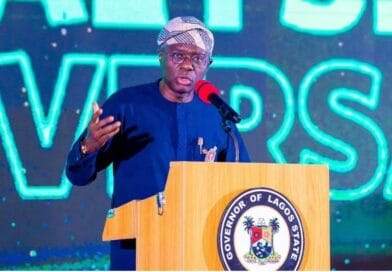
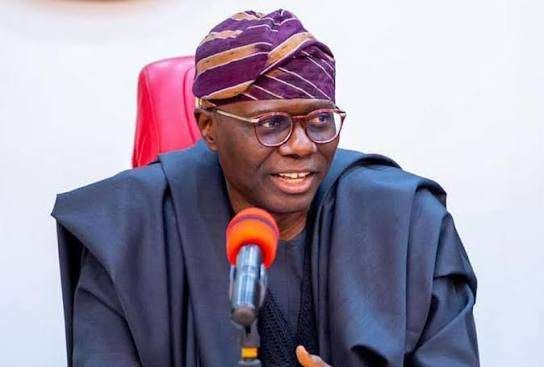
Governor Babajide Sanwo-Olu announced the strategy as part of efforts to strengthen food production, improve affordability, reduce post-harvest losses and create more opportunities for farmers and young people in the agricultural sector.
The announcement was made during the 2026 World Food Day celebration at the Nigeria Police College, Ikeja, where the government outlined its Five-Year Agricultural and Food Systems Roadmap.
Represented by Deputy Governor Obafemi Hamzat, Sanwo-Olu said Lagos was pursuing a more resilient food system despite the state’s limited land for large-scale agriculture and the growing demand for food from its population.
The World Food Day celebration was held under the theme, “Innovate Today, Nourish Tomorrow,” highlighting the role of technology, investment and modern agricultural practices in building sustainable food systems.
The governor explained that the state’s food security strategy rests on 4 major pillars: infrastructure and markets, production and processing, people and skills, and innovation and support for agricultural businesses.
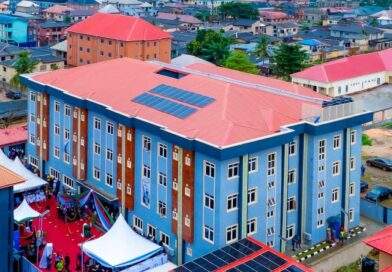
Under the infrastructure component, the government is developing a central food logistics hub at Ketu-Ereyun in Epe, with the first phase reportedly at an advanced stage.
The facility is expected to improve the movement, storage and distribution of agricultural produce while reducing waste and strengthening links between farmers and consumers.
The state has also commissioned mid-level food hubs at Abijo in Ibeju-Lekki and Dairy Farm in Agege, while construction is ongoing at Opebi and Bombata.
The projects are designed to improve access to markets and make food distribution more efficient across Lagos.
Lagos Expands Support For Farmers
As part of efforts to improve agricultural production and guarantee markets for farmers, the state government is implementing initiatives to strengthen the supply chain and encourage investment in farming.
The government highlighted the ₦500 billion Guarantee Offtake Fund as part of its efforts to support agricultural production and provide greater market certainty for farmers.
The Imota Rice Mill remains a major component of the state’s food production strategy. The facility has an annual processing capacity of about 2.5 million 50-kilogram bags of rice and has created more than 2,000 jobs, while supporting about 500 farmers.
The state is also expanding access to mechanised farming through the Tractor-On-The-Go initiative, which has facilitated cultivation across more than 3,000 hectares of farmland for about 6,000 farmers.
In livestock production, the government is developing the Igbodu cattle feedlot project, which covers about 750 hectares and is expected to support the production of more than 100,000 cattle annually when fully operational.
The state is also advancing its dairy production plans through a pilot project at Iyafin, where daily milk production has reportedly exceeded 24 litres per cow.
In the fisheries sector, the Aquaculture Centre of Excellence at Igbonla is projected to produce 50 million fingerlings, 2,000 tonnes of fish and 24,000 tonnes of aquafeed annually.
The government said the projects were intended to reduce dependence on food supplies from outside the state, strengthen local production and improve the availability of essential food products.
₦200m Agrithon To Support Innovation
The government also announced ₦200 million in funding for Lagos Agrithon 3.0, an initiative designed to encourage innovation and support businesses developing solutions to agricultural challenges.
The funding follows the previous edition of the Agrinnovation Summit, where ₦150 million in grants was awarded to successful participants.
More than 200 entries were reportedly received for the latest Agrithon initiative, reflecting interest in technology-driven solutions to challenges across the agricultural value chain.
The programme is expected to support ideas that can improve food production, processing, storage, distribution and access to markets.
The state government is also investing in agricultural skills development, particularly among young people and women, as part of efforts to build a workforce capable of supporting a modern food system.
Through its Agripreneurship Programme, more than 4,400 youths and women have received training, while over 2,000 participants have benefited from the distribution of agricultural assets.
The Lagos State Government has also encouraged interest in agriculture among students, with 12 schools reaching the finals of the Lagos Agric Scholars competition.
The initiative is intended to introduce young people to agricultural opportunities and encourage the next generation to consider farming and agribusiness as viable career paths.
Government Targets Improved Food Affordability
Beyond production, the state government said improving access to affordable food remains a major priority, particularly amid concerns about the cost of living.
Under the Ounje Eko initiative, about 5,000 farmers have benefited from a 25 per cent subsidy aimed at supporting agricultural production and improving access to essential inputs.
The government said the intervention formed part of broader efforts to reduce production costs, strengthen food supply and improve affordability for residents.
Commissioner for Agriculture and Food Systems, Abisola Olusanya, has also been involved in advancing the state’s agricultural programmes and food security initiatives.
The government maintained that achieving the 40 per cent food self-sufficiency target would require sustained investment, collaboration with farmers and private-sector partners, and the adoption of modern agricultural practices.
With its plans for food logistics infrastructure, mechanised farming, rice production, livestock, dairy, aquaculture and agritech funding, Lagos is seeking to strengthen its local food system while creating employment and business opportunities.
The success of the strategy will depend on the timely delivery of projects, continued support for farmers and the ability of the state to translate investments into increased food production and more affordable supplies for residents.