Ibeju-Lekki Flood Victims Demand Lasting Drainage Solutions
For many residents of Ibeju-Lekki, the arrival of the rainy season no longer brings relief from the heat; it brings anxiety.
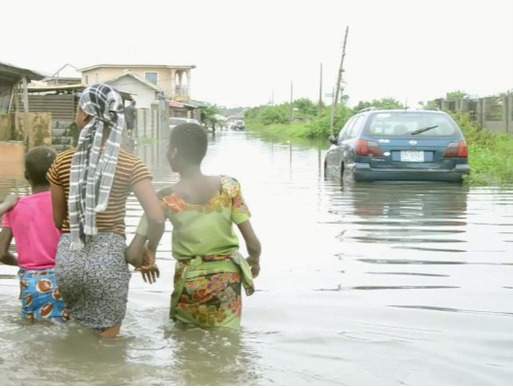
Another spell of heavy rainfall has left homes underwater, businesses shut and roads impassable, prompting renewed calls for lasting drainage infrastructure across the fast-growing Lagos corridor.
Communities such as Awoyaya, Lakowe, Bogije, Eleko, Gbetu and parts of Abijo have once again borne the brunt of flooding, with residents saying the annual crisis has become a painful routine. While emergency interventions are often rolled out after major downpours, many believe only a comprehensive drainage network can provide a permanent solution.
In Awoyaya, resident Adebimpe Ojo described the hardship families endure each time it rains.
“A few hours of rainfall can leave our streets flooded for several days,” she said. “Children miss school, cars get trapped, and many of us are forced to remain indoors until the water recedes.”
Transportation has also been severely affected. Commercial motorcyclists operating around the Lekki-Epe Expressway say flooded access roads have made it increasingly difficult to reach residential estates, leaving commuters stranded and disrupting daily economic activities.
“People often have to wade through dirty floodwater before they can reach the expressway,” said Ibrahim Musa, an Okada rider. “Sometimes customers cancel their trips because they simply cannot get out of their neighbourhoods.”
Business owners say the financial impact is becoming unbearable.
At his grocery store in Bogije, Chukwudi Okeke said floodwater recently destroyed cartons of food items and beverages, adding to losses he has suffered over the past two rainy seasons.
“Instead of investing in growing my business, I’m spending money replacing damaged goods every year,” he lamented.
The recurring flooding comes at a time when Ibeju-Lekki is undergoing unprecedented development, driven by landmark projects including the Dangote Refinery, Lekki Deep Sea Port, Lekki Free Zone and numerous housing estates. While these investments are transforming the area into a major economic hub, residents argue that drainage infrastructure has failed to keep pace with rapid urban expansion.
Environmental experts attribute the flooding to a combination of natural and human-induced factors. Beyond the area’s low-lying coastal terrain, they point to blocked drainage channels, indiscriminate refuse disposal, construction on wetlands and unregulated land reclamation as key contributors to worsening flood conditions.
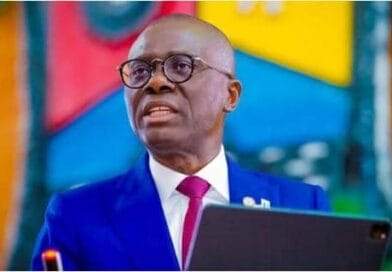
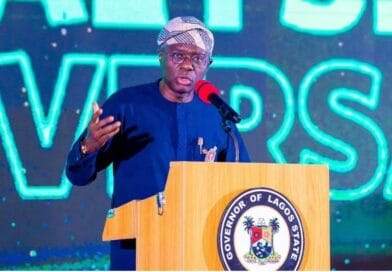
During a recent inspection of flood-affected areas, Lagos State Governor Babajide Sanwo-Olu acknowledged that the flooding was caused by both intense rainfall and activities obstructing natural waterways. He assured residents that the state government would intensify dredging operations, expand drainage channels and improve water discharge into nearby lagoons.
Despite the assurances, many residents believe piecemeal interventions will not solve the problem.
Community leaders say several drainage systems across the axis are either poorly designed, disconnected or too narrow to handle increasing volumes of stormwater, resulting in frequent overflows into residential streets.
“We need an integrated drainage master plan for the entire Ibeju-Lekki corridor,” said community leader Adewale Akinyemi. “Constructing isolated drains without linking them into a functional network simply transfers flooding from one community to another.”
The flooding is also raising public health concerns. Pools of stagnant water have become breeding grounds for mosquitoes, increasing the risk of malaria, while health experts warn of possible outbreaks of waterborne diseases due to contaminated floodwater.
Urban planning specialists believe addressing the challenge requires a combination of engineering solutions and stronger environmental enforcement. They recommend regular desilting of drainage systems, preservation of wetlands, stricter building approvals, wider stormwater channels and sustained public awareness campaigns against dumping refuse into drains.
Residents are also advocating for modern flood-control measures such as retention ponds, pumping stations and real-time flood monitoring systems to improve resilience as climate change contributes to more intense rainfall.
For families who have repeatedly repaired damaged homes and replaced destroyed belongings, patience is wearing thin.
“We don’t want relief materials after every flood,” said resident Funmilayo Adeoye. “We want proper drainage that will stop this cycle once and for all.”
As Ibeju-Lekki cements its position as one of Nigeria’s fastest-growing investment destinations, residents insist that world-class infrastructure must go beyond highways and industrial projects. They argue that without effective drainage systems, the promise of sustainable development will remain incomplete, and thousands of families will continue to pay the price each rainy season.