Dangote Plans Refinery Shares for Two Million Vulnerable Women
By Emmanuel Daniji
For millions of Nigerian women struggling to build financial security, owning shares in one of the country’s biggest industrial projects may soon become a possibility.
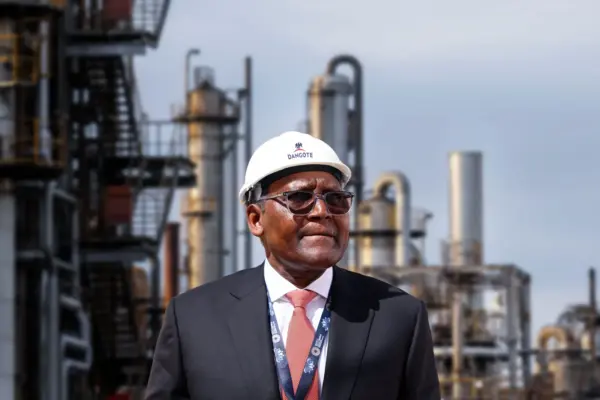
Aliko Dangote has announced plans to support about two million vulnerable women to acquire shares in Dangote Petroleum Refinery and Petrochemicals Limited, with widows and women affected by conflict among those being targeted.
Dangote disclosed the plan in New York during the 81st United Nations General Assembly while responding to a question from the Secretary to the Yobe State Government, Dr Goje Mohammed, on how public-private partnerships could help conflict-affected communities, particularly widows, build sustainable financial futures.
Under the proposed arrangement, the Aliko Dangote Foundation will work with state governments to identify and support vulnerable women who want to participate in the refinery’s planned share offering.
But the support is expected to go beyond helping the women purchase shares.
Dangote said the Foundation also plans to donate additional shares to some beneficiaries, giving them an asset they can hold as long-term savings.
“We are partnering with state governments to ensure that widows and other vulnerable women are able to buy shares in the refinery,” Dangote said.
“Beyond enabling them to buy shares, the foundation will also support them by donating additional shares that they can hold as savings for the future.”
He said the initiative is being designed to reach about two million women.
Giving vulnerable women a stake
The announcement comes as the Dangote Refinery’s planned IPO opens the door for Nigerians to become shareholders in the massive petroleum project.
The refinery’s public offer, described as a “People’s IPO”, is intended to broaden Nigerian participation in the ownership of the 700,000-barrel-per-day facility.
For women who have lost husbands, livelihoods or sources of income because of conflict and economic hardship, the proposed intervention could provide an opportunity to own a financial asset rather than receive only short-term assistance.
The initiative is particularly relevant to conflict-affected communities where widows and other vulnerable women have faced years of economic disruption.
Rather than limiting the intervention to cash or immediate relief, Dangote said the Foundation wants participating women to have an ownership stake that can potentially remain with them as a longer-term asset.
The Foundation is expected to work with state governments to determine how eligible women will participate in the programme.
The announcement, however, represents a plan for support, and details on the eligibility criteria, number of shares each beneficiary may receive and the mechanism for selecting beneficiaries have not been fully disclosed in the reports of Dangote’s announcement.
With the target set at about two million women, the proposed initiative could become a major link between Nigeria’s capital market and women who traditionally have had limited access to investment opportunities.
For the women eventually selected, the significance may go beyond owning a few shares. It could mean having an asset they can hold, save and potentially pass on as part of their financial future.