Lagos Residents Expect Safer Streets As 1,800 Officers Receive Training
By Sherif Salau
Lagos State Traffic Management Authority (LASTMA) officials directing traffic, Kick Against Indiscipline (KAI) personnel clearing sidewalks, or neighbourhood safety corps on patrol shape daily life as much as the city’s notorious congestion. That is why the recent graduation of 1,800 officers from a mandatory in-service training programme has stirred cautious hope that the streets may become not only safer, but also fairer.
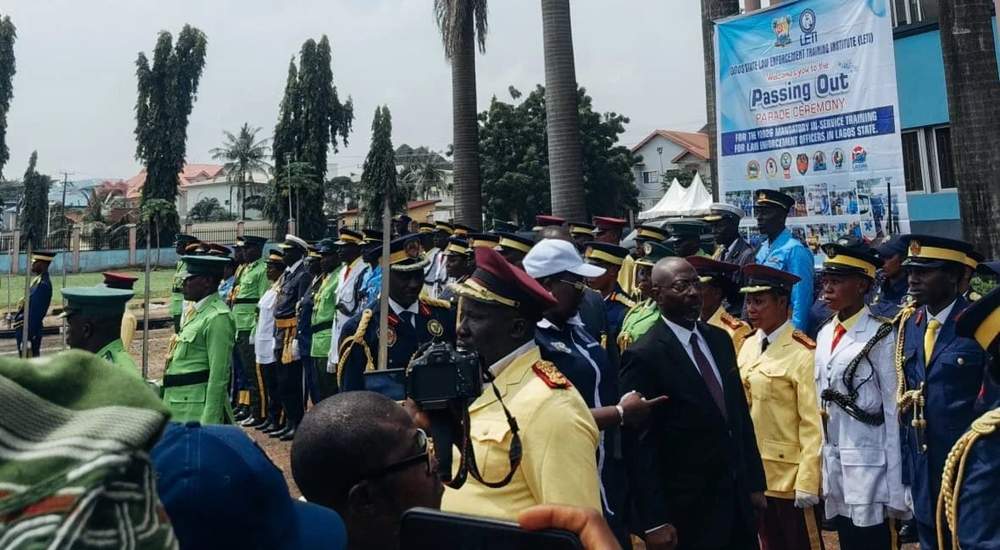
The officers, drawn from seven state agencies including the Lagos State Traffic Management Authority, Kick Against Indiscipline, Vehicle Inspection Service, Lagos Neighbourhood Safety Corps, Lagos State Parking Authority, Lagos State Waterways Authority and the Community Development Board, completed their 2026 training at the Lagos State Law Enforcement Training Institute. They were formally passed out on Thursday in Magodo, with Governor Babajide Sanwo-Olu, represented by Attorney-General Lawal Pedro, charging them to prioritise professionalism, integrity and respect for the public.
The governor’s message was pointed. Law enforcement, he said, is not simply about wielding authority. It is about earning trust through responsible conduct, impartiality and genuine service. He listed five principles the officers must live by: discipline and integrity, respect for the rule of law, professionalism and competence, respect for the public, and accountability. The real test, he added, will be how they behave once they return to the field.
For ordinary Lagosians, those words matter. Complaints about arbitrary stops, heavy-handed enforcement, verbal abuse or demands for unofficial payments have long coloured public perception of some state agencies. At the same time, residents also want visible order—clearer roads, safer neighbourhoods, cleaner public spaces and better-managed waterways. The dual demand is straightforward: officers who can maintain order without treating the public as the enemy.
The training itself covered more than rules and regulations. According to LETI Chief Executive Officer Taiwo Bonnie, the curriculum included technology, teamwork, inter-agency collaboration, stress management, health and wellness, first-response skills, cardiopulmonary resuscitation and physical fitness. The goal, she said, was to equip officers with both the technical capacity and the attitude required for modern urban enforcement.
Whether the investment translates into changed behaviour on the streets remains the open question. Residents will judge the officers not by the certificates they received in Magodo, but by the tone of the next traffic stop, the fairness of the next environmental sweep, and the professionalism shown during late-night neighbourhood patrols. Public cooperation, the governor noted, depends heavily on how officers conduct themselves. That cooperation is precisely what many Lagosians say has been missing.
In a city as dense and demanding as Lagos, small improvements in the quality of enforcement can make a noticeable difference to daily life. Safer streets and fairer treatment are not abstract policy goals; they are the practical expectations of people who navigate the city every day. The 1,800 newly trained officers now carry the responsibility of showing whether those expectations can begin to be met.