BOA Helps Women Farmers Access Finance, Inputs to Grow Businesses
For many women who farm across Nigeria, the hardest part of agriculture does not end when they secure a piece of land.
The real struggle often begins when they need money for seeds, fertiliser, equipment and labour, and later, when they have to find buyers willing to pay a fair price for their harvest.
The Bank of Agriculture (BOA) is now seeking to change that reality by expanding support for women farmers and moving beyond traditional lending to provide the inputs and market connections they need to turn their farms into sustainable businesses.
The initiative comes as Nigeria battles high food prices and intensifies efforts to increase domestic agricultural production.
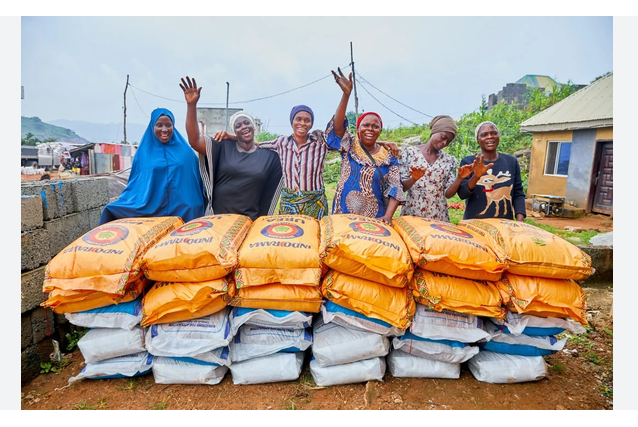
BOA has begun providing high-yield agricultural inputs directly to women’s farming groups, including a recent intervention in Bwari Area Council of the Federal Capital Territory.
For the bank, the objective is not simply to put money in farmers’ hands, but to ensure that the money translates into higher production and better incomes.
BOA Managing Director and Chief Executive Officer, Ayodeji Sotinrin, said farmers require more than loans to succeed. Access to quality inputs, mechanisation, extension services and dependable markets, he noted, must work together if agricultural financing is to produce meaningful results.
That approach is reflected in the bank’s broader financing strategy, including a ₦250 billion single-digit interest facility aimed at improving access to affordable credit for smallholder farmers.
BOA is also pursuing a ₦1.5 trillion recapitalisation programme, which is expected to strengthen its ability to provide more agricultural financing and reach more farmers.
For women farmers, the difference could be significant.
A loan received after the planting season may come too late to help. Fertiliser that arrives after crops have already struggled can limit yields, while a farmer without access to a reliable buyer may be forced to sell at a low price immediately after harvest.
The bank is therefore working to create a more connected agricultural support system, linking finance with inputs, extension services, aggregation and markets.
Through its Renewed Hope Smallholder Support and Value Chain Programme, BOA and its partners are targeting about two million smallholder farmers across Nigeria. The programme provides structured financing, agricultural inputs, extension support and weather information, while also seeking to reduce some of the risks farmers face in getting their produce to market.
Women are expected to make up about one-third of beneficiaries under the wider initiative, which is also expected to distribute more than 10 million bags of fertiliser.
The programme is being rolled out across several states. In Katsina, BOA’s 2026 wet-season intervention is targeting about 10,000 hectares involving more than 1,000 farmer cooperatives, with participating farmers receiving fertiliser support.
In Gombe, similar efforts are connecting farmers with improved seeds, fertiliser, crop-protection products and potential buyers.
The timing is significant for Nigeria, where food production has become an economic and social priority.
The Federal Government is targeting a sharp increase in grain production, with plans to raise annual output from about 11 million tonnes to 25 million tonnes. Expanding access to inputs and affordable financing is expected to play a role in achieving that ambition.
Women are particularly important to that equation because they make up a substantial part of Nigeria’s agricultural workforce but often face barriers to finance, land, technology and markets.
Government efforts are increasingly recognising that gap.
In May, the Federal Government validated a revised national gender policy for agrifood systems aimed at improving women’s access to resources, opportunities and decision-making in agriculture.
A month later, the Federal Ministry of Women Affairs and Social Development and BOA began working together on measures to expand women’s access to finance, land, agro-processing facilities, markets and agricultural value chains.
The emerging approach represents a shift from simply asking whether farmers can access loans to asking whether they have everything required to succeed once they receive financing.
For a woman growing maize, rice or vegetables, success may depend on having quality seeds before planting, fertiliser at the right time, affordable credit during production and a buyer waiting when the harvest arrives.
That is where BOA’s strategy could make its biggest difference.
The real test, however, will not be the size of the financing announced or the number of programmes launched. It will be whether women farmers can produce more, reduce losses, secure better prices and ultimately take more money home to their families.
As Nigeria searches for a sustainable response to rising food costs and food insecurity, empowering the women who work its farms could prove to be more than an agricultural intervention.
It could be an investment in household incomes, rural businesses and the country’s food future.
For thousands of women farmers, the hope is simple: access to the resources they need to farm more productively, sell more profitably and turn agriculture into a stronger source of livelihood.