New US Consul General in Lagos Signals Stronger Business Ties
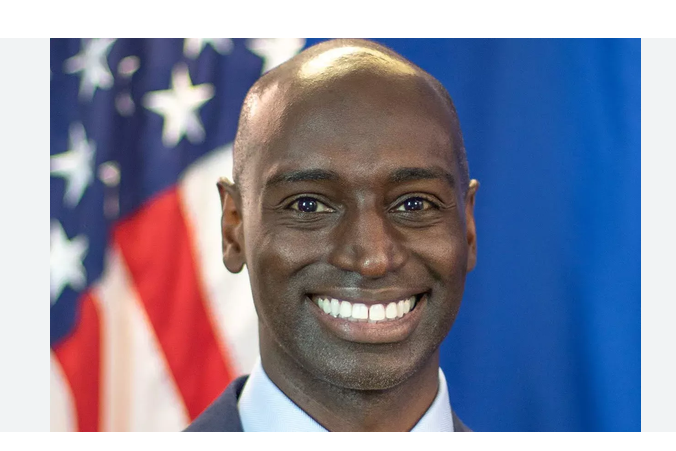
The United States Mission in Nigeria has announced Brandon Hudspeth as its new Consul General in Lagos, beginning a three-year assignment as the senior US government representative across 17 states in southern Nigeria.
The United States’ appointment of a new Consul General in Lagos is coming at a potentially important moment for relations between America and Nigeria’s commercial capital, with trade, investment, technology and the creative economy emerging as key areas for deeper cooperation.
Hudspeth succeeds Rick Swart, who retired from the US Foreign Service in July. His appointment is also a return to familiar territory, having previously served as Political-Economic Section Chief at the US Consulate in Lagos between 2020 and 2022.
His return comes as Washington places increasing emphasis on trade and investment in its engagement with Nigeria, while Lagos is positioning itself more aggressively as a gateway for international capital and business into Africa.
In his initial remarks, Hudspeth said he was pleased to return to Lagos and highlighted the entrepreneurial connection between Nigerians and Americans. He also identified trade, investment, innovation, technology and the creative industries among the areas where he hopes to strengthen cooperation.
The priorities align closely with Lagos’ own economic ambitions.
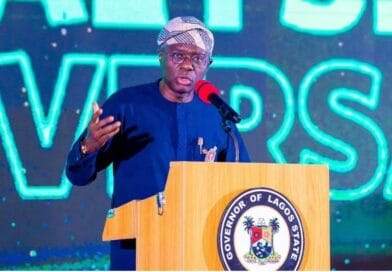
At the Invest Lagos 3.0 summit held in June 2026, the state presented itself as “The Business Gateway to Africa”, placing technology and innovation, infrastructure, manufacturing, creative industries, energy and sustainability among the areas for investment. The summit also showcased opportunities around the Lagos Free Zone, Dangote Fertilizer Plant, Dangote Petroleum Refinery and other major industrial projects.
That convergence could provide an opportunity for Lagos and the US Consulate to move the relationship beyond traditional diplomatic engagement and towards partnerships that produce measurable economic results.
For Lagos businesses, the potential gains are significant.
Technology companies, fintech firms, manufacturers, exporters and creative businesses could benefit from stronger connections with American investors, companies and markets. A Lagos-based software company, for instance, could seek American clients or technology partners, while a local fashion or food-processing company could explore distribution and export opportunities in the United States.
The opportunity is particularly relevant to Lagos’ technology ecosystem. The state has been promoting fintech and technology as one of its strongest competitive advantages, while its large pool of young professionals and entrepreneurs provides a potential talent base for companies looking to expand across Africa.
The creative economy could offer another important bridge between the two sides.
Nigerian music, film and fashion already enjoy considerable visibility in the United States, but the commercial value of that cultural influence can go much further. Stronger cooperation in areas such as film and music co-production, digital rights, streaming, intellectual property, gaming, fashion and content creation could help Nigerian businesses turn international popularity into sustainable revenue.
A US Mission-backed initiative focused on Nigeria’s creative, digital and innovation economy has already identified intellectual property infrastructure, streaming and platform monetisation, film, music and fashion market access, gaming, emerging technology and content creation as priority areas for stronger commercial ties.
For Lagos, this could mean moving from exporting talent to exporting businesses.
A successful Nigerian music brand could generate licensing income in the US. A Lagos film company could secure international distribution or co-production opportunities. A fashion label could build relationships with American retailers, while technology companies could use US partnerships to scale their products internationally.
The potential benefits also extend to smaller businesses.
If an SME secures an American buyer, the effect may spread beyond the company itself to local manufacturers, logistics providers, consultants, packaging companies and other suppliers. More exports could generate foreign exchange, while new investment could create jobs and expose local businesses to international standards and technology.
The relationship is already supported by a substantial American presence in Lagos.
The United States is constructing a new Consulate General complex at Eko Atlantic, with a project budget of $567 million and estimated local investment of $95 million. The facility is expected to be completed in 2027 and is being developed as part of the US government’s long-term diplomatic engagement with Nigeria.
The project itself illustrates the economic footprint that deeper US-Lagos relations can create, from construction and professional services to hospitality, transportation and other businesses supporting the diplomatic community.
The timing is also significant because Washington has recently reaffirmed its interest in expanding its economic relationship with Nigeria.
During celebrations marking the United States’ 250th anniversary in Lagos in July, US Chargé d’Affaires Keith Heffern said the US was committed to deepening trade, investment, security and cultural relations with Nigeria. He described Lagos as a city whose energy, innovation and entrepreneurial spirit could play an important role in expanding commercial ties between the two countries.
But stronger diplomatic relations alone will not guarantee more investment.
Lagos will need to make its business environment increasingly attractive to international investors by improving infrastructure, transportation, electricity supply, regulatory predictability and the ease of doing business. Investors looking at Lagos are competing not only within Nigeria but with other African and global business centres seeking the same capital.
That makes the new Consul General’s tenure an opportunity for both sides.
For Washington, Lagos offers a large consumer market, a deep entrepreneurial ecosystem and a gateway into wider African opportunities. For Lagos, stronger US engagement could provide access to capital, technology, international expertise and new markets.
The challenge is to turn those possibilities into actual commercial relationships.
The success of Hudspeth’s three-year assignment may therefore be measured not only by diplomatic meetings and official engagements, but by the number of businesses that secure new partners