Lagos Explains Waste Recovery Plan as 5,000 Jobs Targeted for Ikorodu, Badagry
Kehinde Adeleye
The Lagos State Government has assured residents of Ikorodu and Badagry that proposed waste recovery facilities in Agbowa and Erekiti will not become conventional dumpsites, as it seeks to address concerns over the projects while highlighting their potential to create about 5,000 direct and indirect jobs.
The government began consultations with landowners, traditional rulers and community leaders in the 2 areas as part of efforts to secure community support for the proposed Material Recovery Facilities (MRFs).
The facilities are expected to form part of Lagos’ transition from conventional waste disposal to a circular economy where waste is recovered, recycled and converted into economic value.
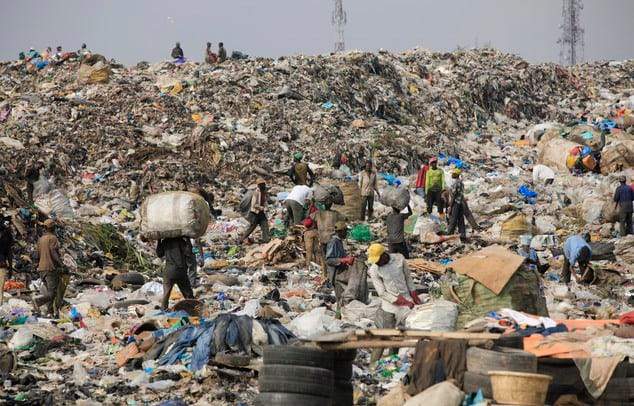
Speaking at a stakeholders’ meeting in Alausa, the Permanent Secretary, Office of Drainage Services, Mobolaji Gaji, said the need for a more sustainable approach had become urgent as Lagos generates more than 13,000 tonnes of municipal waste every day.
Gaji explained that the proposed facilities would receive, sort and recover materials including plastics, metals, paper and organic waste for recycling and further processing.
“This is not just about constructing infrastructure. It is about building a sustainable waste-management value chain that will create jobs, generate wealth and reduce our dependence on landfills,” he said.
He stressed that the proposed facilities would be enclosed and environmentally controlled plants rather than open dumpsites, assuring host communities that the government would put measures in place to address environmental and social concerns.
“There is no need for apprehension. These facilities are not dump sites,” Gaji said.
He added that stakeholder representation and a grievance-redress mechanism would be established to ensure that concerns raised by residents could be addressed.
The Managing Director of the Lagos Waste Management Authority, LAWMA, Muyiwa Gbadegesin, said the projects were expected to generate about 5,000 direct and indirect jobs, with young people and women among those expected to benefit.
He listed potential employment opportunities in plant operations, maintenance, environmental monitoring, security, cleaning and materials handling.
Gbadegesin also said businesses in the host communities could benefit from recycling, compost production, logistics and equipment servicing.
Beyond job creation, the facilities are expected to introduce stronger environmental controls, including controlled access, buffer zones, storm-water separation, leachate management, fire protection and regulated traffic movement.
He said open burning, uncontrolled dumping and unsafe waste picking would not be allowed at the facilities.
An engineer representing Zoomlion Nigeria Ltd., Francis Akoto, said each location would have a Material Recovery Facility and Transfer Loading Station with a processing capacity of about 2,400 tonnes of waste daily.
According to him, organic waste could be processed into compost, while plastics and metals would be recovered for recycling.
The facilities would also be enclosed and equipped with odour-control systems, he said.
Akoto said the projects could help reduce roadside truck queues, unpleasant odours, rodents and mosquitoes while limiting the quantity of waste finding its way into drainage channels.
He added that existing waste pickers would not necessarily be excluded, as they could be integrated into the formal waste management system through training, protective equipment and paid employment.
The Managing Director of Zoomlion Nigeria, Habiba Abubakar, said selected representatives from Ikorodu and Badagry would be taken to existing facilities operated by the company to see how the system works.
“We don’t just talk, we do,” she said.
Gaji urged traditional rulers, community leaders, youth groups, landowners and residents to support the projects, stressing that cooperation among the government, developers and host communities would be critical to their success.
The consultations are coming as Lagos continues to face the challenge of managing its huge daily municipal waste generation, with the government seeking to move from simply disposing of waste to recovering materials and creating economic opportunities from them.