Smuggled Noodles, Rice and Drugs: Who Benefits From Nigeria’s Porous Borders?
By Kehinde Adeleye
The seizure of expired and decomposing noodles, foreign rice, illicit drugs, cigarettes and other prohibited goods at the Seme border on Tuesday has once again exposed the scale of Nigeria’s smuggling problem and raised questions about how such products continue to find their way into the country despite years of border enforcement, public sensitisation and anti-smuggling campaigns.
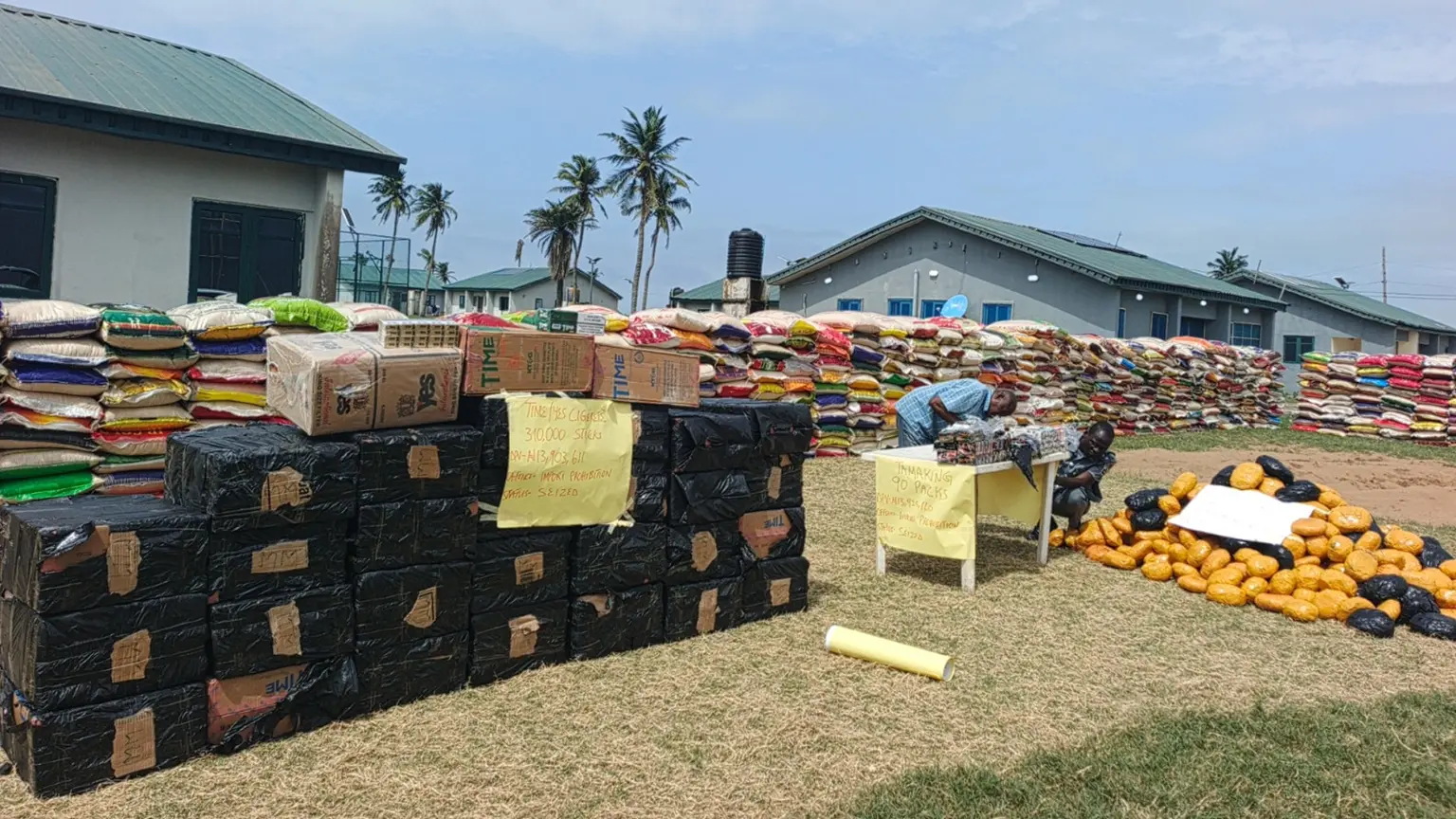
The Nigeria Customs Service, Seme Area Command, intercepted consignments with a combined Duty Paid Value of ₦365.16 million during anti-smuggling operations along the Nigeria-Benin border.
Among the items seized were 1,306 sacks of expired noodles weighing 50kg each, 1,268 bags of foreign parboiled rice, cannabis, pharmaceutical products, 310,000 sticks of cigarettes and 3,300 cartridges of explosive materials.
The seizure is significant not only because of the value of the intercepted goods, but also because of what it reveals about the networks behind the movement of prohibited products into Nigeria.
According to the Customs Area Controller, Comptroller Abdullahi Shuaibu Kaila, the noodles were already deteriorating when they were intercepted, while intelligence available to the command suggested that the products were allegedly intended to be repackaged and relabelled for sale to unsuspecting Nigerians.
That raises a critical consumer safety question: how many consignments of expired or improperly stored food products enter the country undetected and eventually find their way into markets and shops?
For consumers, the danger goes beyond the attraction of cheaper goods. Expired or poorly handled food products can pose serious health risks, particularly where expiry dates, storage conditions or the original condition of the products are concealed.
But the bigger question is how these products continue to reach Nigeria in the first place.
The repeated interception of large consignments along the Nigeria-Benin border suggests that smuggling remains a lucrative business, with organised networks willing to take substantial risks because there is a ready market for the goods once they enter the country.
The foreign rice seized by Customs provides another example.
Despite years of government warnings, public sensitisation and enforcement efforts aimed at discouraging the illegal importation of foreign rice, large quantities continue to enter Nigeria through unauthorised routes.
The question is therefore no longer simply whether smuggling is taking place, but who is financing it, who moves the goods through illegal routes, who receives them after they cross the border and who ultimately profits from their sale.
There is also the question of what happens to consignments that escape detection.
Customs seizures represent successful interceptions, but they can also provide a glimpse into a much larger trade. For every consignment intercepted, there is a need to understand whether others are getting through and how they eventually enter the formal marketplace.
Public sensitisation has also failed to completely eliminate demand for smuggled goods.
Nigerians have repeatedly been warned about the economic, health and security consequences of smuggling, yet cheaper foreign products continue to attract consumers, particularly in an economy where purchasing power remains under pressure.
But consumer demand is only one part of the chain.
Behind the products are financiers, transporters, distributors, traders and other intermediaries who may profit at different stages before the goods reach consumers.
The trade also creates an uneven playing field for legitimate businesses.
Manufacturers and lawful importers that pay applicable duties and taxes and comply with regulatory requirements must compete against products that may have entered the country without paying the same costs or undergoing the same checks.
That can undermine legitimate businesses, discourage investment and reduce government revenue.
The seizure of 3,300 cartridges of explosive materials and illicit drugs at the same border adds another serious dimension to the problem.
While smuggled food and consumer goods raise concerns about health and economic consequences, the movement of explosives and controlled substances through illegal routes also presents potential security risks.
The challenge, therefore, goes beyond the number of seizures recorded by Customs.
Nigeria must also confront the networks that finance smuggling, the illegal routes through which the goods enter the country, the distribution channels that move them into major markets and the people who continue to profit from the trade.
The Seme seizure may have prevented potentially harmful products from reaching Nigerian consumers, but it also raises a broader question: if such a large quantity of expired noodles, foreign rice, illicit drugs and other prohibited goods can be assembled for movement into Nigeria, how much is getting through undetected?
Until that question is answered, the seizure of one consignment may only be a temporary disruption to a trade that continues to thrive on Nigeria’s porous borders and the demand for cheaper goods.