Lagos Moves to Phase Out Traditional Danfo System as NURTW, RTEAN Sign Historic Deal
For generations, the yellow danfo bus has been more than just a means of transportation. It has become one of the strongest symbols of Lagos—a city where millions of residents rely daily on the colourful minibuses to navigate one of Africa’s busiest megacities.
From Oshodi to CMS, Mile 2 to Ikorodu, Agege to Obalende, the iconic buses have transported workers, traders, students and visitors through the ever-busy streets of Lagos for decades. Their conductors, colourful slang, loud horns and spontaneous bus-stop calls have become an unmistakable part of the city’s identity.
But that familiar chapter may soon be giving way to a new era.
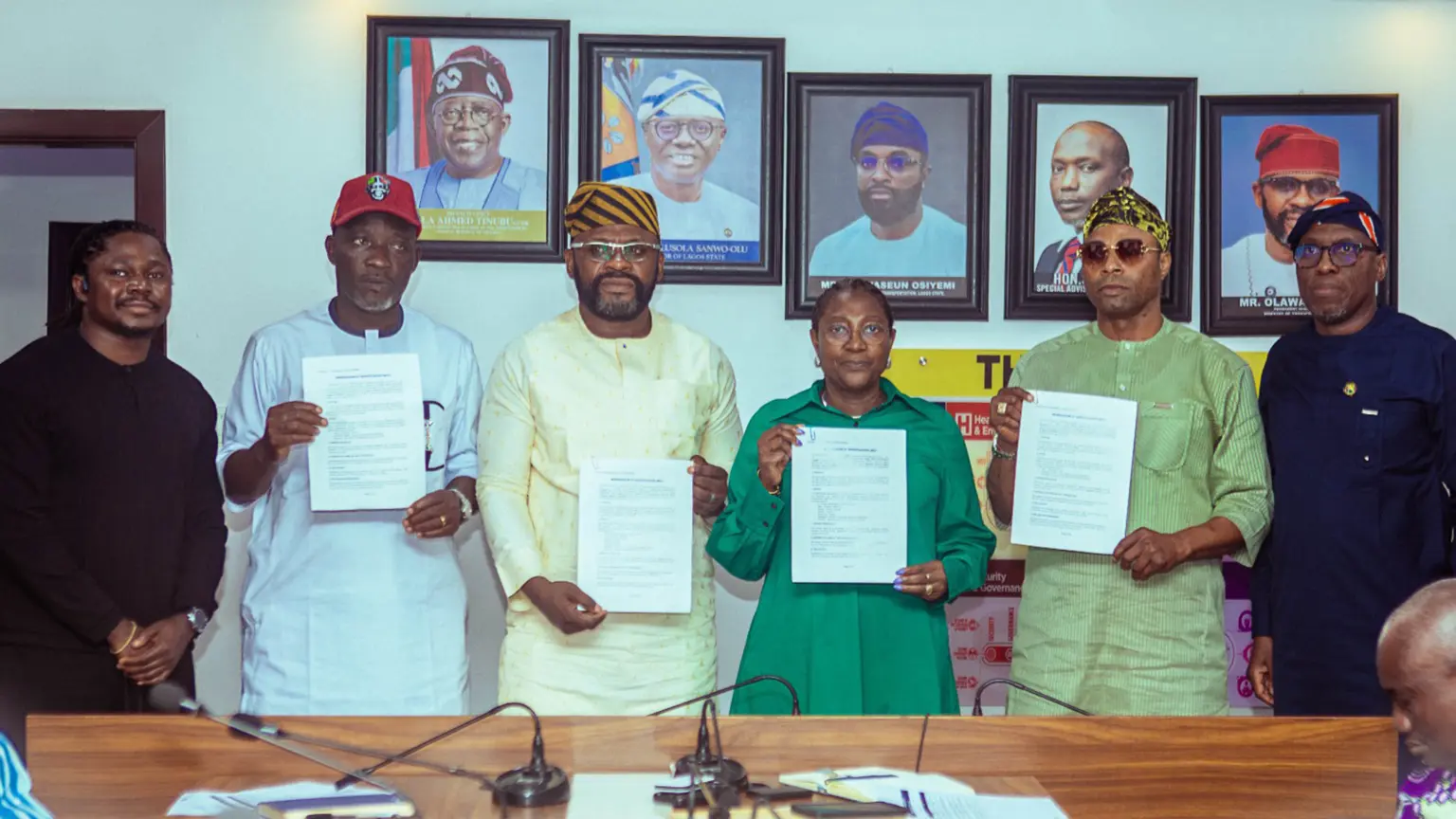
In what is being described as one of the most significant reforms of public transportation in recent years, the Nigeria Union of Road Transport Workers (NURTW) and the Road Transport Employers Association of Nigeria (RTEAN) have signed a landmark Memorandum of Understanding (MoU) with the Lagos State Government to participate in the Lagos State Bus Industry Transition Programme (BITP).
The agreement signals the beginning of a comprehensive transformation of the state’s public bus transportation system, with the aim of integrating the largely informal danfo operations into a safer, better organised and digitally driven transport network.
Speaking during the signing ceremony, the Permanent Secretary, Lagos State Ministry of Transportation, Mr. Olawale Musa, described the agreement as a historic milestone that demonstrates the commitment of both government and transport stakeholders to building a transportation system that meets global standards.
According to him, the initiative is expected to improve safety, operational efficiency, service quality and commuter experience while creating a more sustainable public transport system for the rapidly growing population of Lagos.
The programme is being implemented by the Lagos Metropolitan Area Transport Authority (LAMATA), which has spent more than two years engaging transport unions, operators and other stakeholders before reaching the agreement.
The Memorandum of Understanding was signed by the Lagos State Chairman of RTEAN, Samson Ajala Adepeju, alongside the association’s Secretary, Bolaji Kawojue, while the NURTW was represented by its Chairman, Mustapha Adekunle Sego, and Secretary, Usman O. Teslim. Representing the Lagos State Government were Permanent Secretary Olawale Musa and LAMATA Managing Director, Mrs. Abimbola Akinajo.
What Will Change?
Under the Bus Industry Transition Programme, commercial bus operations across Lagos will gradually migrate from the largely informal system to a structured franchise model similar to what operates in many developed cities.
Rather than individual operators competing for passengers, transport unions will be reorganised into cooperative societies capable of managing fleets under regulated franchises.
The programme also introduces digital fare payment systems, improved driver training, route regulation, higher vehicle standards and stronger government oversight.
LAMATA will continue to regulate routes and monitor compliance to ensure uniform service delivery across the state.
As part of the first phase, four major Quality Bus Corridors have already been identified for implementation. They include Iju-Ishaga–Abule Egba, Ketu–Alapere–Akanimodo, Iyana-Iba–Igando–Iyana-Ipaja, and Ojuelegba–Lawanson–Cele.
Ultimately, the programme is expected to cover all eight Quality Bus Corridors planned across Lagos State.
A 30-Month Journey
LAMATA Managing Director, Mrs. Abimbola Akinajo, disclosed that the agreement was the product of more than 30 months of consultations between the government and transport unions.
She described the partnership as an unprecedented collaboration capable of becoming a model for cities across Africa seeking to modernise public transportation without displacing existing operators.
According to her, the objective is not to eliminate transport workers but to integrate them into a more organised and profitable system.
“This will become a baseline for other cities because it will be a verifiable example of a handshake between government and the unions,” she said.
She added that formalising the transport sector should not be mistaken for marginalising operators.
“Formalisation should not be construed as strangulation. When we collaborate, the result will be formidable and capable of being replicated across Nigeria and even internationally.”
What It Means for Lagosians
For millions of daily commuters, the reforms could significantly improve the quality of public transportation.
Residents are expected to benefit from safer buses, better-maintained vehicles, professionally trained drivers, more predictable services, digital ticketing, improved route management and reduced operational chaos.
The initiative is also expected to reduce road congestion, attract greater private sector investment into public transportation and improve environmental sustainability through more efficient fleet management.
Perhaps most importantly, the programme seeks to preserve the livelihoods of thousands of drivers and conductors by bringing them into the formal transport economy instead of excluding them from the system.
A New Chapter for Lagos Transport
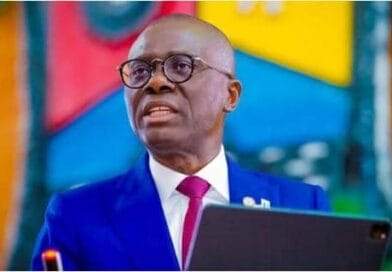
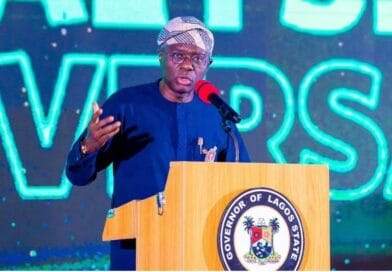
The signing of the Memorandum of Understanding represents another major milestone in Governor Babajide Sanwo-Olu’s transportation reform agenda.
If successfully implemented, the Bus Industry Transition Programme could fundamentally reshape how millions of Lagos residents commute every day while gradually transforming the iconic danfo system into a modern, technology-driven public transport network fit for Africa’s largest city.
For a city long defined by the sound of bus conductors calling destinations and the unmistakable sight of yellow minibuses weaving through traffic, the agreement signals not necessarily the end of the danfo, but the beginning of its evolution into a safer, smarter and more sustainable transport system.