TIME FOR LAGOS PURPLE LINE: MY KARA STORY
TIME FOR LAGOS PURPLE LINE: MY KARA STORY
By Kunle Awosiyan
In less than 24 hours, the visual of the Lagos lockdown I posted on Facebook had generated more than 2,500 likes, 141 comments and 225 shares.
Those figures tell a story. They speak of the pain of commuters and motorists, some of whom were forced to spend the night on the Lagos-Ibadan Expressway because of the traffic gridlock around Kara.
The story also goes beyond traffic. It raises questions about the quality and management of the ongoing repair of expansion joints around Kara. It raises questions about traffic management and the preparedness of the relevant road agencies.
And, more fundamentally, it reminds us of the recurring failure to provide a durable solution to a problem that has plagued one of Nigeria’s busiest highways for years.
For those of us who ply the Lagos-Ibadan Expressway regularly, the condition of some of the expansion joints is becoming increasingly difficult to ignore.
On Tuesday, I had my own Kara story. If I had stayed in the office for just one more hour, I might have found myself spending the night in traffic.
Thankfully, I left early enough. Yet what should have been an ordinary journey from Berger to Magboro became a three-hour ordeal.
Three hours for a journey that, under normal conditions, could take about eight minutes. And I did not escape without a cost. While trying to manoeuvre through the heavy traffic, I lost a portion of my car roof rack.
That is what Lagos traffic has become for millions of residents: not merely transportation, but endurance. For the commuter, every journey carries a calculation and questions about how to get home and how to go to work?
Coupling with the fuel that would be consumed in traffic one will always think twice before jumping into the car.
From Mowe and the Ogun State border through Isheri, Omole, Ogba, Agege and Iyana-Ipaja, into the sprawling communities of Alimosho and onward to LASU, Okokomaiko and Ojo, millions of people depend overwhelmingly on roads to move around the Lagos metropolitan area.
And that is why the conversation about the Lagos Purple Line is becoming increasingly important.
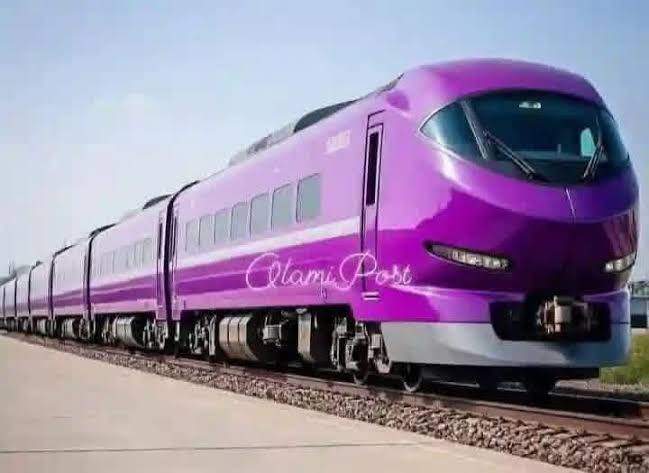
The Purple Line is one of the proposed corridors in the Lagos Rail Mass Transit network being developed by the Lagos Metropolitan Area Transport Authority, LAMATA.
Unlike the Blue and Red lines, which have entered passenger service, the Purple Line remains a project under development.
But its proposed route makes it particularly significant.
The corridor is planned to stretch from the Redemption Camp/Mowe axis through several densely populated communities before reaching the Ojo/Volkswagen area on the Lagos-Badagry corridor.
The proposed alignment broadly covers:
Redemption Camp/Mowe – Long Bridge – Isheri – Toll Gate – Omole – Ogba – Agege – Iyana-Ipaja – Isheri-Osun – Igando – Iba – LASU – Okokomaiko/Volkswagen – Ojo.
LAMATA project materials have put the corridor at about 57 kilometres, with 17 proposed stations, while some Lagos State investment documents have described it as approximately 60 kilometres.
The figures may evolve as the project alignment develops. But the central idea remains the same.
The Purple Line is designed to create a railway spine across a huge and heavily populated section of the Lagos metropolitan area.
And that matters because the communities along this corridor are not insignificant suburbs, they are some of the places where Lagos lives, works, studies and does business.
Consider the commuter leaving Mowe early in the morning.
The journey into Lagos can become a daily battle against congestion.
Consider a student travelling towards Lagos State University.
A traffic delay can mean missing a lecture, examination or appointment.
Consider the trader moving between Ojo, Alaba, Okokomaiko, Iyana-Ipaja and other commercial centres. Every hour spent in traffic has an economic cost.
Every litre of fuel burnt while a vehicle remains stationary is money lost.
Every day a worker spends several hours commuting is time taken away from family, business and rest.
This is why the Purple Line should not be viewed simply as another railway project.
It represents the possibility of changing the geography of movement in Lagos.
For years, residents have depended heavily on buses, tricycles, motorcycles and private vehicles.
A functioning rail corridor would introduce another transportation option.
And its impact could extend beyond the train itself.
The proposed Purple Line connection around the Redemption Camp/Mowe axis gives it a Lagos-Ogun metropolitan dimension.
Every day, large numbers of people cross the Lagos-Ogun boundary for employment, education, trade and other activities.
The Lagos-Ibadan Expressway carries an enormous share of that movement.
And Kara has become one of the painful symbols of what happens when road infrastructure is asked to carry virtually everything.
When there is no repair work, a minor accident on this road sometimes leads to nightmare, mostly around Otedola bridge orong bridge.
Perhaps my three-hour journey from Berger to Magboro is only one man’s experience, the thousands of reactions to the video I posted suggest that it resonates with many others.
The Federal, Lagos and Ogun government cannot continue to depend almost entirely on roads to move its growing population.
Road expansion, bridge repairs, better traffic management and stronger enforcement remain necessary.
The Blue Line has demonstrated that rail can become part of everyday Lagos transportation. The Red Line has expanded that network. The Purple Line, if delivered according to its evolving plans, could extend that transformation into communities that have long been defined by road congestion.
The question, therefore, is no longer simply whether Lagos needs another railway.The question is how quickly the city can move from planning to delivery.
Because for the commuter trapped at Kara, a railway that exists only on a project map offers no immediate relief.
For the student heading to LASU, the trader travelling to Ojo, the worker coming from Mowe and the millions moving across Lagos every day, time is the real currency of transportation.
My Kara story lasted three hours.
For millions of Lagosians, however, the Kara story is repeated every day, at different locations and in different forms.
That is why the Purple Line deserves more than another mention in a transportation plan.