Shallipopi Accuses Former Label Boss Dapper of Forgery, Catalogue Sale
By Emmanuel Daniji
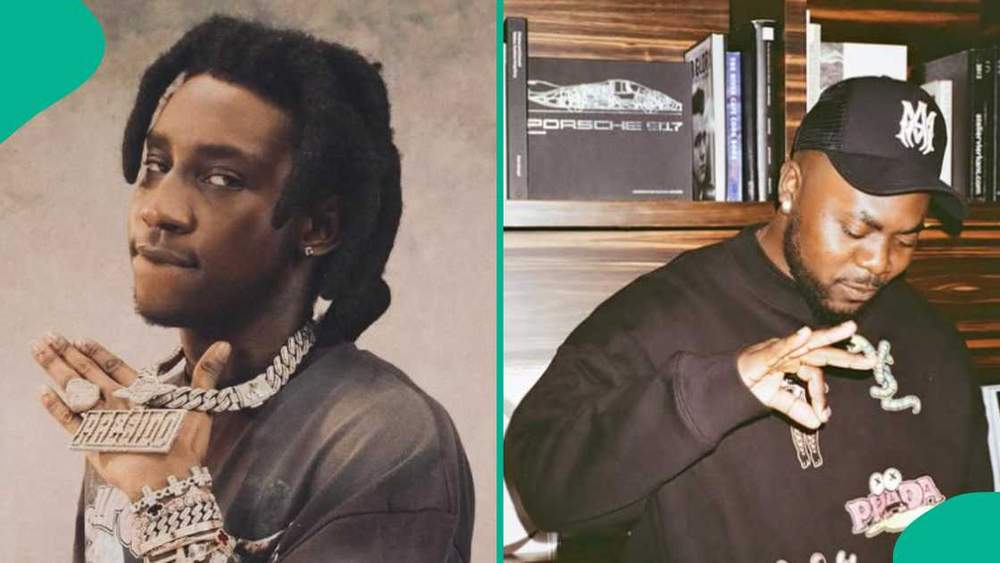
Nigerian singer Crown Uzama, popularly known as Shallipopi, has made fresh and serious allegations against his former record label boss, Damilola Akinwunmi, the CEO of Dapper Music, accusing him of allegedly forging his signature and selling his music catalogue to a foreign company without his consent.
The singer made the allegations in a statement shared on his X account on Saturday, reopening a dispute that has previously attracted considerable attention within Nigeria’s music industry.
According to Shallipopi, his agreement with Dapper in 2023 was strictly a management deal and did not authorise the 10-year distribution arrangement he claims was subsequently presented.
The singer alleged that his signature was forged and placed on a 10-year distribution contract despite the fact that he was already using digital music distribution platform DistroKid.
‘He Forged My Signature’
Shallipopi claimed that the alleged conduct went beyond the disputed distribution agreement.
According to him, Dapper allegedly used the same forged signature to enter into an agreement with international music company Virgin Music Group involving his catalogue.
“In 2023 I signed to Dapper management only, he forge my signature and put it on a 10 years distribution contract even when I already use Distrokid,” Shallipopi alleged.
“He also went ahead to forge my signature and sign with an international label called Virgin Music Group.”
The singer further alleged that money was received from the foreign company in connection with his catalogue but was not remitted to him.
‘He Told Me My Money Is in the Future’
Shallipopi also alleged that Dapper retained earnings generated from his music while encouraging him to continue working with the promise that greater financial rewards would come later.
“I might be from the trenches but I’m not the dumb type,” he said.
“Dapper went ahead to collect money from Virgin Music Group and he put all those money in his pocket and told me to work more, more and more that my money is in the future!”
The allegation, if established, could raise serious questions about contractual authority, ownership of music rights, revenue accounting and the relationship between artists and management or distribution companies.
Shallipopi Calls for Investigation
The singer said he was prepared to take the matter beyond social media, calling on Nigeria’s anti-corruption authorities and government to investigate the allegations.
“I want the EFCC and the entire government, the entire media and everyone in Africa as a whole take this matter very serious,” he said.
His demand places the dispute squarely within a wider conversation about the business side of Nigeria’s rapidly expanding music industry.
As Nigerian artists increasingly enter international licensing, distribution and publishing arrangements, disputes over contracts and ownership of recordings have become increasingly consequential.
Allegations Yet to Be Established
It is important to note that the claims made by Shallipopi are allegations and have not been independently established.
Dapper Music had not, at the time of reporting, publicly responded to the singer’s latest accusations.
The response from Dapper will likely be crucial in determining the other side of the dispute, particularly regarding the alleged 10-year contract, the authenticity of the signatures, the relationship with Virgin Music Group and the handling of revenue from Shallipopi’s catalogue.
For now, the controversy has once again placed the often-hidden business side of music under the spotlight.
Behind every hit song, stream and viral performance is a network of contracts, rights and financial agreements.
And Shallipopi’s latest accusations raise a fundamental question for artists and the industry alike:
When an artist signs a contract, does the artist truly understand what they have signed—and who ultimately controls the music they create?