
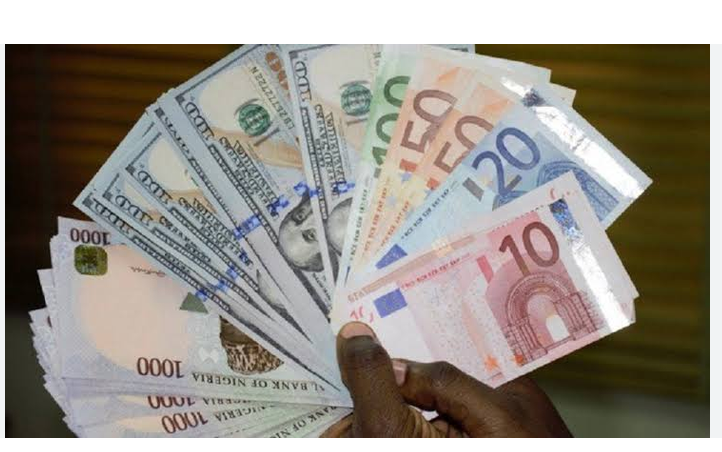
Naira Strengthens Against Euro as CBN FX Reforms Steady Market
The naira is showing signs of renewed stability against the euro, with the European currency hovering below ₦1,580 amid the Central Bank of Nigeria’s ongoing efforts to deepen liquidity and improve transparency in the foreign exchange market.
The euro is currently trading at around ₦1,573.10, keeping it below the ₦1,580 psychological barrier and signalling a period of relative calm in a market that has experienced significant volatility in recent years.
The development comes as the CBN continues to implement reforms to create a more transparent and market-driven foreign exchange system.
Among the key changes is the consolidation of Nigeria’s multiple FX windows into a unified market framework, alongside the adoption of a willing-buyer, willing-seller model. The reforms were designed to narrow arbitrage opportunities, improve price discovery and strengthen confidence in the naira.
The apex bank has also been scaling back its reliance on direct market intervention. Its 2025 annual report showed a substantial decline in expenditure on over-the-counter FX futures, underscoring a gradual shift towards a market-determined exchange-rate regime.
Efforts to improve access to foreign currency at the retail end have also continued, with licensed Bureau de Change operators permitted to source FX through authorised dealer banks at prevailing market rates.
The CBN further reinforced the regulatory framework in May 2026 with the release of the fourth edition of its Foreign Exchange Manual, which it said was aimed at improving transparency, efficiency and credibility across the FX market.
Beyond monetary policy, the naira’s performance will continue to depend on Nigeria’s external earnings and demand for foreign currency. Oil revenues, diaspora remittances, foreign investment inflows and import demand remain critical factors that could influence the currency in the months ahead.
But while greater FX stability offers some relief, the impact is yet to be fully felt by households. Nigerians continue to face elevated living costs after years of inflation and a prolonged period of currency weakness.
The naira’s ability to maintain its recent gains will therefore depend on sustained dollar liquidity, stronger market confidence and consistent implementation of the CBN’s reforms.
For now, the euro’s retreat below ₦1,580 offers another indication that Nigeria’s FX market may be moving towards a more stable phase after years of sharp currency swings.