Explainer: Who Can Be Arrested Under Lagos’ Proposed Street Begging Law?
Kehinde Adeleye
If you have driven through Lagos, you have probably encountered them.
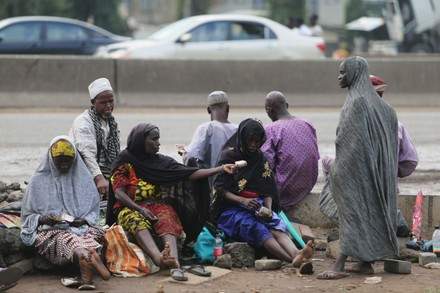
A person knocking on your car window at a traffic light. A child moving from one vehicle to another. Someone approaching motorists at a busy junction. People sitting around a pedestrian bridge or gathering at a motor park asking passers-by for money.
Now, the Lagos State House of Assembly is considering legislation that could change how such activities are treated in the state.
The proposed Street Begging and Street Urchins (Prohibition, Prevention and Rehabilitation) Law of Lagos State 2026 seeks to prohibit street begging and certain activities associated with street urchins while introducing penalties, enforcement measures and rehabilitation programmes.
But what exactly does the proposed law mean?
Is street begging already banned by this new law? No, not yet. This is important.
The N200,000 fine and two-year jail term being discussed are contained in a proposed bill, not a new law that has already taken effect.
The bill was presented at a public hearing at the Lateef Jakande Auditorium, Alausa, Ikeja, where lawmakers, lawyers, human rights advocates, civil society organisations and members of the public had the opportunity to make recommendations.
The Assembly will consider the submissions before the bill progresses through the remaining stages of the legislative process.
If passed by the House and assented to by the governor, the relevant provisions would then become enforceable.
So, what is Lagos trying to prohibit?
The proposed legislation seeks to prohibit street begging and related activities in public places.
The places specifically mentioned include motor parks, traffic intersections, pedestrian bridges and open markets.
But the bill goes beyond simply standing beside a road and asking for money.
It also identifies activities such as loitering, sleeping, assembling or erecting temporary structures for the purpose of begging as conduct that could constitute an offence under the proposed framework.
In other words, the proposed law is aimed at organised or persistent street-based begging and related activities in public spaces, rather than merely addressing one person asking another person for help.
Who could be punished?
The person physically begging is not necessarily the only person targeted.
The bill also seeks to hold accountable people who procure, aid, encourage or abet street begging.
This could become particularly significant where children are involved.
Parents or guardians who deliberately send children onto the streets to solicit money could face prosecution under the proposed law, alongside applicable child protection legislation.
The focus, therefore, is partly on the circumstances that put people, especially children, on the streets in the first place.
What happens to someone caught begging?
The proposed penalties are structured according to the circumstances and frequency of the offence.
For a first-time offender, the proposed approach includes a formal warning and referral to a government rehabilitation centre.
For a subsequent violation, the bill proposes a fine of up to N200,000, a non-custodial sentence of not more than three months, or both.
For more serious or repeated offences, the proposed law provides for imprisonment of up to two years upon conviction.
The important word here is “proposes.”
These are not penalties that Lagos residents are currently being punished under simply because the Assembly has held a public hearing. They would depend on the bill completing the legislative process and becoming law.
Does that mean Lagos simply wants to arrest beggars?
Not exactly. One of the notable features of the proposal is that it combines prohibition with rehabilitation.
The bill proposes the establishment of Rehabilitation and Welfare Centres through the Ministry of Youth and Social Development.
People removed from the streets could receive temporary accommodation, basic literacy education, psychological counselling, vocational training and life skills.
The stated objective is to help people acquire the skills and support necessary to leave street begging and eventually reintegrate into society.
That means the proposed framework has two sides.
There is the enforcement side, which deals with prohibited conduct and sanctions.
Then there is the rehabilitation side, which seeks to address some of the social and economic circumstances behind street begging.
What about children begging at traffic lights?
This is one of the more sensitive issues. The bill seeks to deal with children being sent onto the streets to beg, meaning responsibility could extend beyond the child to parents or guardians who deliberately put them in that situation.
The rehabilitation provisions are also particularly relevant to children and vulnerable young people.
The underlying question is whether removing a child from the street actually solves the problem if the child is simply returned to the same environment.
The proposed rehabilitation approach appears intended to address that concern by providing education, counselling, skills and temporary welfare support.
Can enforcement officers arrest people without a warrant?
The proposed legislation gives the Environmental Sanitation Corps Agency significant enforcement responsibilities, including proposed powers to arrest suspected offenders without a warrant and seize property allegedly connected to an offence.
This is one of the areas that has attracted concern at the public hearing.
Human rights advocates and legal practitioners questioned how such powers would be exercised and whether vulnerable people could be exposed to arbitrary arrests or abuse.
That concern is significant because the people affected by the law could include some of the most vulnerable people in society.
The bill therefore also contains provisions prohibiting torture, inhuman or degrading treatment and unlawful detention.
What happens after someone is arrested?
The proposed framework provides for profiling of persons arrested before they are transferred to the Nigeria Police Force or appropriate local neighbourhood security structures, according to the provisions presented at the hearing.
This is intended to distinguish the circumstances of people arrested and facilitate the appropriate next step.
However, the exact implementation would depend on the final version of the law and the regulations or procedures eventually adopted if the bill is passed.
Why is Lagos proposing this?
Supporters of the bill have linked it to public order, safety, environmental sanitation and child protection.
The argument is that persistent street begging and associated activities can create problems around busy roads, pedestrian areas, markets and other public spaces.
The proposal also seeks to address the use of children for street begging and create a structured system for rehabilitation.
But the public hearing also shows that stakeholders are concerned about making sure that regulation does not become an excuse for violating the rights of poor or vulnerable people.
So, is the Assembly banning poverty?
No. That distinction is important. The proposed legislation targets street begging and specified related activities, not poverty itself.
A person being poor does not automatically mean that the person would be guilty of an offence under the proposed law.
The question under the bill is whether the person is engaging in conduct defined as an offence and whether the required legal process establishes responsibility.
What happens to the bill now?
The public hearing is part of the legislative process.
Stakeholders have now presented their views, including concerns about enforcement powers, human rights, rehabilitation and the treatment of vulnerable people.
The Assembly is expected to consider those submissions as the bill proceeds.
If the House eventually passes the legislation, it would then be presented to the governor for assent.
Until that happens, the proposed N200,000 fine and two-year jail term are not new penalties that have automatically become law.