Health Insurance Now Mandatory For Employers, Workers, Residents In Lagos – Sanwo-Olu
Health Insurance Now Mandatory For Employers, Workers, Residents In Lagos – Sanwo-Olu
…Sets December 31st Deadline, Enforcement Begins Jan 1st 2027
…21 HMOs Endorse Partnership, As Govt Targets 10million Enrollees
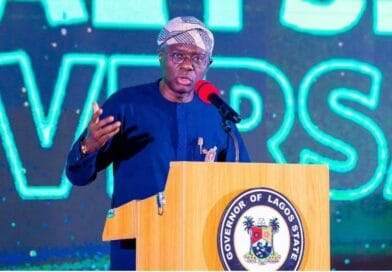
Lagos State Government on Tuesday launched the Lagos Private Health Plan (LPHP) Partnership and flagged off the enforcement of mandatory health insurance, with Governor Babajide Sanwo-Olu announcing a grace period until December 31, 2026, for employers, workers and residents to secure appropriate coverage before enforcement commences on January 1, 2027.
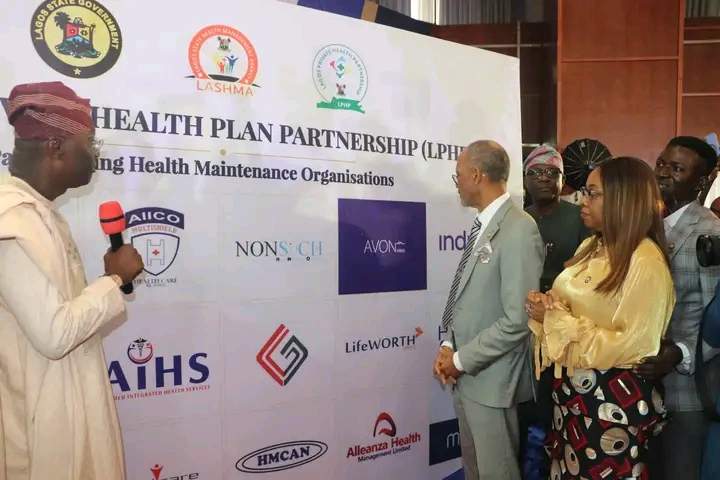
The launch, held at Lagos Continental Hotel, Victoria Island, also featured the unveiling of 21 participating Health Maintenance Organisations (HMOs), marking a major step in the state’s drive to expand health insurance coverage and protect residents from the financial burden of healthcare.
Sanwo-Olu said the initiative, anchored on Executive Order EO/BOS/01/2024 signed on July 16, 2024, was designed to ensure that access to healthcare would no longer depend solely on an individual’s ability to pay at the point of illness.
Reaffirming the state’s commitment to implementation of State Health Insurance Scheme, Ilera Eko, the Governor said the scheme would create a more inclusive healthcare financing system for formal-sector employees, informal-sector workers and vulnerable residents.
Explaining the rationale for the new plan, the Governor said the existing Ilera Eko scheme was designed primarily to support vulnerable populations and people working in the informal sector, necessitating a complementary arrangement for salaried workers and corporate organisations.
He disclosed that actuarial analysis of approximately two million claims and enrolment records informed the development of the LPHP, which offers structured health insurance options for the formal sector.
The Governor said the state had established implementation and enforcement mechanisms to ensure compliance, including a Lagos Private Health Plan Implementation Steering Committee and an Enforcement Task Force.
He directed the relevant authorities to provide operational guidelines and support for enrolment before the end of the grace period, stressing that the objective was compliance rather than confrontation.
“We want compliance, not unnecessary confrontation,” Sanwo-Olu said, urging employers and workers to use the transition period to select suitable plans and complete registration.
He added that the initiative would strengthen healthcare financing by making payments to participating providers more predictable, improving service delivery and reducing pressure on public hospitals.
The Governor also said part of the contributions would support the Lagos State Health Equity Fund and public healthcare infrastructure, helping extend coverage to residents unable to afford insurance.
He assured stakeholders that the state would monitor HMOs’ performance, particularly prompt payment to providers, claims settlement and access to appropriate care.
State Commissioner for Health, Prof. Akin Abayomi, described the launch as a defining shift in the state’s healthcare financing system, arguing that out-of-pocket payments expose households to severe financial hardship.
He explained that health insurance pools contributions from a broad population, spreading the cost of healthcare across individuals and reducing the risk of families exhausting their savings or falling into debt when illness occurs.
Abayomi said mandatory participation was necessary to build a sufficiently large and diverse insurance pool, noting that voluntary schemes often struggle because healthier people may opt out until they need medical attention.
He said the policy would promote solidarity, whereby the healthy support the sick, the young support the old, and those able to contribute help protect vulnerable residents.
Outlining the expected benefits, the Commissioner said the LPHP would provide healthcare providers with more predictable income, encourage competition in service quality, ease patient congestion in public facilities, support vulnerable residents and expand the insurance market.
He said Lagos was targeting an increase in insured residents from about two million to at least 10 million, while confirming that participating organisations were accredited by the National Health Insurance Authority.
Special Adviser to the Governor on Health, Dr (Mrs.) Kemi Ogunyemi, said the Executive Order provided the legal framework for compulsory health insurance for residents and required public and private employers to provide coverage for their workers.
She described the LPHP as an opportunity to expand choice by enabling individuals, families and employers to select from accredited health insurance plans suited to their needs.
Ogunyemi stressed that the initiative was not intended to penalise HMOs or private healthcare providers but to bring stakeholders into a coordinated and regulated system.
She said competition among participating providers could help improve affordability and service quality, adding that government, employers, insurers and healthcare facilities must work together to achieve universal health coverage.
Chairman of the Governing Board of the Lagos State Health Management Agency (LASHMA), Dr Adebayo Adedewe, said the agency had sustained public sensitisation through radio, billboard and digital campaigns, as well as engagements with traditional rulers, market associations, transport unions and community leaders.
He disclosed that funding for the Lagos State Health Equity Fund had increased from ₦1 billion to ₦3 billion to strengthen access to healthcare for vulnerable populations, with a target of enrolling 500,000 residents.
Permanent Secretary, Lagos State Ministry of Health, Dr Dayo Lajide, said the programme was critical in addressing the high financial burden of healthcare on Nigerian households. Citing the National Health Insurance Authority’s report that out-of-pocket payments accounted for 58 per cent of total health expenditure in Nigeria in 2024, she said the LPHP would build on Lagos’ existing insurance structure and help protect more families from financial hardship.
Permanent Secretary, LASHMA, Dr Emmanuella Zamba, described the launch as a transition from policy development and stakeholder engagement to implementation.
She thanked the Governor, the Ministry of Health, participating HMOs, healthcare providers and other partners, urging sustained collaboration to ensure that the new framework delivers accessible and reliable healthcare coverage.
Representing Sterling Bank’s Managing Director and Chief Executive Officer, Abubakar Suleiman, the Vice President, Government Banking, Adewale Adebowale, said the bank was supporting the initiative as a technology and financial partner.
He explained that the digital platform developed with Sterling Bank’s assistance would facilitate enrolment and enable employers to register their workers more efficiently, noting that effective partnerships were essential to translating policy into practical benefits.
National President of the Healthcare Providers Association of Nigeria, Dr Aipoh Augustine, commended the state for the consultations that preceded the launch but called for transparent implementation, timely reimbursement of healthcare providers, simplified payment procedures and fair accreditation processes.
He said the programme’s success should be measured not only by the number of people enrolled but also by their ability to access appropriate treatment without financial distress.
National President of the Guild of Medical Directors, Dr Raymond Abiodun Kuti, said building public trust through transparency and accountability would be crucial to the scheme’s success. He urged the government to maintain effective engagement with private healthcare providers and address their concerns, while immediate past President of the Health and Managed Care Association of Nigeria, Dr Leke Oshunniyi, said a well-functioning insurance system would help providers receive payment for services rendered while reducing the financial burden on patients.
The Lagos Private Health Plan Partnership complements Ilera Eko by providing additional coverage options for formal-sector employees and corporate organisations within a coordinated state framework.
The government said enrolment would be supported through a digital platform, while operational guidelines would specify applicable contributions, minimum benefit packages and the responsibilities of participating organisations.
With the grace period ending on December 31, 2026, full enforcement of mandatory health insurance is scheduled to commence on January 1, 2027