Traders Count Losses as LAWMA Returns to Clear Mile 2, Festac Corridors
Traders Count Losses as LAWMA Returns to Clear Mile 2, Festac Corridors
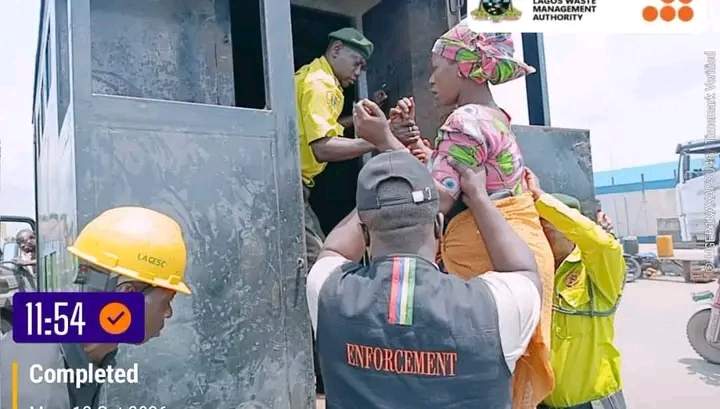
Traders operating around the Mile 2 Bridge and Festac corridors in Lagos are facing renewed disruption to their businesses as the Lagos Waste Management Authority (LAWMA), alongside other state enforcement agencies, intensifies its clampdown on roadside trading.
The latest operation, carried out under the state government’s Project WISE initiative, targets traders who reportedly returned to public spaces previously cleared by the authorities.
For traders who depend on daily sales to support their families, the enforcement raises concerns about lost income, the security of their goods and the challenge of finding alternative locations to continue their businesses.
The operation involved LAWMA, the Lagos State Taskforce, the Lagos State Traffic Management Authority (LASTMA), the Lagos State Environmental Sanitation Corps (LAGESC) and the Lagos State Neighbourhood Safety Corps.
The agencies moved to reclaim public spaces around the busy transport corridors, where roadside trading has remained a source of concern for traffic management, pedestrian safety and environmental sanitation.
However, the renewed exercise also highlights the difficult balance between the government’s responsibility to keep public infrastructure free from obstruction and the economic realities of traders who depend on accessible locations to attract customers.
For many small-scale traders, proximity to commuters and motorists is an important factor in daily sales. Relocating to another market could mean losing regular customers, spending additional money on transportation and paying for new trading spaces.
While the authorities have directed traders to move their businesses to government-approved markets and designated trading zones, the availability, affordability and accessibility of such alternatives remain important considerations in any lasting solution.
LAWMA Managing Director and Chief Executive Officer, Dr. Muyiwa Gbadegesin, said sustained surveillance and enforcement were necessary to prevent traders from returning to restricted areas.
According to the authority, trading on bridges and walkways obstructs pedestrian and vehicular movement, creates safety risks and interferes with sanitation and waste management operations.
The government has consequently warned that enforcement will continue, with partner agencies maintaining surveillance around the affected corridors to prevent fresh encroachment.
The latest clampdown follows an earlier clearance of the areas, suggesting that removing traders without preventing their return remains a challenge for the authorities.
For traders, the immediate concern is how to sustain their livelihoods while complying with government directives. A lasting resolution may require not only enforcement but also effective engagement with affected traders and the provision of accessible, affordable and suitable trading locations.
As the state intensifies efforts to keep public spaces clear, the success of the operation will ultimately depend on whether the authorities can maintain order while addressing the economic pressures that drive some traders back to roadside locations.