Boost for Lagos Ports as US Lifts 12-Year Maritime Restriction
US Lifts 12-Year Maritime Restriction, Boost for Lagos Ports
Move Expected to Cut Shipping Costs, Improve Turnaround Time at Apapa, Tin Can Island
Nigeria’s maritime industry, particularly the Lagos port complex, is set to benefit from the United States Government’s decision to lift a 12-year Condition of Entry (CoE) imposed on vessels arriving in the US from Nigeria.
The development is expected to reduce additional security-related requirements and costs for shipping operators while improving turnaround times and schedule reliability for vessels involved in Nigeria–United States trade.
The decision is particularly significant for Lagos, which hosts Nigeria’s major commercial seaports, including the Apapa Port and Tin Can Island Port, through which a substantial volume of the country’s maritime trade passes.
In a letter dated August 26, 2026, the U.S. Assistant Secretary of State for African Affairs, Frank W. Garcia Jr., congratulated the Minister of Marine and Blue Economy, Dr. Adegboyega Oyetola, CON, on the lifting of the long-standing restriction.
Garcia described the development as evidence of Nigeria’s “sustained strengthening of port security and anti-terrorism compliance.”
According to the U.S. Government, the removal of the restriction will reduce security-related requirements and associated costs for vessels operating between Nigeria and the United States.
It is also expected to improve vessel turnaround times and schedule reliability, potentially making operations through Lagos ports more efficient and competitive.
Lagos Ports Positioned for Greater Competitiveness
For operators at the Lagos maritime gateway, the development could translate into lower operational burdens for shipping lines and greater confidence among international carriers trading with Nigeria.
The Apapa and Tin Can Island port corridors are central to Nigeria’s import and export activities, making improvements in maritime security compliance particularly important to the Lagos economy.
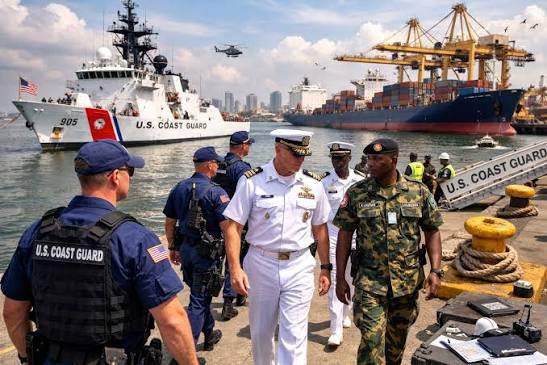
The lifting of the restriction also comes after years of collaboration between the Nigerian Maritime Administration and Safety Agency (NIMASA) and the United States Coast Guard on maritime security and anti-terrorism compliance.
The U.S. Government acknowledged NIMASA’s continued efforts to address security concerns and strengthen Nigeria’s maritime regulatory framework.
Oyetola Credits Tinubu
Reacting to the development, Minister Oyetola credited President Bola Ahmed Tinubu for providing strategic support and prioritising the marine and blue economy as part of the Federal Government’s economic transformation agenda.
Oyetola described the lifting of the Condition of Entry as a major achievement for Nigeria’s maritime sector and an indication of progress in port security and international compliance.
“With the Condition of Entry now removed, Nigerian ports are better positioned to compete for international shipping business,” the minister said.
He added that shipping lines operating between Nigeria and the United States could benefit from lower security-related costs, fewer procedural burdens, improved turnaround times and greater schedule reliability.
For Lagos, the development could provide an additional boost to the city’s position as Nigeria’s leading maritime and commercial gateway, while strengthening the competitiveness of its ports in attracting international shipping business.
The Federal Government is expected to sustain its engagement with international maritime partners as it seeks to improve port efficiency, strengthen security standards and position Nigeria’s blue economy as a major driver of economic growth.