When Rent Eats the Paycheck
For many working-class Nigerians, payday no longer brings relief; it brings another reminder that a significant portion of their income is already spoken for.
As rent prices continue to climb across Lagos, Abuja, Port Harcourt and other fast-growing cities, families are making difficult choices about where to live, how to spend and even whether to stay together.
In Lagos, neighbourhoods once considered affordable—such as Ikorodu, Iyana Ipaja, Egbeda, Sangotedo and parts of Ajah—have seen steady increases in rental costs over the past two years. In Abuja, tenants are also grappling with rising rents in satellite towns like Lugbe, Kubwa and Gwarinpa, as demand for housing continues to outstrip supply.
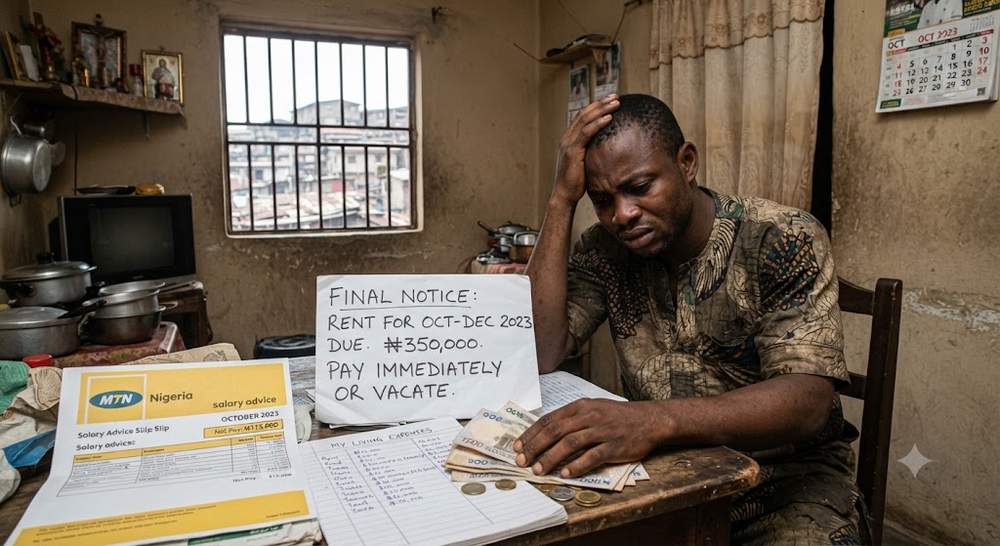
For civil servants, teachers, nurses, artisans and junior private-sector workers, rent is consuming an ever-larger share of monthly earnings. Many landlords still demand one or two years’ rent in advance, forcing families to rely on loans, cooperative societies or support from relatives just to secure accommodation.
“I spend almost half of my salary on rent,” says Tunde, a customer service representative who recently moved from Yaba to Mowe in neighbouring Ogun State. “I now wake up before 4:30 a.m. to beat traffic into Lagos. By the time I get home at night, I barely have time for my family.”
His story mirrors the experience of thousands of workers who have relocated to areas such as Mowe, Ibafo, Arepo, Agbara and Epe, where housing is relatively cheaper but commuting can take three to five hours daily. While the move reduces rental costs, it often increases transport expenses and leaves workers physically and mentally exhausted.
Young professionals are also changing how they live. Apartment sharing, once common mainly among students, has become a practical solution for many employed adults. Two or three colleagues now frequently split the cost of rent and utilities, sacrificing privacy in exchange for financial stability.
For families with children, the impact extends beyond housing. Parents are moving children to less expensive schools, postponing home ownership plans and cutting spending on healthcare, recreation and savings to keep up with rent payments. Some households have even sent children to live with relatives in other towns to reduce living expenses.
Small business owners are feeling the strain as well. Many who operate shops in urban centres now live farther away, spending more time and money commuting while trying to maintain their businesses. Others have converted parts of their homes into workspaces to avoid the cost of commercial rent.
Nigeria’s housing deficit—estimated by industry experts at over 20 million units—continues to put pressure on available accommodation, while inflation, rising building material costs and rapid urban migration have pushed rental prices even higher. Developers say construction costs have surged in recent years due to the higher prices of cement, steel, diesel and imported finishing materials, with these increases ultimately passed on to tenants.
Housing advocates argue that beyond building more homes, Nigeria needs reforms that encourage affordable housing, improve access to mortgage financing and review the widespread practice of demanding multiple years of rent upfront.
For millions of Nigerians, the housing crisis is no longer just about finding a place to live. It is changing family routines, stretching household budgets, increasing commuting times and redefining what it means to build a stable life in the country’s largest cities.