Lagos Sounds Red Alert on Lassa Fever, kicks off Statewide Awareness Campaign
Lagos State Government has issued a public health alert over rising cases of Lassa fever across Nigeria, launching a statewide awareness and prevention campaign as concerns grow over infections among healthcare workers.
Commissioner for Health, Akin Abayomi, disclosed that the country is currently facing one of its most severe outbreaks in recent years, with more than 660 confirmed cases and 167 deaths recorded between January and mid-March 2026.
He noted that the outbreak has affected 22 states and 93 local government areas nationwide, describing the situation as a serious public health concern that requires urgent and coordinated action across all levels of government.
Abayomi expressed particular concern over the increasing number of infections among frontline medical personnel, revealing that at least 38 healthcare workers have contracted the disease, with three doctors confirmed dead since the beginning of the year. He warned that such developments signal a dangerous phase in the outbreak, calling for stricter infection prevention measures and heightened vigilance within health facilities.
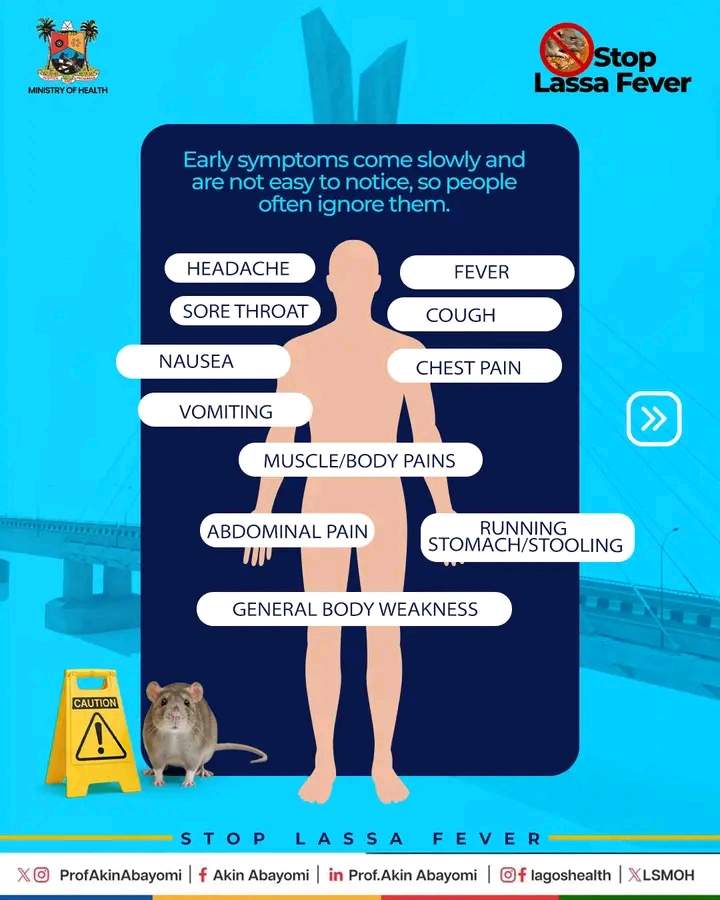
He explained that Lassa fever is a zoonotic viral disease transmitted primarily through contact with infected rodents or contaminated food, and can also spread between humans. The disease often presents as a haemorrhagic illness, causing symptoms such as fever and, in severe cases, internal bleeding.
Although Lagos is not classified as an endemic state and typically records only a few imported cases annually, Abayomi cautioned that its status as a major commercial hub with a dense population increases the risk of rapid transmission.
According to him, the constant movement of people into the state by road and air makes early detection and containment critical, noting that past experiences, including the COVID-19 pandemic, have demonstrated how quickly infectious diseases can spread in a megacity.
He added that emerging evidence suggests Lassa fever is no longer strictly seasonal, with cases now recorded throughout the year due to environmental changes and increased human interaction with rodent carriers.
Abayomi further explained that about 70 per cent of infected individuals may show mild or no symptoms while still being capable of transmitting the virus, thereby posing a silent risk, particularly in densely populated areas.
He said roughly one in five symptomatic cases can develop severe complications, especially when diagnosis and treatment are delayed, increasing the likelihood of fatalities.
The Commissioner classified Lassa fever among high-risk infectious diseases capable of overwhelming health systems if not properly managed, linking its growing incidence to factors such as climate change, deforestation and ecological disruption that bring humans and wildlife into closer contact.
To address the threat, he said the state has strengthened its preparedness systems, including the activation of a 24-hour Emergency Operations Centre, improved disease surveillance, deployment of digital health tools and ongoing training of healthcare workers on infection prevention and biosecurity.
He emphasised that the state’s strategy focuses on early detection, prompt isolation and effective case management to prevent escalation.
Abayomi reassured residents that the government is working in collaboration with the Nigeria Centre for Disease Control, the Federal Ministry of Health and partners such as Irrua Specialist Teaching Hospital to strengthen response efforts.
He added that the awareness campaign will prioritise public education, capacity building for healthcare professionals and community engagement to reduce transmission risks and improve response to suspected cases.