Women Turning Small Businesses Into Family Lifelines
As Nigeria continues to grapple with rising living costs, inflation and shrinking household incomes, millions of women are quietly becoming the backbone of their families, using small businesses to keep food on the table, children in school and hope alive.
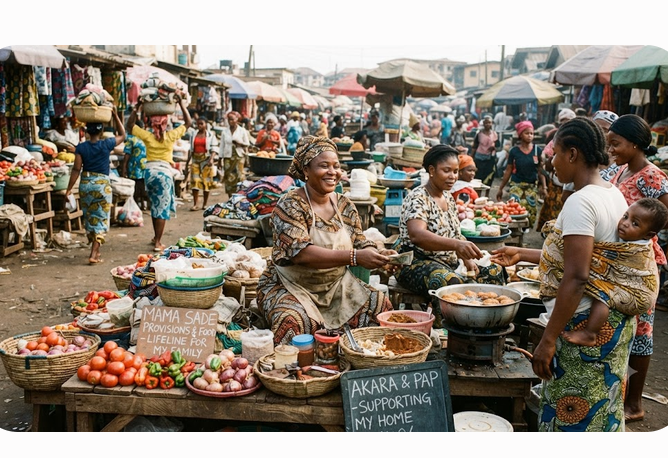
From bustling markets in Lagos and Kano to roadside food stalls in Abuja, tailoring shops in Aba and online stores run from living rooms across the country, women are proving that resilience can be just as valuable as capital.
For many households, what once began as a side hustle has become the primary source of income.
“I started selling food to support my husband,” says a roadside vendor in Lagos. “Now, the business pays our rent, school fees and even some hospital bills. We simply can’t survive on one income anymore.”
Her story mirrors those of thousands of Nigerian women who have adapted to changing economic realities by turning skills, creativity and determination into sustainable livelihoods.
Across major markets, traders say customers now buy in smaller quantities as prices continue to rise. Rather than give up, many women have adjusted by purchasing fewer goods, reducing waste and offering more affordable package sizes to retain customers. Others have embraced digital platforms, using WhatsApp, Instagram, Facebook and TikTok to reach buyers beyond their immediate communities.
The shift has accelerated the growth of women-led micro-enterprises, with women estimated to own around 40 percent of Nigeria’s small businesses and playing an increasingly important role in the country’s expanding digital commerce ecosystem.
Tailors are also finding new ways to stay afloat. Instead of relying solely on seasonal orders, many now diversify into ready-to-wear clothing, school uniforms and fashion accessories while marketing their products online. Home bakers, thrift fashion sellers, hair stylists and cosmetics vendors are following a similar path, combining traditional entrepreneurship with digital marketing.
Economic experts say these informal businesses remain the lifeblood of Nigeria’s economy. In Lagos alone, millions of people work in the informal sector, which includes market traders, artisans, food vendors and other micro-enterprises that support household incomes and local commerce.
Yet survival is far from easy.
Women entrepreneurs continue to battle rising transportation costs, expensive raw materials, unstable electricity, limited access to affordable financing and fluctuating consumer spending. Business owners say profit margins have narrowed significantly as they struggle to balance higher operating costs with customers’ reduced purchasing power.
Despite these obstacles, many refuse to shut their doors.
Instead, they have embraced innovation—accepting digital payments, offering home deliveries, joining cooperative savings groups and learning online business skills. Government agencies, financial institutions and non-profit organisations have also expanded training programmes aimed at helping women-led businesses improve financial management, digital literacy and market access.
For families across Nigeria, the impact extends beyond business.
These women are paying school fees, supporting elderly parents, funding university education, caring for relatives and creating jobs for neighbours. Their enterprises may be modest, but their influence reaches entire communities.
In an economy where many households face mounting financial pressure, Nigeria’s market women, roadside food vendors, tailors and online entrepreneurs are demonstrating that resilience often begins with ordinary people making extraordinary sacrifices.
Their shops may be small, but the role they play in sustaining Nigeria’s families has never been greater.