Tinubu: Reform Era Over, Now Comes Age of Prosperity
Tinubu: Reform Era Over, Now Comes Age of Prosperity
President promises lower cost of living, jobs, cheaper food, stronger economy
President Bola Ahmed Tinubu has declared that Nigeria has moved beyond the era of painful economic reforms, announcing what he described as a new “age of prosperity” focused on lowering the cost of living, creating jobs and ensuring that economic growth is felt by ordinary Nigerians.
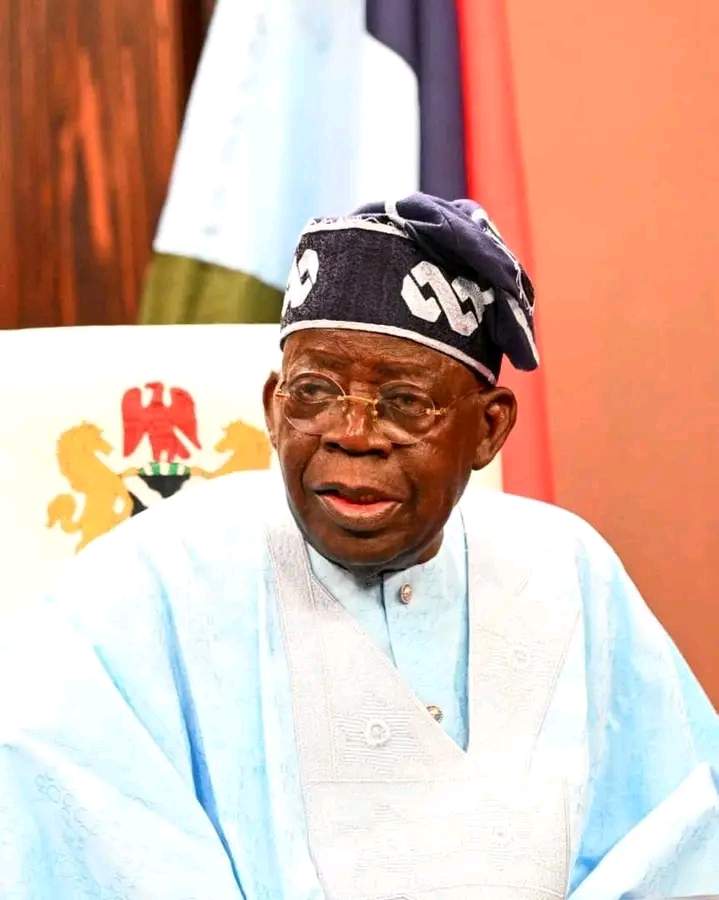
Tinubu made the declaration on Thursday in his Independence Day address to Nigerians, delivered to mark the country’s 66th anniversary of independence.
The President, whose address was themed “From Reform to Prosperity,” said the difficult economic measures introduced by his administration over the past three years had corrected the country’s economic direction and laid the foundation for widespread prosperity.
According to him, the country had reached a turning point and could no longer afford to return to policies that, in his assessment, had allowed structural weaknesses to worsen.
“The age of reform has done its work. Now begins the age of prosperity,” Tinubu declared.
He said the next phase of his administration would concentrate on making life more affordable for Nigerians by reducing the cost of producing and transporting food and other essential goods.
Tinubu said the Federal Government would expand mechanised irrigation and dry-season farming, improve access to seeds and fertiliser, increase agricultural mechanisation and invest in storage and transportation.
He also said roads, railways and ports were being built and completed to connect farms and factories with markets.
“Our priority is to bring down the cost of living,” the President said, explaining that lower production and transportation costs would ultimately translate into cheaper goods for consumers.
Jobs, industries take centre stage
Tinubu also placed job creation and industrial growth at the centre of the new economic phase, saying Nigeria must turn its youthful population into an engine of production rather than a source of despair.
He promised greater use of Nigeria’s gas resources to power industries, support for factories and businesses, expanded digital connectivity and investment in skills demanded by employers.
The President said he wanted to see more Nigerians producing goods locally, more farms supplying Nigerian cities and factories, and Nigerian companies exporting their products to the global market.
He also expressed support for young Nigerians building technology companies and creating employment opportunities at home.
Tinubu cites economic gains
Defending his administration’s reforms, the President said Nigeria’s economy had grown by more than four per cent in 2026, with both oil and non-oil sectors contributing to the growth.
He also claimed that oil theft had declined, inflation had fallen substantially from its peak, foreign reserves had been rebuilt and the foreign exchange market had stabilised.
Tinubu further said Nigeria recorded more than $6 billion in non-oil export revenue in 2025, describing it as the highest in the country’s history.
The President said international observers, multilateral institutions and the private sector had recognised improvements in Nigeria’s economic stability and resilience.
‘We will defeat poverty’
Tinubu acknowledged that millions of Nigerians were still struggling with food, school fees, medical bills and transportation costs.
He said the hardship confronting many families did not begin with his administration but was the accumulated result of decades of low productivity, inadequate infrastructure and insufficient opportunities.
He nevertheless promised that his government would change the direction of the country and progressively lift Nigerians out of poverty.
“We cannot erase in four years what accumulated over generations. But we can change its course,” he said.
The President said his administration would strengthen direct support for poor households, improve the National Social Register and expand programmes such as the Nigerian Education Loan Fund and CREDICORP.
He said NELFUND was helping children from low-income families access higher education, while CREDICORP was providing working Nigerians with access to credit for essential assets such as vehicles, solar systems and digital devices.
He also said the Federal Government, in collaboration with states and local governments, would continue to strengthen primary healthcare, basic education and essential public services.
‘No looking back’
Tinubu urged Nigerians to remain committed to the country’s economic transformation, saying the nation had passed through difficult years but now had a clearer direction.
He compared the economic journey to the biblical crossing of the Red Sea, declaring that Nigeria had “passed through our own Red Sea” and should not look back.
“Nigeria has corrected its course. We have passed through our own Red Sea. This is not the time to look back,” he said.
The President described the Nigeria ahead as a “Promised Land” of abundance and opportunity, where prosperity would be broadly shared and children could dream beyond the circumstances of their birth.
“Our destination is in sight. Our foundations are strong. Our direction is clear. So let us go forward. No looking back,” Tinubu said.
He ended his Independence Day message by wishing Nigerians a happy 66th Independence Anniversary and praying for the Federal Republic of Nigeria.
Alternative punchier headlines: