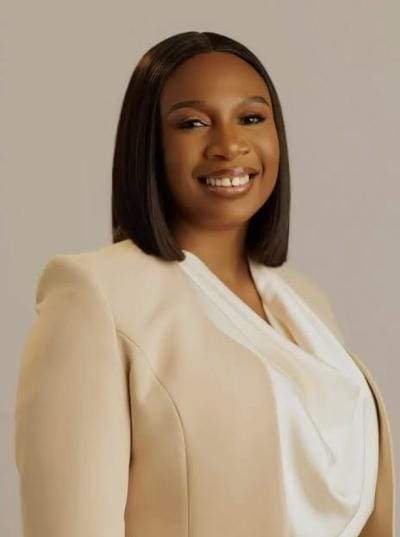
Princess Sonayan James Unveils Development Plans For Riverine Residents
By Sherif Salau
APC Deputy Governorship Aspirant, Princess Damilola Sonayan James, has unveiled her development vision for Lagos State’s riverine communities, promising greater attention to residents’ needs, improved infrastructure and inclusive opportunities across the waterfront settlements.
The launch, held at a packed community hall in Ikorodu with live links to gatherings in Badagry, Epe and parts of Ajeromi-Ifelodun, drew traditional rulers, youth groups, market women, boat operators and local political leaders. Dressed in elegant traditional attire, Princess James spoke with quiet intensity about the daily struggles of riverine dwellers and her determination to change their story.
“These communities are not afterthoughts,” she declared. “They are an essential part of Lagos. Yet for too long they have remained at the margins of development. The vision we present today is a commitment to bring practical, lasting solutions to the people who live on and by the water.”
The document, titled “Riverine Lagos Rising”, outlines interventions across five priority areas: water transportation and jetties, basic healthcare access, education and skills development, sanitation and environmental protection, and economic empowerment. Among the standout proposals are the construction and upgrade of modern jetties in key communities, the introduction of solar-powered floating clinics, support for community-managed water purification systems, and targeted skills training for young people in boat building, aquaculture and digital services.
Princess James, who has maintained close ties with several riverine communities over the years, emphasised that the plan was developed through months of consultations with residents rather than imposed from outside. “We did not sit in an office and write this,” she said. “We sat in canoes, in makeshift halls, and under trees listening to mothers who lose children to preventable diseases, to young people who cannot go to school when the water rises, and to fishermen whose livelihoods are disappearing.”
Residents who attended the event expressed cautious optimism. Mr. Kunle Ashamu, a boat operator from a community near Ebute-Metta, said improved jetties alone would make a significant difference. “When the jetty is bad, everything becomes expensive and dangerous. If they can fix that and add lighting, it will help all of us.”
Mrs. Bose Okunola, a trader and mother of four from a settlement in Badagry creek, welcomed the focus on healthcare and education. “Our children miss school whenever it rains heavily. If there can be better floating or elevated learning spaces, and if nurses can come closer to us, many lives will improve.”
The challenges facing Lagos’s riverine populations are well documented. Limited access to clean water and sanitation, vulnerability to flooding and erosion, poor connectivity to the mainland, and weak economic opportunities have kept many communities in cycles of poverty despite the city’s overall growth. Successive administrations have made interventions, yet residents and activists often argue that the scale of need still outstrips the response.
Political observers note that Princess James’s initiative arrives at a time when conversations about inclusive development and equity in Lagos are gaining renewed attention. By focusing specifically on riverine areas, she has positioned herself as a voice for a constituency that rarely dominates mainstream political discourse.
While the vision has been warmly received in the communities it targets, its ultimate impact will depend on partnerships, funding and sustained political will. Princess James acknowledged this reality, stating that implementation would require collaboration with the state government, local councils, development agencies and the private sector.
“This is not a one-woman project,” she said in closing. “It is a people’s agenda. My role is to keep shining the light on these communities until the promise of development truly reaches them.”