
Nigeria @66: Lagosians Who Have Made Their Mark on the Nation
Kehinde Adeleye
As Nigeria celebrates 66 years of independence, the country’s journey from colonial rule to an independent nation provides an opportunity to remember citizens whose contributions have helped shape its political, economic, cultural and social development.
Among the Nigerians whose stories are closely connected with Lagos are individuals who have made significant contributions in politics, public administration, business, entertainment, sports, education and the professions.
Lagos has historically served as one of the country’s major centres of political activism, commerce, culture and innovation. It has therefore been both a home and a launching pad for many Nigerians whose influence eventually extended beyond the state.
One of the earliest names is Herbert Macaulay, a Lagos-born nationalist, engineer and political activist who became one of the prominent figures in Nigeria’s early struggle for self-government. His political activities helped lay part of the foundation for the nationalist movement that eventually contributed to Nigeria’s independence.
Another important Lagos figure was Lateef Jakande, the first civilian governor of Lagos State. His administration became associated with an ambitious programme of public housing, education, healthcare and infrastructure, leaving a lasting mark on the development of the state.
Mobolaji Johnson, Lagos State’s first military governor, also played an important role in the early development of the state, particularly during the period when Lagos was being transformed into a modern administrative and commercial centre.
In contemporary politics, Bola Ahmed Tinubu, a former governor of Lagos State, has remained one of the most prominent political figures associated with Lagos. His tenure as governor between 1999 and 2007 was followed by a long career in national politics, culminating in his emergence as President of Nigeria.
Babatunde Fashola, another former Lagos governor, also moved from state administration to federal service, where he served as Minister of Power, Works and Housing and later Minister of Works and Housing.
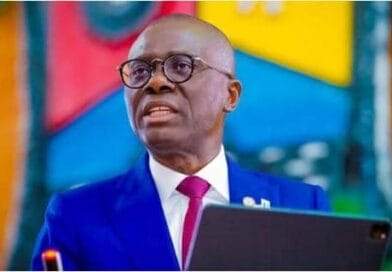
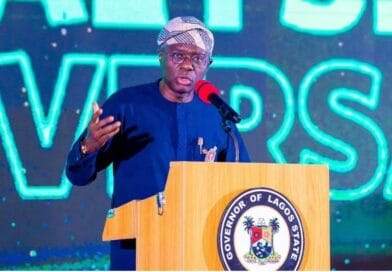
The state’s political leadership has continued to produce figures with national responsibilities, including former governor Akinwunmi Ambode and incumbent governor Babajide Sanwo-Olu.
Beyond politics, Lagos has remained a major engine of Nigerian business.
Jim Ovia, founder of Zenith Bank, built one of Nigeria’s major financial institutions and has also invested in education and youth development.
Tony Elumelu, businessman and philanthropist, has used his corporate and philanthropic platforms to promote entrepreneurship and economic empowerment across Africa.
Aliko Dangote, although born in Kano, built a substantial part of his business empire in Lagos, where the Dangote Group established major operations and investments. His rise reflects Lagos’ position as a major centre for Nigerian and African business.
The city’s influence is perhaps most visible in Nigeria’s entertainment industry.
Fela Anikulapo-Kuti transformed Nigerian music through Afrobeat, combining music with social and political commentary. His influence has extended well beyond Nigeria and continues to inspire musicians around the world.
Wizkid, who grew up in Lagos, emerged from the city’s music scene to become one of the Nigerian artistes whose work helped take Afrobeats to a global audience.
Lagos has also been central to the careers of filmmakers, actors, writers and other creative professionals who have helped build Nigeria’s internationally recognised entertainment industry.
In literature and the arts, Wole Soyinka, Nigeria’s first Nobel laureate in Literature, has maintained a strong connection with Lagos and Nigeria’s intellectual and cultural life. His writings and public engagement have contributed significantly to discussions about governance, society, culture and human rights.
In sports, Hakeem Olajuwon, born in Lagos, became one of the greatest basketball players of his generation after moving to the United States. His achievements in the NBA gave Nigeria another prominent presence on the international sporting stage.
Football has equally produced Lagos-connected figures who have become household names, including Segun Odegbami and Austin ‘Jay-Jay’ Okocha, both of whom contributed to Nigeria’s football history and international reputation.
The contribution of Lagosians and Lagos-based Nigerians, however, extends beyond famous personalities.
Across the state, teachers, doctors, engineers, journalists, entrepreneurs, artisans, civil servants, technology professionals, community leaders and young innovators continue to contribute to the country’s development, often without national recognition.
As Nigeria marks 66 years of independence, their stories underline an important part of the country’s history: nation-building is not only the work of presidents, governors or famous personalities.
It is also the cumulative result of the work of millions of Nigerians who build businesses, educate children, create jobs, develop communities, tell Nigerian stories and represent the country in different fields.
For Lagos, a city that has remained at the centre of Nigeria’s political, economic and cultural life, the 66th Independence Anniversary is therefore also a moment to reflect on the sons and daughters who have used the opportunities provided by the city to leave their footprints on Nigeria and the wider world.