NAFDAC Destroys 50,000 Fake Alcohol Bottles In Lagos, Uncovers Raw Ethanol
By Sherif Salau

The National Agency for Food and Drug Administration and Control (NAFDAC) has destroyed over 50,000 empty bottles bearing labels of popular alcoholic beverage brands in Lagos after uncovering raw ethanol at the site, raising alarm over suspected illegal alcohol production and potential public health risks.
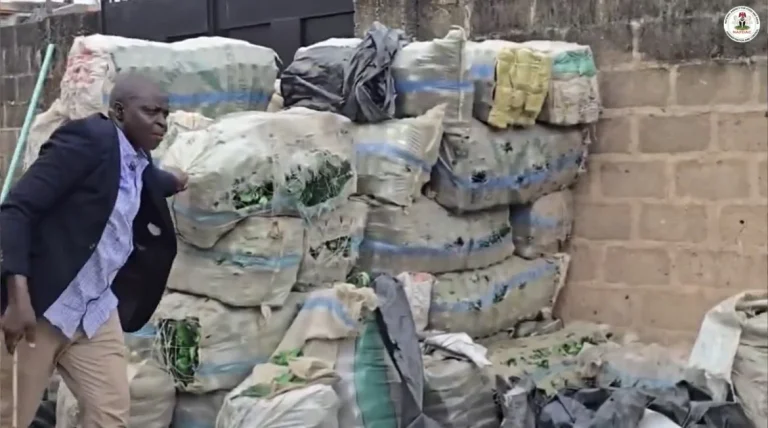
Investigation and Enforcement officers of the agency uncovered the large collection of customised empty bottles, which were allegedly being supplied to individuals involved in the counterfeiting of popular alcoholic products. The bottles carried the labels of several well-known brands, including Jack Daniel’s, William Lawson’s, Johnnie Walker Red Label and Blue Label, Action Bitters, Lord’s Dry Gin and Hennessy.
At the same location, officers also discovered raw ethanol stored in a drum. The presence of the chemical raised immediate concerns about possible illegal production and packaging of alcoholic beverages using the branded containers.
NAFDAC said the bottles were destroyed to prevent their reuse in the manufacture and distribution of counterfeit products. In a statement, the agency noted: “Over 50,000 assorted branded bottles were destroyed to prevent their reuse in the production and circulation of counterfeit alcoholic products.”
The operation forms part of the agency’s ongoing efforts to curb the trade in fake and adulterated alcoholic drinks, which pose significant public health risks. Counterfeiters often refill original or imitation bottles with unregulated mixtures, leaving consumers unaware of the true contents, ingredients or production conditions of what they are drinking.
NAFDAC has warned against the buying, selling or use of branded packaging materials for counterfeiting purposes. It urged members of the public to remain vigilant and to report any suspicious activities involving the storage or trade of such materials to the agency.
The latest action at Iyana Oba follows a series of enforcement operations in Lagos and other parts of the country targeting illegal production, packaging and distribution of alcoholic beverages. Officials say sustained vigilance and public cooperation remain essential if the flow of counterfeit products into the market is to be effectively reduced.