New Book Documents Lagos’ Journey to Africa’s Megacity Status
Kehinde Adeleye

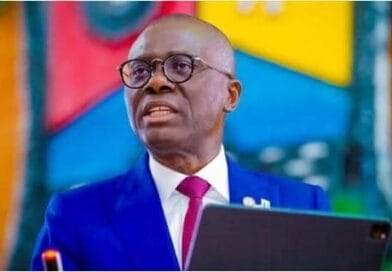
Lagos State Governor, Babajide Sanwo-Olu, has attributed the state’s emergence as Africa’s megacity to decades of leadership continuity, institutional development and the resilience of its residents.
Sanwo-Olu acknowledged the contributions of successive administrations, saying the transformation of Lagos was the result of sustained efforts by different governments rather than the achievement of any single leader.
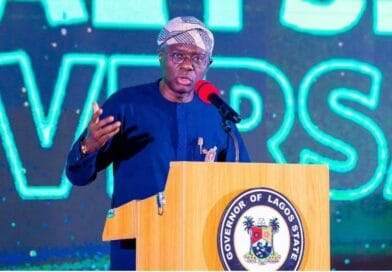
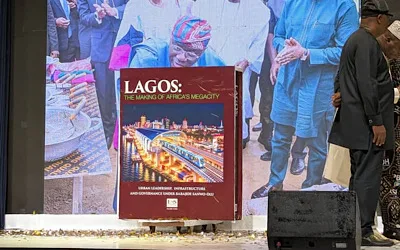
He spoke on Tuesday at the presentation of *Lagos: The Making of Africa’s Megacity*, a 32-chapter publication and the third volume of the Eminent Nigerians Series, held in Victoria Island, Lagos.
The book documents the state’s development over the years, examining the leadership decisions, policies and projects that have shaped Lagos, as well as lessons other cities could learn from its experience.
The governor recognised the contributions of former governors Lateef Jakande, Bola Tinubu, Babatunde Fashola and Akinwunmi Ambode, noting that each administration laid foundations upon which subsequent governments continued to build.
He stressed that the publication was not designed to glorify any individual or administration but to document the collective efforts that had shaped the state’s development.
Sanwo-Olu identified increasing demands for transportation, housing, healthcare, education, security and economic opportunities as major challenges confronting Lagos, given its rapidly expanding population.
He said addressing these challenges required proper planning, strong institutions, difficult policy decisions and consistency in implementation.
The governor explained that his administration’s THEMES and THEMES+ development agendas were designed to promote inclusive growth through investments in infrastructure, rail transportation, water connectivity, healthcare, education, housing, food security and technology.
He also commended President Bola Tinubu’s leadership at the national level, expressing confidence in his administration’s ability to sustain its policies and programmes.
On the political future of Lagos, Sanwo-Olu reiterated his endorsement of his deputy, Dr Obafemi Hamzat, the All Progressives Congress (APC) governorship candidate, describing him as capable of taking the state to the next level.
He maintained that continuity in leadership was essential to sustaining Lagos’ development trajectory.
In his remarks, Hamzat described Lagos as a city shaped by the contributions of successive leaders and the determination of residents from different backgrounds.
He said the state’s continued progress depended on preserving the foundations already established and entrusting its leadership to people who understood its history, structure and peculiar challenges.
Earlier, the founder of the Eminent Nigerians Series, Prince Bimbo Folayan, said the publication was the outcome of independent research and assessments conducted by Nigerian and international authors and editors.
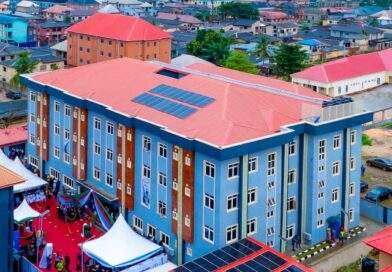
Folayan disclosed that the research team visited several projects across the state, including the Tolu School Complex in Ajegunle, the 300-bed Ojo General Hospital, housing schemes in Igando and Ikorodu, food hubs in Mushin and Agege, and the Lagos Blue Line rail service.
He said the project went beyond documenting infrastructure to examine the human impact of governance, particularly the opportunities created for vulnerable communities and young people.
According to him, the initiative would be complemented by a documentary intended for international distribution and a youth development programme known as the Sanwo-Olu Legacy Initiative for Development (SOLID).
He explained that SOLID would equip young people with relevant skills, mentorship, enterprise support and access to employment opportunities.
The pilot programme, scheduled to commence in 2027, is expected to target at least 10 participants from each of Lagos State’s 20 local government areas and 37 Local Council Development Areas.
The book was reviewed by Professor Maryam Quadri, a political scientist at the University of Lagos.