Lagos Proposes ₦200,000 Fine, Two-year Jail Term for Street Begging
By Emmanuel Daniji
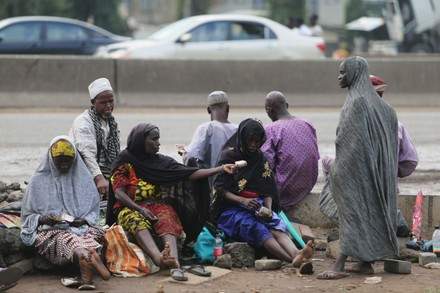
For the child who knocks on a car window at a Lagos traffic light asking for money, the woman who walks between vehicles with a baby in her arms, or the elderly man who sits quietly by a busy road hoping motorists will notice him, life on the streets could soon come with a new legal consequence.
What has for years been treated largely as a problem of poverty, homelessness and survival may soon become a matter for the courts in Lagos.
The Lagos State House of Assembly is considering a new law that could impose a fine of up to ₦200,000 and imprisonment of up to two years on people involved in street begging and related activities if convicted.
For some vulnerable residents, however, the bigger question is not simply what happens when they are picked up from the streets. It is what happens after that.
Where does the child go? Who takes care of the elderly beggar? What happens to a family that has turned to begging because it has no other source of income?
Those questions are at the heart of a proposed law that seeks to combine enforcement with rehabilitation and welfare programmes.
The bill, titled the Street Begging and Street Urchins (Prohibition, Prevention and Rehabilitation) Law of Lagos State 2026, was presented to legal practitioners, civil society organisations and members of the public during a public hearing at the Lateef Jakande Auditorium, Alausa, Ikeja.
The proposed legislation seeks to prohibit begging and activities associated with street urchins in public places, including motor parks, traffic intersections, pedestrian bridges and open markets.
It would also make activities such as loitering, sleeping, gathering or erecting temporary structures for the purpose of begging offences.
People who engage in, procure, aid or encourage begging could also face prosecution.
Parents and guardians who send children onto the streets to solicit alms could equally be prosecuted under the proposed law and existing child-rights legislation.
The proposed sanctions would be introduced in stages.
A first-time offender could receive a formal warning and be referred to a state rehabilitation centre. A subsequent offence could attract a fine of up to ₦200,000, a non-custodial sentence of not more than three months, or both.
For more serious or repeated offences, the bill proposes imprisonment of up to two years upon conviction by a Lagos State High Court or Magistrate Court.
Chairman of the House Committee on Youth, Sports and Social Development, Abiodun Orekoya, said the legislation was designed to promote public order, safety and environmental sanitation while strengthening child protection.
But the bill does not stop at removing people from the streets.
It proposes the establishment of Rehabilitation and Welfare Centres by the Ministry of Youth and Social Development, where people removed from the streets could receive temporary accommodation, basic literacy education, psychological counselling, vocational training and life-skills education.
The aim is to help them develop the skills and support needed to return to society and find more sustainable ways of surviving.
Still, some participants at the public hearing raised concerns about the proposed enforcement powers, particularly the provision allowing the Environmental Sanitation Corps Agency to arrest suspected offenders without a warrant and seize property allegedly connected to an offence.
Human rights advocates and legal practitioners questioned how such powers would be exercised without exposing vulnerable people to arbitrary arrests, harassment or abuse.
The proposed law prohibits enforcement officers from subjecting detainees to torture, inhuman or degrading treatment or unlawful detention, in line with constitutional protections.
Deputy Speaker of the Assembly, Mojisola Lasbat Meranda, said the views gathered from the public and stakeholders would be considered before the bill is finalised.
The bill must still go through further legislative consideration, including third reading, before it can be presented to the Lagos State Governor for assent.
Until that process is completed, the proposed fines and prison terms are not yet law.
For Lagos, however, the debate has already moved beyond whether begging should be allowed on the streets. It is increasingly about what happens to the people behind the outstretched hands when the state clears them from the roads—and whether rehabilitation can address the poverty and vulnerability that put them there in the first place.