Lagos Poised To Benefit As Nigeria Nears WHO Vaccine Regulatory Benchmark
By Sherif Salau
Nigeria moves closer to achieving a higher World Health Organisation (WHO) regulatory benchmark for medicines and vaccines. With National Agency for Food and Drug Administration and Control (NAFDAC) reporting that eight of nine requirements have been met, the development could strengthen confidence in locally produced vaccines, attract pharmaceutical investment and support the growth of Lagos’ healthcare and life-sciences ecosystem. The remaining hurdle vaccine lot release highlights the need to advance regulatory capacity alongside local manufacturing.
Director-General of NAFDAC, Prof. Mojisola Adeyeye, made the disclosure at the 8th Nigeria Pharma Manufacturers’ Expo held in Lagos. She explained that while the agency has strengthened its regulatory systems to the point of successful re-benchmarking at Maturity Level 3 the first such achievement in sub-Saharan Africa.full Level 4 status for vaccines hinges on the ability to perform lot release functions, which require domestic production facilities.
“We want to call on our international partners who have been of tremendous help,” Adeyeye said.
“I want to challenge them to contribute to modular fill-and-finish vaccine manufacturing so that we can get our vaccine lot release.”
She noted that Nigeria once produced vaccines and possesses the technical and regulatory capacity to resume, adding that the cost of establishing the necessary facilities has been estimated and is considered manageable.
Maturity Level 3 already signals that NAFDAC’s systems for medicines and imported vaccines are stable, well-functioning and integrated. Advancing to Level 4 would place Nigeria among a select group of countries whose regulatory authorities meet the highest international standards, potentially unlocking greater opportunities for local manufacturing, technology transfer and export of medical products.
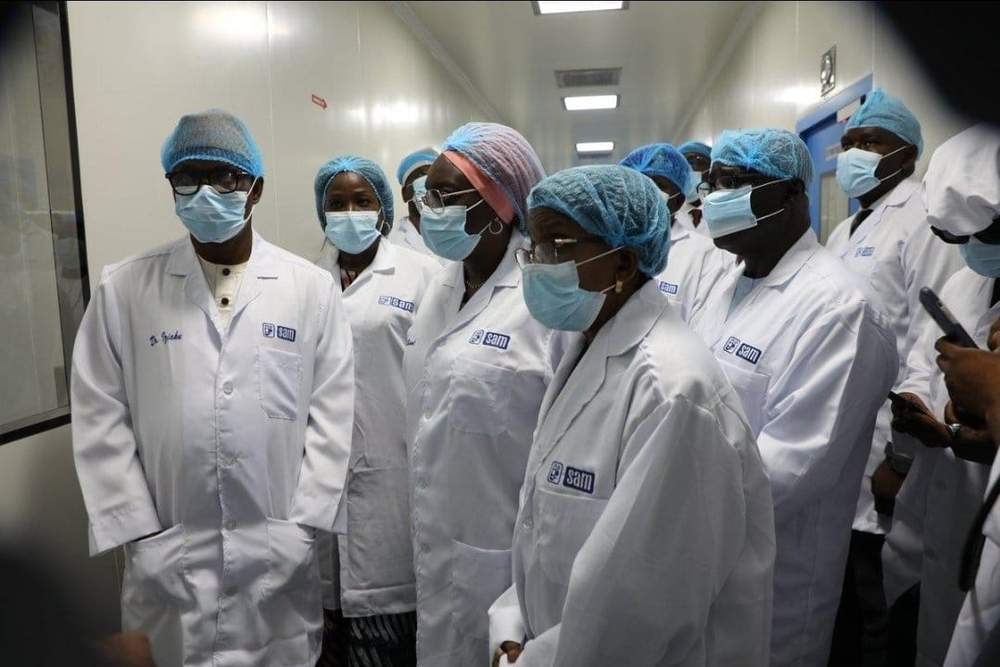
Lagos state hosts key pharmaceutical manufacturers, NAFDAC’s WHO-prequalified laboratory in Yaba, and a dense network of research and industry players. Progress toward higher regulatory maturity could attract investment in vaccine-related infrastructure, strengthen local supply chains and reduce dependence on imported vaccines outcomes that would enhance health security for the country’s most populous city and commercial hub.
Industry stakeholders at the Lagos expo welcomed the clarity of purpose. The absence of local production has long constrained Nigeria’s ability to respond swiftly to disease outbreaks and to build a more self-reliant pharmaceutical sector. Adeyeye’s call for modular fill-and-finish plants is seen as a practical next step that could be implemented relatively quickly with the right partnerships.