From Seaports to Couriers: How Drug Cartels Shifted Tactics to Move Cocaine Across Borders
From Seaports to Couriers: How Drug Cartels Shifted Tactics to Move Cocaine Across Borders
The National Drug Law Enforcement Agency (NDLEA) has uncovered a growing shift in the tactics of international drug trafficking organisations, with criminal networks increasingly turning to courier and logistics companies as alternative channels for moving narcotics across Nigeria’s borders.
The development came to the fore following the dismantling of an international cocaine trafficking cartel that used Nigeria as a transit hub for shipments destined for the United Kingdom, other European countries and Asia.
NDLEA Chairman/Chief Executive Officer, Brig. Gen. Mohamed Buba Marwa (Rtd), disclosed the details in Lagos on Tuesday, August 18, 2026, describing the operation as one of the agency’s most significant narcotics investigations in recent times.
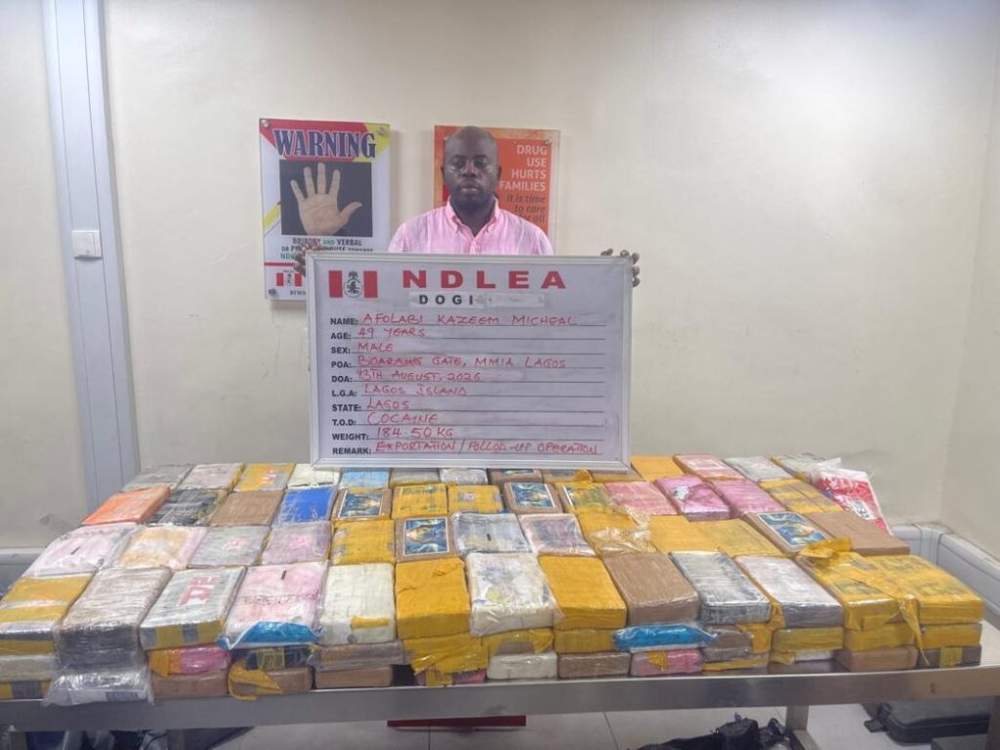
At the centre of the investigation was the interception of 184.50 kilogrammes of cocaine, concealed in a consignment processed through a courier logistics channel in Lagos. The cocaine, according to the agency, had an estimated potential street value of about ₦39 billion within the cartel’s international distribution network.
The seizure triggered a Special
Investigation Team ordered by Marwa to trace the shipment beyond the immediate couriers and identify the financiers, facilitators and masterminds behind the operation.
Cartel turns to courier companies
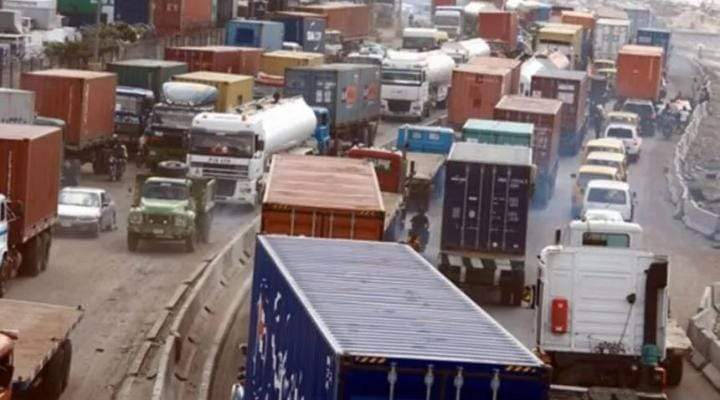
The investigation revealed that the syndicate had deliberately moved away from traditional routes, particularly seaports and airports, where increased surveillance has made large-scale drug shipments more difficult.
Instead, the traffickers exploited courier and logistics companies, apparently believing that smaller consignments moving through commercial delivery networks would attract less scrutiny.
NDLEA said the investigation, conducted with the cooperation of the management of the courier company involved, exposed a network of intermediary companies and individuals responsible for processing and routing the cocaine shipments.
One of those arrested was Lawal Mujab Kehinde, a staff member of the logistics firm. Investigators established that he maintained a direct relationship with the cartel’s Nigerian coordinator and was involved in packaging and processing consignments for the syndicate.
According to the agency, the consignments were subsequently routed to the United Kingdom, other parts of Europe and Asia, with the suspect allegedly receiving cash payments for his role.
Luxury lifestyle allegedly masked drug empire
The investigation subsequently led NDLEA operatives to Afolabi Kazeem Michael, popularly known as “KC Luxury”, whom the agency identified as the Nigerian arrowhead of the cartel.
Afolabi allegedly operated publicly as a luxury goods dealer, businessman and social media influencer involved in gold, jewellery and other high-value products.
Behind the glamorous public image, however, investigators alleged that he was coordinating a cocaine trafficking pipeline stretching from South America through Nigeria to international markets.
The agency said the suspect attempted to leave Nigeria after receiving information that law enforcement authorities were closing in on the network.
On August 13, 2026, NDLEA operatives intercepted him at the boarding gate of the Murtala Muhammed International Airport, Lagos, as he allegedly prepared to board a business-class flight to Paris.
He was reportedly found with €7,750, £2,800 and ₦100,000 in cash, as well as expensive jewellery.
A subsequent search of his luxury apartment in Banana Island, Ikoyi, Lagos, led to the recovery of exotic vehicles, according to the NDLEA.
International network exposed
Marwa said the investigation also uncovered the use of false identities to conceal the actual consignors of drug shipments.
The cartel allegedly relied on financial facilitators to move billions of naira and maintained criminal connections in the United Kingdom.
Some members of the syndicate have reportedly been arrested by British authorities in connection with the same investigation, highlighting the transnational nature of the operation.
For the NDLEA, the case demonstrates that drug cartels are continuously adapting their methods as enforcement pressure increases at established entry and exit points.
Marwa said the development represented a major warning to traffickers who believe that courier companies provide a safer alternative to conventional smuggling routes.
“There is no alternative route into or out of Nigeria for illicit drugs that this Agency cannot police,” Marwa said.
No hiding place for traffickers
The NDLEA boss linked the latest breakthrough to a series of recent operations targeting transnational drug networks, including the dismantling of the Switzerland-based Simon Amadi cartel and Nigerian-Mexican methamphetamine syndicates operating clandestine laboratories in Ogun and Oyo states.
He said the latest operation demonstrated that traffickers could no longer rely on their wealth, luxury lifestyles, social media visibility or seemingly legitimate businesses to shield them from investigation.
The agency’s message is increasingly clear: as traffickers change routes, law enforcement is also changing tactics.
The shift from seaports to courier companies may have been intended to exploit perceived gaps in Nigeria’s drug-control system, but the seizure of the ₦39 billion cocaine consignment and the arrest of the alleged Nigerian coordinator suggest that the new route is already under scrutiny.
The case therefore raises a broader concern for Nigeria’s courier and logistics industry. As legitimate e-commerce and international parcel deliveries expand, drug trafficking organisations may increasingly attempt to exploit the same infrastructure for illicit purposes.
For the NDLEA, the challenge will be to ensure that the growing volume of legitimate courier traffic does not become a convenient cover for international narcotics networks.
And for the cartels, the latest operation delivers a blunt warning: changing the route may not be enough to escape detection.