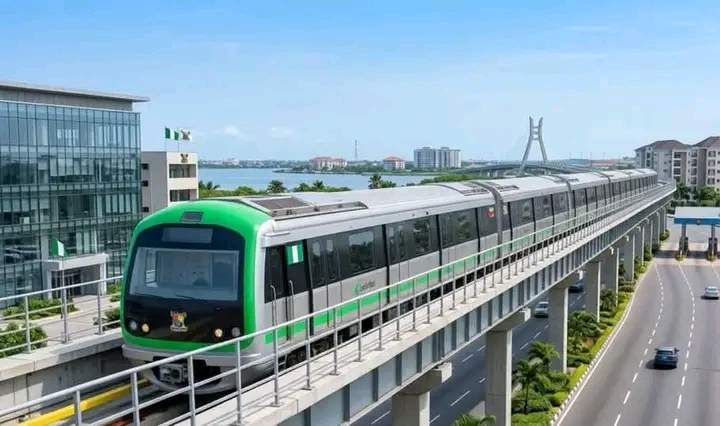
FG to Begin Lekki Green Line Metro Construction in December 2026
FG to Begin Lekki Green Line Metro Construction in December 2026
The Federal Government has targeted December 2026 for the commencement of construction of the Lekki Green Line Metro in Lagos State, beginning with Phase 1A, covering the Lekki Phase 1–Sangotedo corridor.
The proposed railway project is expected to strengthen Lagos’ urban rail transportation network and improve connectivity along the rapidly expanding Lekki-Epe corridor.
The Green Line is part of the Lagos Strategic Transport Master Plan, designed to provide an efficient mass transit system connecting Lagos Island with Lekki and Ibeju-Lekki.
The proposed 69.7-kilometre rail line will run from Marina on Lagos Island to the Lekki Free Trade Zone in Ibeju-Lekki, with 17 stations planned along the corridor.
The proposed stations include Marina, Civic Centre, Lekki Phase 1, Freedom Way, Jakande Market, Chevron, Ajah, Ogombo, Sangotedo, Lakowe, Eleko, Ibeju, Lekki Airport and the Lekki Free Trade Zone.
The initial construction phase, designated Phase 1A, is expected to cover the Lekki First Toll Gate to Sangotedo section, with work scheduled to commence in December 2026.
Engineering and Operational Features
The Green Line is designed to combine elevated and ground-level railway sections. Approximately 11.9 kilometres of the route will be elevated, while the remaining 57.8 kilometres will run at ground level.
The proposed railway will operate modern eight-car train sets, with a projected maximum speed of 100 kilometres per hour and an estimated passenger capacity of 35,000 passengers per hour in each direction.
Upon completion, the railway is expected to ease transportation difficulties along the Lekki-Epe corridor, which has witnessed rapid population growth, increasing residential developments, commercial activities and industrial expansion.
Connection to Existing Rail Network
A major feature of the project is its proposed interchange with the Lagos Blue Line at Marina, which will enable passengers to transfer between the two rail systems.
The integration is expected to improve connectivity across Lagos and gradually reduce dependence on road
transportation for daily commuting.
The extension of the Green Line towards the Lekki Free Trade Zone is also considered significant, given the area’s growing importance as an industrial and commercial hub, particularly with the presence of the Lekki Deep Sea Port and other major investments.
Funding and Project Implementation
The Federal Government made counterpart funding provisions of ₦146.14 billion for the project in the 2025 budget and ₦102.3 billion in the 2026 budget.
In April 2026, the Federal Executive Council approved contracts for the Lagos Green Line, Kano Metro City Rail and Kaduna Light Rail projects, with the three railway projects reportedly valued at approximately $3 billion collectively.
The Lagos Metropolitan Area Transport Authority (LAMATA) is expected to play a central role in the implementation of the project, while the Federal Government is involved in its financing arrangements.
China Harbour Engineering Company has been identified as the contractor for the Green Line project.
Economic Prospects
Beyond transportation, the Green Line is expected to stimulate economic activities along its route through improved accessibility, employment generation and increased investment in residential and commercial developments around railway stations.
The proposed rail connection to the Lekki Free Trade Zone is particularly strategic, as the area continues to attract industrial investments and emerging business opportunities.
When completed, the approximately 70-kilometre railway will represent a major addition to Lagos’ transportation infrastructure and provide a more efficient commuting alternative for residents, workers and businesses operating along the Lekki corridor.
The project underscores the importance of integrating transportation planning with urban expansion, housing development and industrial growth as Lagos continues to evolve into a major economic centre.
For a megacity where mobility directly affects productivity and economic performance, the expansion of mass transit infrastructure is expected to remain critical to improving urban mobility and supporting sustainable development.