Hamzat Unveils ‘The Lagos Promise’ Manifesto
By Sherif Salau

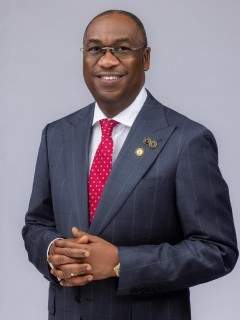
Deputy Governor Kadri Obafemi Hamzat today formally unveiled his long-anticipated policy document, “The Lagos Promise”, outlining a detailed blueprint for the next phase of development in Africa’s largest city.
The event, held at the Eko Hotel and Suites in Victoria Island, drew party leaders, business executives, community representatives, youth groups and members of the diplomatic community. In a carefully delivered address, Hamzat presented the manifesto as both a continuity agenda and a forward-looking plan designed to deepen the gains of the past three administrations while confronting the new challenges facing Lagos.
“This is not a document of empty slogans,” Hamzat told the audience. “The Lagos Promise is a solemn commitment to the people of this state. It is a pledge that the progress we have recorded under Governors Fashola, Ambode and Sanwo-Olu will not only be protected but deliberately expanded so that more citizens feel its impact in their daily lives.”
The manifesto is structured around six interconnected pillars: Infrastructure and Mobility, Human Capital Development, Housing and Urban Renewal, Economic Competitiveness and Job Creation, Health and Social Welfare, and Inclusive Governance. Each section contains specific targets, timelines and proposed funding approaches.
On infrastructure, the document prioritises the completion and expansion of the Blue and Red Line rail corridors, the accelerated delivery of key road projects across the suburbs, and a renewed focus on water transportation to ease pressure on the city’s congested roads. It also proposes a more aggressive public-private partnership model for the maintenance of existing assets.
In the area of human capital, “The Lagos Promise” places strong emphasis on education reform, technical and vocational training, and digital skills acquisition. Hamzat argued that Lagos must prepare its young population for the jobs of the future rather than those of the past. “We cannot continue to produce graduates who are unprepared for a rapidly changing economy,” he said.
Housing forms another central plank. The manifesto commits to scaling up the delivery of affordable homes, reforming land administration to reduce the cost and complexity of securing titles, and upgrading informal settlements through a combination of infrastructure intervention and community participation.
Economic competitiveness receives detailed attention. The document outlines plans to strengthen Lagos’s position as a technology and innovation hub, improve the ease of doing business, support micro, small and medium enterprises, and create clearer pathways for job creation in manufacturing, creative industries and the green economy.
Public reaction at the event was largely positive among party supporters, many of whom described the document as comprehensive and realistic. Mrs. Folake Adeyemi, a businesswoman from Ikeja, said the focus on continuity gave her confidence. “Lagos has suffered in the past when new administrations discarded the work of their predecessors. This approach is wiser.”
Political analysts, however, note that the real test will lie in implementation and in how the manifesto addresses persistent challenges such as traffic congestion, flooding, waste management and the high cost of living. Dr. Ibrahim Yusuf, a public policy researcher, observed that while the document is strong on vision, its success will depend on fiscal discipline and the ability to mobilise both public and private capital at scale.
By unveiling “The Lagos Promise” at this time, Hamzat has moved to define the terms of the emerging conversation about the future of the state. Whether the document ultimately becomes a governing agenda or remains a campaign platform, it has already succeeded in framing continuity, delivery and inclusion as the central themes of the next political season in Lagos.