The Strategic Value Of Peer Educator Training
By Sherif Salau
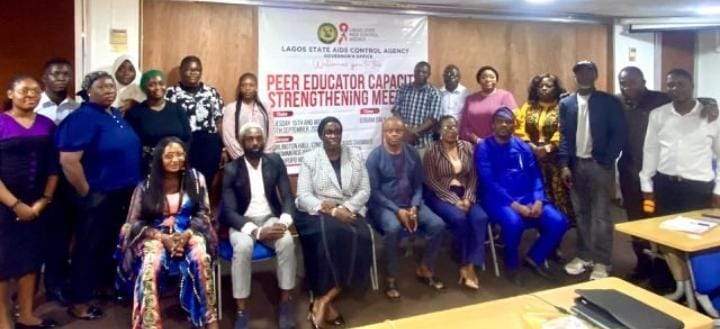
The Lagos State AIDS Control Agency (LSACA) is advancing a more sustainable model of HIV programming by systematically training peer educators across the state. This community-led approach places trained individuals from within affected and at-risk populations at the centre of prevention, testing, linkage to care and ongoing support. The initiative is designed not merely as an expansion of outreach activities, but as a structural improvement in how HIV services reach and retain the people who need them most.
For individuals and families living with or affected by HIV, the benefits are direct and practical. Peer educators, drawn from the same social networks, markets, transport corridors and residential communities, reduce the social distance that often discourages people from seeking services. They facilitate earlier testing, support treatment adherence, counter stigma through lived experience, and provide consistent, culturally relevant information. This translates into higher rates of diagnosis, improved retention in care, and better health outcomes for those already on treatment. People who previously avoided formal health facilities because of fear, discrimination or logistical barriers gain accessible, trusted points of contact within their own communities.
The health sector stands to gain measurable efficiencies and effectiveness. By decentralising basic education, demand creation and first-line support to trained community members, formal health facilities can focus specialist capacity on clinical management, laboratory services and complex cases. Peer educators expand the reach of testing and linkage without proportionally increasing facility workload or cost. They also improve the quality of data flowing into the system by identifying gaps in coverage and supporting accurate reporting from hard-to-reach groups. Over time, this reduces late presentation, lowers the burden of advanced HIV disease on hospitals, and strengthens the overall continuum of care.
Broader public benefit follows from these gains. Higher community-level awareness and reduced stigma contribute to lower rates of new infections, protecting families and future generations. A more informed population is better equipped to make protective decisions, support relatives living with HIV, and participate in collective efforts to sustain progress. The programme therefore reinforces public health security while building social capital around a shared health priority.
In essence, LSACA’s investment in peer educators represents a deliberate shift toward community ownership of the HIV response. It improves the lived experience of those directly affected, enhances the efficiency and reach of the health system, and delivers wider protective benefits to the population of Lagos State. Sustained implementation and supportive supervision will determine how fully these gains are realised.