King’s College Crisis Deepens As Education Workers Threaten Nationwide School Shutdown
By Emmanuel Daniji
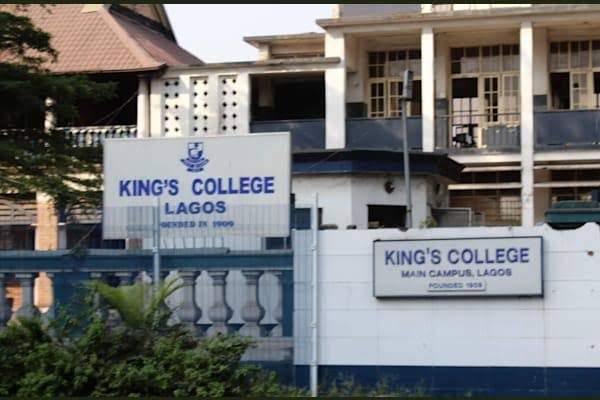
The dispute over the proposed concession of King’s College, Lagos, has taken a more serious turn, with education workers threatening to shut down Federal Unity Colleges across Nigeria if the Federal Government does not reverse the arrangement.
The threat came on Tuesday as the workers’ protest at the Federal Ministry of Education headquarters in Abuja entered its fourth day, leaving activities at the ministry paralysed and raising fears of a wider disruption to the country’s public education system.
The workers, under the Joint Council representing four unions in the ministry, said they would prevent the resumption of activities in Federal Unity Colleges nationwide if their concerns over King’s College and other public education assets were not addressed.
For families who depend on Federal Unity Colleges to provide their children with affordable access to quality education, the prospect of a nationwide shutdown adds another layer of uncertainty to an already tense dispute.
The Joint Council comprises the Administrative Staff College of Nigeria Senior Staff Union (ASCSU), Organisation of Public Service Technical and Engineering Workers (OPTER), Nigeria Civil Service Union (NCSU) and National Union of Banks, Insurance and Financial Institutions Staff (NOBSTUCK).
Addressing journalists at the entrance of the ministry, Chairman of the Joint Council, Comrade Onukhe Abraham, said the workers were not opposed to development or private-sector involvement in education.
He said, however, that government-owned schools established and funded with public resources should not be subjected to concession arrangements that, in the unions’ view, could threaten workers’ jobs or reduce access to quality education.
Abraham also warned that the proposed concession of King’s College could set a precedent for other Federal Unity Colleges.
“There is what is called precedence. Once King’s College goes, others will follow,” he said.
“The children of the poor must be able to go to King’s College. That school is one of the assets Nigeria has, and it must not go that way.”
The workers’ concerns have also been heightened by a recent ministry circular which, according to the unions, directed teachers who could not remain at King’s College under the proposed arrangement to seek redeployment to other schools in Lagos State.
Abraham questioned the decision, particularly against the backdrop of President Bola Ahmed Tinubu’s reported approval of a waiver for the recruitment of more than 3,000 Parent-Teacher Association staff into Federal Unity Schools.
He welcomed the recruitment approval but questioned why additional staff would be needed while existing King’s College teachers were allegedly being asked to move elsewhere.
“If Mr President has approved employment of 3,000 plus PTA staff, then where will the new staff work if existing teachers are being displaced from King’s College?” he queried.
The Joint Council also rejected Monday’s meeting between Trade Union Congress (TUC) leaders and Minister of Education, Dr Tunji Alausa, describing the meeting as “null and void”.
The workers insisted that the TUC did not represent the body currently leading the protest.
Abraham accused the congress of negotiating with the minister without the participation of the recognised leadership of the protesting workers.
“TUC is not part of this issue. They have never come here for one day to dialogue with us,” he said.
The unions also raised concerns over what they described as unresolved welfare and administrative problems within the ministry, including stagnation of education officers, delays in promotion and other long-standing grievances.
They further expressed opposition to what they described as plans to concession Federal Unity Schools generally, as well as concerns surrounding a land-swap controversy involving Federal Government College, Kano, and Suleja Academy School of the Gifted in Niger State.
According to the workers, these developments have heightened fears about the future of public education assets and the security of their jobs.
The Joint Council said it had written to Alausa on July 6 seeking a meeting to discuss its grievances but alleged that the minister had not responded despite the letter being acknowledged.
The council described the alleged lack of engagement as unacceptable and warned that the continued failure to resolve the issues could deepen tensions within the education sector.
The protest has also raised concerns about the safety of union leaders.
Chairman of the Association of Senior Civil Servants of Nigeria (ASCSN) in the ministry, Comrade Ngadi Sampson Chigozie, alleged that union leaders had received threats and that officials of the Department of State Services (DSS) were present around the protest.
He also alleged that security personnel had been deployed to intimidate the protesting workers.
“They sent police to King’s College to see how they will intimidate the workers, but they can’t intimidate them,” Chigozie said.
“I don’t know what will happen to me today or tomorrow. DSS is on us, all of us the chairmen here. If I die for this cause, we perish. We don’t know what will happen when we are going home.”
The allegations concerning security personnel could not, from the information provided, be independently established.
The tension was further exposed on Tuesday when angry workers reportedly booed and blocked the Minister of State for Education, Prof. Suwaiba Ahmad, and the Acting Permanent Secretary, Dr Folake Olatunji-David, as they arrived at the ministry’s headquarters.
The incident reflected the depth of the disagreement between the workers and the ministry over the King’s College issue.
However, there was a fresh attempt to reopen dialogue later in the day.
National President of ASCSN, Comrade Bola Audu, announced that a meeting between the workers and Alausa had been rescheduled for Wednesday at 4 p.m. at the minister’s conference room.
Audu said the workers remained willing to engage the minister and formally present the grievances that led to the protest and shutdown of the ministry.
He also rejected the outcome of Monday’s meeting between the minister and what he described as “factional leaders” of the unions, insisting that the recognised leadership of the Joint Workers Committee remained the body mandated to negotiate with the ministry.
He urged workers to remain united ahead of the meeting, particularly over the proposed concession of King’s College.
With the ministry still paralysed and the unions threatening to extend the shutdown to Federal Unity Colleges nationwide, attention is now focused on Wednesday’s meeting.
At stake is not only the dispute between government and its workers, but also the uninterrupted education of thousands of students in Federal Unity Colleges and the future management of some of the country’s longstanding public schools.