Court Stops Further Demolition, Construction On Disputed Broad Street Property
By Emmanuel Daniji
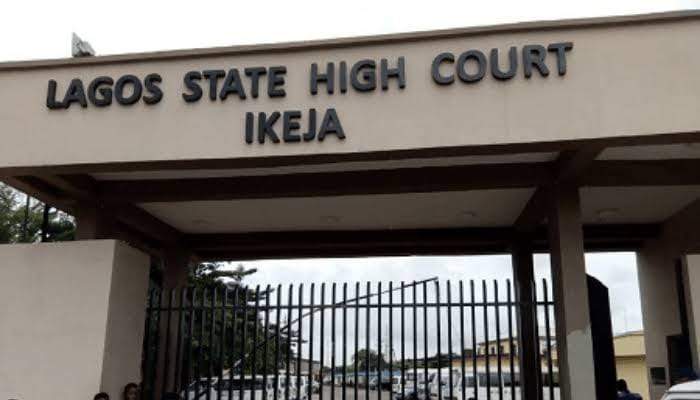
A Lagos State High Court sitting in Igbosere has stepped in to halt further demolition and construction activities on a disputed property at 168 Broad Street, Lagos Island, after concerns that the premises could be substantially altered before the ownership dispute is resolved.
Justice Yetunde Adesanya issued a pre-emptive order restraining further demolition, excavation and construction on the property following an application by Dr Abimbola Adebowale, who alleged that part of the building had already been demolished before Taiwo Yusuf allegedly took possession and began preparations for further development.
The dispute reportedly began after the Lagos Island Local Government issued a 48-hour enforcement notice on August 6, 2026, directing occupants to vacate the property and remove containers and other structures described by the council as illegal.
The notice, signed by A. O. Ojora on behalf of the council engineer, warned that failure to comply within the stipulated 48 hours would lead to enforcement action under applicable laws and regulations.
According to Adebowale, the situation escalated after part of the property was demolished and Yusuf allegedly took possession following the local government’s intervention.
She further alleged that tenants were forcefully ejected without notice, that part of the structure was demolished at night and that the premises was subsequently barricaded with aluminium zinc in preparation for further demolition and construction.
In an 11-paragraph affidavit filed in support of the application, Babatunde Bello, a staff member of United Capital Trustee Limited, said the company had managed the property since 2016 without disturbance until the alleged encroachment.
Bello stated that Adebowale appointed United Capital Trustee Limited as trustee of her properties through a Deed of Trust dated August 8, 2026.
He alleged that on August 19, 2026, the defendants forcibly evicted tenants from the premises without prior notice or Adebowale’s consent before partially demolishing the building.
The affidavit further alleged that the defendants barricaded the property with aluminium zinc to facilitate the complete demolition of the remaining structure and commencement of construction.
Adebowale, through her lawyer, Waheed Isiaka of KISAB Solicitors & Attorneys, asked the court to preserve the property while the parties completed the pre-action protocol required before substantive proceedings.
Her application relied on Orders 1 and 2 of Practice Direction No. 2 of 2019, which provide for pre-emptive remedies where necessary in the interest of justice or to prevent irreparable damage or serious mischief.
Ruling on the application, Justice Adesanya held that Adebowale had satisfied the conditions required for the grant of the temporary protective order.
The judge noted that an applicant seeking such relief must demonstrate that refusing the order could result in irreparable damage or serious mischief, attach a Memorandum of Claim, establish an urgent need to preserve the subject matter and explain why the pre-action protocol had not yet been fully complied with.
According to the court, the applicant satisfied those requirements through the contents of her affidavits, the Memorandum of Claim and exhibits placed before the court.
Justice Adesanya consequently restrained Yusuf, the unidentified defendants, their privies, agents and proxies from completely demolishing, dissipating, excavating or carrying out construction on the disputed property pending full compliance with the pre-action protocol.
The court, however, stressed that the order is temporary and conditional.
Justice Adesanya directed the applicant to fully comply with the pre-action protocol within the timelines prescribed by the High Court of Lagos State (Civil Procedure) Rules 2019 and Practice Direction No. 2 of 2019.
She warned that failure to comply within the stipulated period would cause the protective order to lapse.