What Hamzat’s 40% Rent Advice Means for Lagos Residents
Kehinde Adeleye
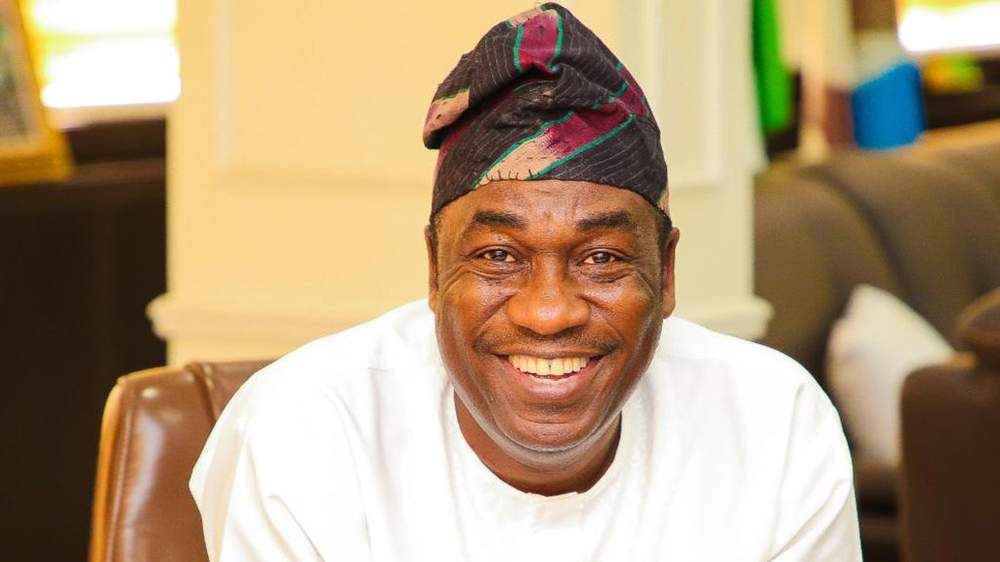
Lagos State Deputy Governor and All Progressives Congress, APC, governorship candidate for the 2027 election, Obafemi Hamzat, has advised residents not to spend more than 40 per cent of their income on rent, saying excessive housing costs could leave workers struggling to meet other basic needs.
Hamzat gave the advice while appearing as a guest on Nigerian Info, where he discussed housing affordability, income levels and the broader economic challenges confronting Lagos residents.
According to him, housing expenses should be considered alongside other essential needs such as food, clothing and transportation.
“So, in fact, if you spend more than 40% of your income on rent, it is too high because you must eat, you must buy clothes, you must do transportation,” Hamzat said.
The 40 per cent figure, however, was presented by Hamzat as an affordability guideline and not as a new statutory rent limit in Lagos.
For instance, a person earning ₦500,000 monthly would, under the principle Hamzat outlined, spend about ₦200,000 or less on rent, leaving the remaining income for other necessities, savings and financial obligations.
Hamzat says young workers should start small
The deputy governor also advised young Nigerians not to feel pressured to move immediately into expensive apartments when they begin working.
He argued that cultural practices such as living with parents or relatives could help young workers reduce their housing costs and build their finances.
“Don’t let us misunderstand ourselves as a people. We are cultural people. Do you understand? So, if I start to work as a young person and I’m not married, a lot of us live with our parents,” he said.
“A lot of us live with our cousins. Go to Turkey, for example, and see how young people also live. So, do you understand? So, you don’t start from the top. Self-contained. You don’t start from the top. You start from the average.”
Hamzat said a young worker could begin with a one-bedroom apartment or self-contained accommodation, depending on their income, rather than taking on a housing cost they could not comfortably afford.
“It doesn’t have to be, if you are a young person, you can start it with one bedroom or even a self-contained like you explained,” he said.
He also stressed the importance of developing a culture of saving, saying an individual’s ability to save could eventually strengthen their capacity to acquire property.
“So, that is what is important. But the bottom line is, like I said, the culture of ability to save so that if people see that you can save money, then I can give you a property,” he said.
Hamzat links housing crisis to earning power
The APC candidate argued that the housing challenge could not be addressed in isolation from the broader Nigerian economy.
He said government must create conditions that allow Nigerians to earn better, while also increasing the supply of affordable housing.
“But what is important is we must also build our economy in such a way that people earn better. You understand? So that everybody can be uplifted,” Hamzat said.
According to him, improving people’s earning power would make it easier for households to meet housing costs without sacrificing other basic needs.
He said the availability of affordable housing was also connected to economic stability and the ability of individuals and businesses to plan.
“What is important is we must also build our economy in such a way that people earn better. And that is the bottom line. How do we improve our economy to make sure that we can build more houses? It is just revolving around the economy,” he said.
Hamzat backs Tinubu’s economic policies
Hamzat also expressed optimism about the economic policies of President Bola Tinubu’s administration, saying the Federal Government was taking steps to stabilise the economy.
“And we are lucky. We are lucky because the levers that the federal government should pull, they are pulling it in terms of the stability of the economy,” he said.
He argued that a more stable economy would make inflation, prices and other economic indicators more predictable, allowing individuals and businesses to plan better.
“If this economy is stable, then things are becoming predictable. In that way, you can predict inflation, you can predict everything, and prices become steady,” Hamzat said.
“That way, we can start to uplift the economy.”
He added that government must address the fundamentals of the economy before significant improvements could be achieved in areas such as housing.
“So it’s to prepare the fundamental first before we can actually go to the next one,” he said.
According to him, the cost of goods and services remains one of the major issues that must be addressed.
“So, the cost of buying things is what we need to fix first. And then when we fix that, which is what the federal government is doing now, then we’ll be able to talk a lot more about the other pillars that are on top of that,” he said.
Lagos housing costs remain a major concern
Hamzat’s comments come amid growing concerns over housing affordability in Lagos, where rising rents and substantial upfront payments have placed increasing pressure on low- and middle-income households.
For many residents, rent represents one of their largest recurring financial obligations, particularly in areas where demand for accommodation continues to outpace the supply of affordable housing.
Hamzat’s argument therefore centres on two approaches: encouraging individuals to make housing choices based on their actual income and savings capacity, while government works to improve economic conditions, increase earning power and expand access to affordable housing.
Hamzat’s 2027 ambition
Hamzat is seeking to succeed Governor Babajide Sanwo-Olu in the 2027 Lagos governorship election after securing the APC ticket at the party’s governorship primary held in May 2026.
He polled 657,917 votes to defeat his rival, Olanrewaju Jim-Kamal, who received one vote in the primary.