
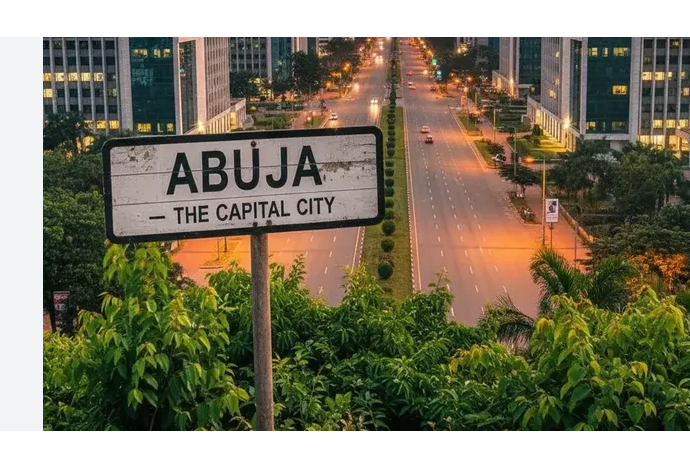
Abuja Rent Crisis: Families Cut Food, Healthcare, and Education Cost
For many Abuja families, paying rent is no longer just a housing expense; it is becoming a painful choice between keeping a roof over their heads and meeting other basic needs.
In Kubwa, Abdulsalam Danladi is learning to stretch every naira further after the rent on his one-bedroom apartment jumped from ₦800,000 to ₦1.5 million within a year.
The house, he said, did not receive any major improvement, and his salary did not increase. Yet, the amount required to renew his tenancy almost doubled.
The father of two told the News Agency of Nigeria (NAN) that his family had responded by buying cheaper food and, on some occasions, skipping meals.
Danladi’s experience mirrors a growing concern among Abuja residents, who say sharp rent increases are consuming a larger share of their incomes and forcing them to cut spending on food, education, healthcare, clothing and savings.
For Romanus Orjinta, a civil servant also living in Kubwa, the impact of the housing squeeze reached his children’s classroom.
Unable to absorb the higher accommodation costs alongside other household expenses, Orjinta moved his children to a cheaper school.
“I know changing schools can affect their academic performance, but I really don’t have a choice at this point,” he said.
The decision illustrates how a rent increase can trigger a chain reaction within a household. Once accommodation takes a larger portion of income, families are left to find savings elsewhere.
Achadu Emmanuel, who works with a security agency, faced the same dilemma after the annual rent on his two-bedroom apartment increased from ₦1.5 million to ₦2 million.
He considered moving to a cheaper neighbourhood but realised that the additional cost of commuting to work could cancel out whatever he saved on rent.
He stayed, but began cutting back on other expenses.
Emmanuel said he had stopped buying new clothes and was making his existing wardrobe last longer. More worrying for him, however, was the disappearance of the savings he once kept for emergencies.
“Before, I was saving a reasonable amount for emergencies and unforeseen circumstances, but now it is difficult to maintain that,” he said.
For Josephine Daudu, a mother of three, healthcare became another casualty of rising accommodation costs.
Daudu said the rent on her two-bedroom apartment increased from ₦1.4 million to ₦2 million. With her salary unchanged, she said she could no longer sustain the family’s previous use of private healthcare and had switched to public facilities.
Across Abuja, such adjustments are becoming increasingly common as households struggle to keep pace with the cost of living.
The pressure is particularly significant because rent does not exist in isolation. Families must also contend with food, transportation, electricity, school fees and medical expenses, all competing for the same income.
Although Nigeria’s headline inflation rate has moderated considerably, household costs remain high. The National Bureau of Statistics reported that headline inflation fell to 15.91 per cent in June 2026 from 15.93 per cent in May, while the Federal Capital Territory recorded a significantly higher year-on-year inflation rate of 39.91 per cent. Food inflation stood at 17.52 per cent nationally.
For residents, however, the economic reality is often experienced at the supermarket, in the classroom, at the hospital and when a landlord presents a new rent demand.
The housing market is facing pressures of its own.
Landlords and property