Truck Owners Demand Refunds Over Cancelled E-Call-Up Slots
Truck owners operating around Nigeria’s seaports are demanding refunds for paid Electronic Call-Up (ETO) bookings cancelled or rendered unusable by delays they say are beyond their control.
The Association of Maritime Truck Owners (AMATO) said the situation is placing additional financial pressure on operators, who are sometimes required to pay for fresh bookings after their original slots expire.
The association wants the Nigerian Ports Authority (NPA) and Truck Transit Parks Limited (TTP) to introduce a transparent refund or transfer mechanism for truckers whose bookings are cancelled through no fault of their own.
AMATO’s Head of Research and Technical, Adeshina Ajibola, said operators should not bear the financial consequences of system or operational failures. He argued that cancelling paid bookings without offering compensation or redress could raise concerns under the Federal Competition and Consumer Protection Act, 2018.
Ajibola also called for a clear dispute-resolution process to enable truck owners to recover funds or transfer bookings when delays prevent them from accessing their allocated slots.
The association is equally pushing for ETO wallet balances to be refunded whenever a booking is cancelled for reasons outside a trucker’s control, rather than forcing operators to make another payment.
AMATO Secretary, Sani Mohammed, raised another concern over the handling of Truck Delivery Orders (TDOs). He called for TDOs to be permanently tied to specific trucks immediately after matching, saying the measure would prevent duplication and reduce opportunities for manipulation within the system.
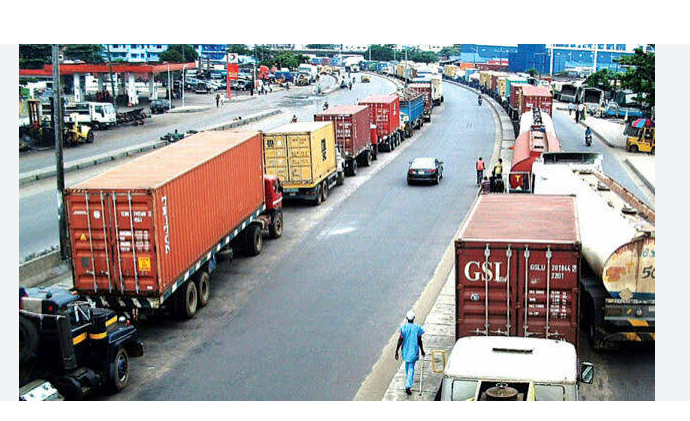
The demands come amid persistent concerns over compliance with the electronic call-up process around the Apapa and Tin Can Island port corridors.
AMATO has alleged that some operators exploit loopholes in the system by obtaining direct or express call-ups and bypassing approved truck transit parks. According to the association, such practices undermine operators who comply with the established procedure and can worsen congestion around the ports.
The E-Call-Up system was introduced to streamline truck movements into and out of Nigerian ports, reduce gridlock and create a more predictable process for freight operators.
The system has also been extended to the Lekki-Epe corridor, where it covers major economic facilities, including the Lekki Deep Sea Port, Dangote Refinery and Lekki Free Zone.
By May 2026, the Lagos State Government said more than 28,000 trucks and about 11,000 transport operators had registered on its Lekki-Epe E-Call-Up platform as authorities intensified efforts to regulate heavy-duty traffic along the corridor.
AMATO is now urging authorities to ensure that the digitalisation of truck movement does not create fresh financial burdens for compliant operators.
The truck owners’ position is that where a paid booking is cancelled or expires because of circumstances outside the operator’s control, the affected trucker should be allowed either a refund or a transfer to a new slot.
They also want authorities to close loopholes that enable operators to bypass the approved system and ensure that the E-Call-Up platform operates with greater transparency, accountability and fairness.