Lagos Accelerates Infrastructure Projects
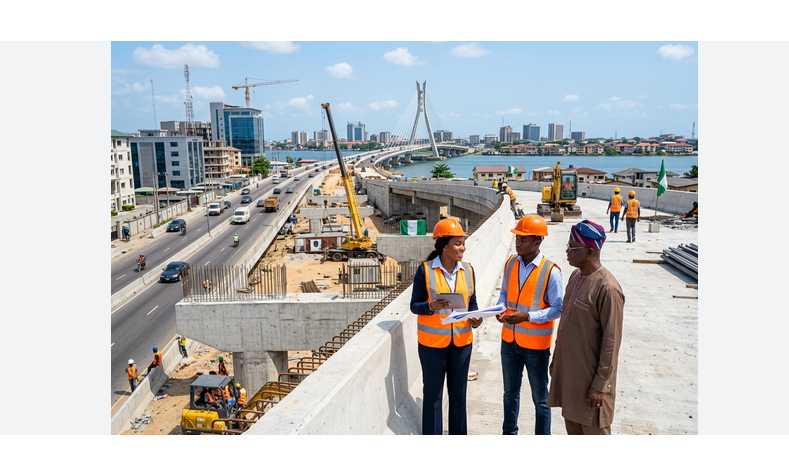
The Lagos State Government is intensifying its infrastructure push, with authorities accelerating work on roads, bridges and other strategic projects as the state races to keep pace with its growing population and economic activity.
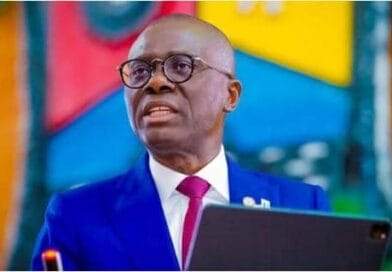
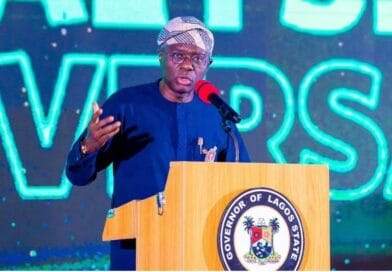
The administration of Governor Babajide Sanwo-Olu says it is focusing on completing ongoing projects while expanding infrastructure across different parts of the state.
Recent figures show the scale of the effort. Since 2019, Lagos says it has completed 362 roads covering about 347.17 kilometres, with another 181 road and bridge projects currently under construction. The government also plans to inaugurate 12 newly completed road projects.
Among the projects delivered are the Opebi-Mende Link Bridge and approach roads, Babajide Sanwo-Olu Road in Agege, formerly Dopemu Road, and Abaranje Road in Alimosho, alongside road networks across several divisions of the state.
The government’s infrastructure programme extends beyond conventional road construction. Major investments are also being directed towards transport, drainage, flood control, housing, water infrastructure, waste management and other public facilities.
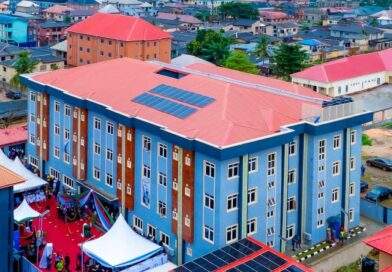
Earlier in 2026, President Bola Ahmed Tinubu commissioned several Lagos projects, including the Ojota/Opebi Link Bridge, Lagos State Geographic Information System Building, Tolu Schools Complex and Lagos Food Logistics Hub, highlighting the growing scale of infrastructure development across the state.
Lagos is also pursuing urban regeneration in established areas where ageing infrastructure has come under pressure from rapid development. Projects covering parts of Ikeja, Ikoyi and Lagos Island are aimed at improving road networks and addressing wider environmental and infrastructure challenges.
The government has identified strategic transport infrastructure as a key tool for reducing travel times, improving connectivity and supporting economic activity.
Several additional road projects have been earmarked for completion and commissioning in 2026, including schemes in Ikorodu, Ikeja, Eti-Osa, Ibeju-Lekki and Alimosho.
The scale of construction, however, comes against a difficult economic backdrop marked by rising construction costs and pressure on public finances. This makes efficient project management, prioritisation and timely completion increasingly important.
For Lagos residents and businesses, the impact of faster delivery could extend beyond better roads. Improved transport links and supporting infrastructure can reduce travel bottlenecks, strengthen connections between communities and commercial centres, and create more favourable conditions for investment.
With hundreds of projects completed and many more still underway, Lagos is seeking to maintain the momentum of its infrastructure programme while ensuring that new and ongoing developments translate into tangible improvements in everyday life.
The message from the state is increasingly clear: completion, connectivity and speed are becoming central to Lagos’ next phase of infrastructure development.