
Families Lament About Food Inflation In Eti-Osa
As Nigeria continues to grapple with inflation and the high cost of living, many households across Eti-Osa, Epe and Ibeju-Lekki Local Government Areas of Lagos State are making difficult decisions about what ends up on their dining tables.
Although recent national data indicates that headline inflation has eased slightly compared to its 2024 peak, food prices remain stubbornly high. The cost of staples such as rice, beans, tomatoes, pepper, cooking oil, bread, eggs and protein has continued to stretch household budgets, forcing many residents to cut back on both the quantity and quality of their meals.
For many families in Eti-Osa, where neighbourhoods range from affluent districts like Ikoyi, Victoria Island and Lekki Phase 1 to densely populated communities such as Ajah, Jakande Estate, Ilasan, Badore and Sangotedo, the economic reality differs sharply. While some residents have adjusted by reducing luxury spending, lower-income households say feeding their families has become their biggest monthly challenge.
“I used to cook rice with chicken twice a week,” said Mrs. Kemi Adebayo, a petty trader in Ajah. “Now, we reserve meat for weekends, and sometimes we substitute it with beans or eggs because everything is expensive.”
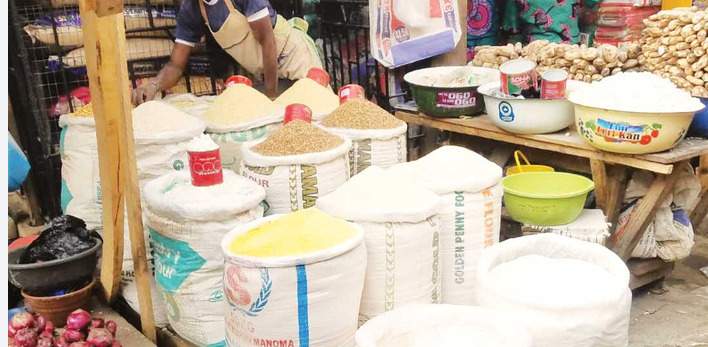
Food vendors across Lekki and Ajah also report that customers are buying in smaller quantities.
“People now buy a cup of rice instead of two,” explained Chinedu Okafor, who operates a foodstuff store in Sangotedo. “Some customers ask us to split vegetable oil into very small portions because they cannot afford a full litre.”
The impact is equally visible in Epe, where fishing and farming have traditionally supported local food supplies. Despite being one of Lagos’ agricultural hubs, residents say production costs have increased due to higher transportation expenses, fertiliser prices and fuel costs.
According to local farmers, getting produce from farms to major markets has become significantly more expensive. As a result, consumers are paying higher prices even for locally grown vegetables, cassava, yam and fresh fish.
Mr. Wasiu Bello, a fish farmer in Epe, noted that feed prices have risen sharply over the past year.
“Fish farming is no longer as profitable as before. Everything we use—from fish feed to transportation—has become more expensive. Naturally, fish prices have gone up.”
The situation is also affecting families in Ibeju-Lekki, one of Nigeria’s fastest-growing development corridors. Despite the influx of major investments such as the Lekki Deep Sea Port, Dangote Refinery, new housing estates and expanding road infrastructure, many long-time residents say daily living has become increasingly difficult.
Construction activities have created employment opportunities for some residents, but rising rents and food prices have offset much of the additional income earned by many households.
At the bustling Eleko and Awoyaya markets, traders say buyers now negotiate more aggressively than ever before.
“Customers compare prices from three or four stalls before buying,” said trader Rukayat Ibrahim. “Some people who used to buy baskets of tomatoes now purchase just a few pieces.”
Nutrition experts warn that prolonged increases in food prices could have lasting effects on children’s health, as many families replace balanced meals with cheaper carbohydrate-based alternatives.
Parents interviewed across the three local government areas admitted they have reduced purchases of fruits, dairy products and protein because these items consume a large share of their monthly income.
“I want my children to eat healthy,” said Mr. Emmanuel Johnson, a commercial driver living in Badore. “But when your salary remains the same and food keeps getting more expensive, survival comes first.”
School owners in parts of Epe and Ibeju-Lekki also observe that some pupils now bring simpler lunches to school, while others rely on school feeding programmes where available.
Community leaders have called for stronger support for local farmers, improved transportation infrastructure and expanded food assistance programmes to cushion vulnerable households.
Several residents also believe that encouraging backyard farming, cooperative food purchasing and local agricultural initiatives could help reduce pressure on household budgets.
Despite the financial strain, many families continue to adapt through careful budgeting, bulk purchasing, reducing food waste and relying on support from relatives and community networks.
For thousands of households across Eti-Osa, Epe and Ibeju-Lekki, however, one reality remains unchanged: the daily question is no longer what to eat, but how to make limited resources provide enough food until the next income arrives.
As Lagos continues to expand economically, residents say they hope that the benefits of development will increasingly translate into lower food costs, improved livelihoods and greater food security for ordinary families.