
Why Kaestyle’s Stylish is One of the Most Interesting Debut Albums of the Year
By Emmanuel Daniji
There is a certain confidence that comes with an artiste reaching the point where his influences no longer feel like separate pieces of his identity. On Stylish, Kaestyle appears to have reached that point.
His 15-track debut album brings together the sounds, experiences and cultural references that have shaped him, without forcing them into one particular box. R&B, Afrobeats, soul, Highlife and hip-hop all find room on the project, yet Kaestyle manages to maintain a recognisable identity throughout.
Even before the first song plays, the album makes a statement.
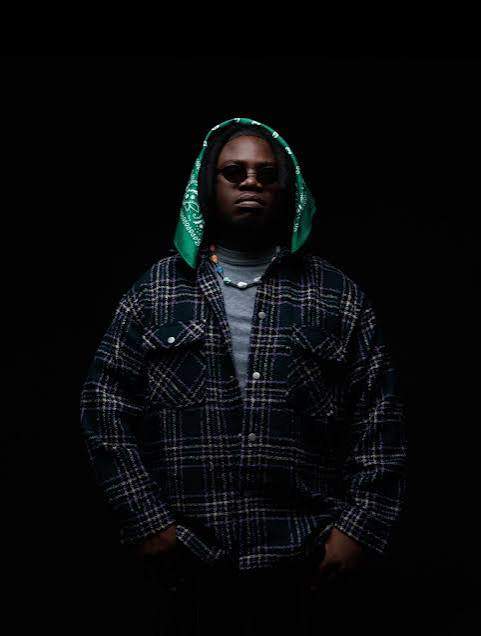
On the cover of Stylish, Kaestyle wears an Etibo, a traditional Rivers outfit, beneath an urban jacket. It is a deliberate meeting of two worlds — tradition and contemporary fashion, culture and streetwear, R&B and hip-hop.
The message is simple. Kaestyle is not trying to choose between where he comes from and where his music is headed. He is putting both in the same frame.
That idea runs through the entire album.
Stylish is divided into two sides, much like a vinyl record. Side A leans heavily into Kaestyle’s R&B instincts, giving him space for softer melodies, intimacy and introspection.
The album opens with Bucket List before moving through Cairo, One Life featuring Ajebo Hustlers, See Finish, To Me featuring M3LON, P.O.Y and Bere (Interlude) featuring Wizard Chan.
There is an unhurried quality to this side of the project. Kaestyle does not appear desperate to manufacture a hit every few minutes. Instead, he allows his vocals and songwriting to carry the songs.
One Life benefits from the chemistry with Ajebo Hustlers, while To Me and Bere deepen the emotional side of the album. Side A ultimately feels personal without becoming unnecessarily heavy.
Then the mood changes.
Side B opens the door to Kaestyle’s Afrobeats side with songs such as Eluwa, Baba, Saki Ofori featuring Duncan Mighty, Dey Go, Mama, Differently featuring Daviid Hart and the title track, Stylish.
The energy is different, but the personality remains the same.
This division is one of the album’s strengths because it makes Kaestyle’s versatility feel intentional. Instead of jumping randomly between sounds, Stylish gives each side its own character.
Side A makes the case for his R&B instincts. Side B shows his comfort with Afrobeats and sounds closer to his Nigerian roots.
Together, they suggest that these are not two competing versions of Kaestyle. They are simply different parts of the same artiste.
That cultural connection becomes even clearer on Saki Ofori, where Duncan Mighty brings another layer of Port Harcourt identity into the project.
For Kaestyle, culture is not just something to put on an album cover. It appears in the music, the artwork and even in the people he brings into the project.
His connection to Nigerian music history is also evident in the album’s hip-hop link. A collaboration involving Kaestyle and ElDee carries significance beyond the song itself. It creates a connection between an emerging generation and an earlier era of Nigerian music.
For younger artistes, such collaborations can serve as reminders that the current Nigerian music scene did not emerge from nowhere. There is a long cultural and musical history behind today’s Afrobeats, R&B and hip-hop movements.
But perhaps the most interesting part of Stylish is the story behind its visual identity.
Kaestyle has spoken about growing up around two rival fraternities in his neighbourhood, represented by the colours red and green. Bringing those colours together in the album’s visual world represents his attempt to communicate an idea that goes beyond music: beneath colours, affiliations and divisions, people remain human beings.
That gives the album artwork another layer of meaning.
On a project that is deeply concerned with identity, Stylish becomes more than a title. Style, in Kaestyle’s world, is not simply about the clothes an artiste wears or the sound he makes.
It is also about how he carries his history into the present.
And that may ultimately be what makes the album interesting.
Kaestyle’s debut does not try to erase his influences in order to create something completely unfamiliar. Instead, he brings those influences together and allows them to speak to one another.
The result is an album rooted in Port Harcourt but open to the wider Nigerian musical landscape; contemporary in its execution but conscious of the culture that shaped its creator.
With Stylish, Kaestyle is making an introduction, but he is also making a statement about who he is — and perhaps more importantly, who he wants to become.