Why CAPPA Is Raising Alarm Over Lagos’ Planned Water Concession
Kehinde Adeleye
Corporate Accountability and Public Participation Africa (CAPPA) has warned the Lagos State Government against moves to concession parts of the state’s public water infrastructure, raising concerns that the policy could increase hardship for residents and undermine access to affordable and reliable water.
CAPPA’s position followed the state government’s signing of a 1-year Memorandum of Understanding (MoU) with China Harbour Engineering Company (CHEC) and Naston Engineering Nigeria Limited to scope and define components of a proposed water infrastructure programme within the Lekki Concession Area.
Under the agreement, the first phase of the project will involve the installation of a transmission pipeline beneath the Lagos Lagoon into the Lekki Concession Area, while the second phase will cover downstream distribution, metering and last-mile connections.
The engagement is expected to produce a technical report and implementation framework for a possible concession agreement between the Lagos State Government and the consortium.
However, CAPPA said the proposed arrangement raises questions about the future of public water supply in Lagos, particularly the possibility of private control over distribution, tariffs, metering and household access.
The organisation said there was no publicly accessible information providing details of the project’s full scope, the process through which the consortium was selected, the obligations of the companies involved or the extent of consultation with affected communities.
“The government is already discussing tariffs and a concession while the public remains shut out,” CAPPA said.
Why CAPPA Is Concerned
According to CAPPA, concessioning public water infrastructure could undermine universal access if commercial profitability becomes the priority over the needs of residents, particularly low-income households.
The organisation argued that Lagos, with its substantial revenue base, has the capacity and responsibility to mobilise public resources, maintain existing infrastructure, expand water production and guarantee access to safe and affordable water.
CAPPA’s Water Programme Officer, Holiness Segun-Olufemi, said successive administrations had failed to fund, maintain and expand the public water system at the scale required by the state.
“The problem is that successive administrations have failed to fund, maintain, and expand the system at the scale Lagos requires.
“Allowing a public institution to deteriorate and then presenting private control as its rescue is dishonest. It is an abdication of responsibility,” he said.
CAPPA Opposes Prepaid Water Meters
CAPPA also opposed the planned expansion of prepaid water meters, warning that the system could make access to water dependent on a household’s ability to pay upfront.
Unlike conventional postpaid metering, prepaid systems automatically cut off supply once purchased credit is exhausted.
“For a resource essential to human life, sanitation, and public health, automated disconnections are fundamentally exclusionary and set to worsen the lives of vulnerable groups and low-income earners,” Segun-Olufemi said.
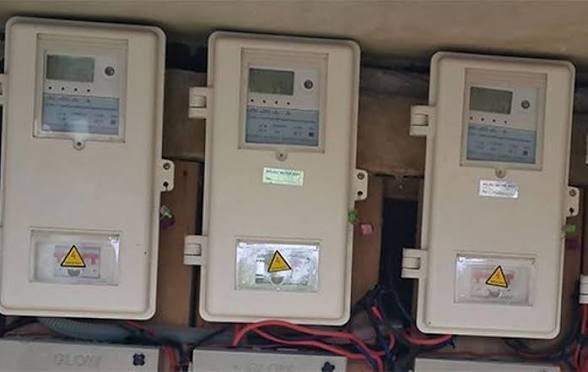
The organisation drew parallels between the proposed water concession and Nigeria’s experience with electricity privatisation, arguing that consumers have continued to contend with rising tariffs, metering challenges, estimated billing and unreliable supply despite the transfer of major parts of the electricity sector to private operators.
CAPPA warned that Lagos could face similar challenges in the water sector, with public funds potentially financing infrastructure while private operators control billing and revenue.
It said the consequences could be more serious because water is essential to human survival, sanitation and public health.
The group cited Akilo and Baruwa areas of Lagos as examples where prepaid water meters have reportedly been introduced.
According to CAPPA, residents in the areas complained of intermittent supply, delays in activating purchased units, low pressure, restricted supply periods and discrepancies between payments and the volume of water received.
In Baruwa, the organisation said some households reported spending as much as N60,000 monthly on water, while also alleging sudden disappearance of purchased units, prolonged outages, dirty water when supply resumed and inadequate complaint mechanisms.
CAPPA’s Demands
CAPPA called on the Lagos State Government to halt further steps towards concessioning the water system and suspend the expansion of prepaid metering.
It also demanded the immediate publication of the CHEC-Naston MoU and urged the government to develop and publicly disclose a fully funded plan to rehabilitate water treatment plants, pipelines, reservoirs and distribution networks.
The organisation called for a system that guarantees every household access to a basic quantity of water.
It also urged communities, labour unions, students, journalists, civil society organisations and residents to demand greater accountability from the government over the provision of basic amenities.
CAPPA warned that any concession agreement could bind Lagos for decades and potentially outlast the administrations that negotiated it.
While acknowledging the urgent need for massive investment in Lagos’ water infrastructure, the organisation said such investment should strengthen the Lagos Water Corporation and expand public capacity rather than create another avenue for private profit from an essential service.